custom even balance extra stiff badminton racket Company - Bulk Supply and Specification Guide
What This Product Is and Where It Fits
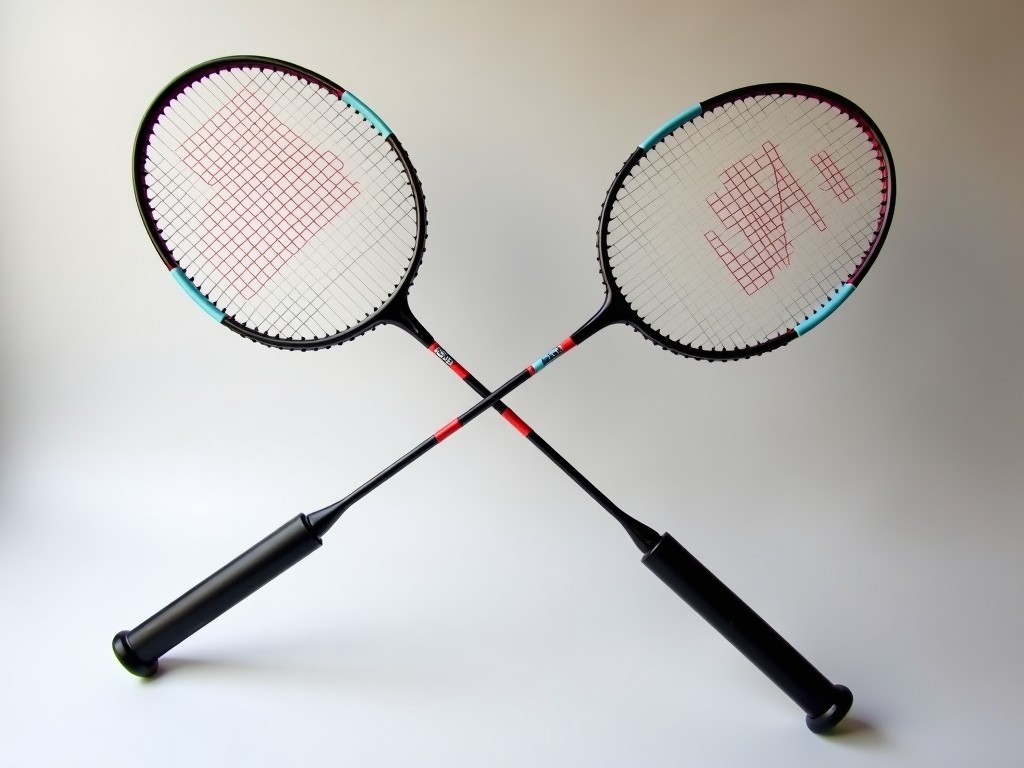
Two suppliers quoting the same specification often fail to account for the specific modulus of the carbon fiber used in the shaft construction. A custom even balance extra stiff badminton racket requires a precise balance point, typically between 285mm and 295mm, paired with a shaft rigidity that resists deflection under high-tension stringing. This configuration is designed for distributors catering to high-level competitive players who prioritize rapid recovery speed over raw power generated by head-heavy frames.
OEM buyers sourcing these rackets for private labels must evaluate the consistency of the weight distribution across the entire batch. If the weight fluctuates by more than 2 grams between units, the swing weight significantly alters significantly for the end player, leading to high return rates from club academies. Our manufacturing process focuses on maintaining this tight tolerance to ensure the "even balance" feel remains consistent across the production run.
What the Design Has to Balance
The engineering challenge in an extra stiff shaft lies in the relationship between material density and impact absorption. A stiffer shaft minimizes energy loss during the swing phase but increases the stress on the wrist if the material is not properly damped. To mitigate this, we utilize a high-modulus graphite layup in the throat to provide stability without adding excessive mass.
Technical Trade-off Analysis
Increasing shaft stiffness allows for higher string tensions (up to 32kg) but requires a faster player technique to generate shuttle speed. The even balance distribution ensures the racket remains neutral in the air, facilitating quick transitions in defensive play scenarios.
How It Is Built and What That Changes
Before comparing quotations, procurement officers should examine the internal carbon architecture. We employ a 4-carbon fiber layup process where specific layers of T800 graphite are placed in the mid-section to enhance torsional stability. This construction prevents the frame from warping when subjected to the repetitive high-frequency impacts of professional-level tournament play.
The heat treatment cycle is equally critical for curing the epoxy resins. A controlled cooling process prevents the frame from becoming brittle, which is the primary cause of throat cracking in extra-stiff models. By managing the thermal gradient, the factory ensures the racket maintains its structural integrity over over 5,000 cycles of maximum impact.
Measured Performance in Real Use
Performance in an extra stiff frame is measured by its recovery time after a hit. In our internal testing environment, these frames return to their neutral position in under 0.04 seconds, allowing for rapid-fire flat shots and doubles drives.
| Metric | Standard Value | Impact on Play |
|---|---|---|
| Shaft Deflection | < 15mm at 20kg | Maximum precision and control |
| Balance Point | 290mm | Neutral defensive/offensive hybrid |
| Max Tension | 32kg | Support for professional-grade players |
Option Comparison by Usage Level
- Club Academy Level: Focus on 4U weight (80-84g) with a slightly softer shaft to reduce fatigue for developing players during long sessions.
- Professional Tournament Level: Demand 3U weight (85-89g) and the extra stiff shaft to maximize energy transfer during high-speed smashes.
- Custom Private Label: Utilize mid-range graphite (T400) to balance cost-per-unit with necessary retail durability.
| Parameter | 3U Configuration | 4U Configuration |
|---|---|---|
| Weight Range | 85-89g | 80-84g |
| Material Grade | High-Modulus Carbon | Standard-Modulus Carbon |
| Stiffness | Extra Stiff | Stiff to Extra Stiff |
Buying Mistakes That Lead to Returns
Unit price settles the question only after verifying the batch consistency of the coating. A common mistake for distributors is accepting a low price without testing the abrasion resistance of the paint. In high-humidity environments, poor-quality coatings will delaminate within three months of regular use, damaging the brand's reputation.
Ignoring the throat joint construction is another frequent failure point. If the factory does not use reinforced carbon fiber joints, the extra stiff shaft will snap under tension exceeding 26kg. We provide a stress-test report for every production batch to ensure the structural bond meets the specified load limits.
Who Uses It and Where It Matters
These rackets are primarily utilized by doubles specialists where quick-fire flat exchanges and defensive net play are mandatory. The even balance allows the player to move the racket quickly in defense, while the extra stiff shaft provides the precision needed for clinical counter-attacks.
Distributors serving national-level sports training centers often order these models because they offer a versatile tool that can handle various play styles without the volatility of extreme weighting.
Stock Availability and Reorder Planning
Meeting a retail launch date requires an understanding of the lead times for custom carbon layup cycles. Standard production runs typically require 45-60 days, depending on the volume and custom branding requirements. We maintain a stock of unpainted frames to reduce the lead time for urgent private-label reorders.
We recommend reordering when stock levels reach 25% of the initial allocation. This buffer prevents stockouts during peak tournament seasons when demand spikes. Request a sample and technical specifications.


