Factory Direct ball badminton racket For Sale: What Buyers Should Check Before Ordering
What the Design Has to Balance
| Parameter | Standard Range | Technical Impact |
|---|---|---|
| Total Weight | 85g - 105g | Lower weight increases speed but reduces impact stability. |
| Balance Point | 290mm - 315mm | Head-heavy configurations favor power for the weighted ball. |
| Frame Stiffness (RA) | 18 RA - 24 RA | Higher RA prevents frame oscillation during high-velocity strikes. |
| String Tension | 22 lbs - 28 lbs | Tension affects control and increases stress on the throat. |
Balance and load analysis shows that the structural integrity of the racket depends heavily on the distribution of graphite throughout the layup. Because ball badminton utilizes a heavier projectile compared to standard shuttlecocks, the frame experiences significantly higher kinetic energy upon impact. A thicker beam width at the throat provides the necessary reinforcement to prevent deformation, which often leads to cracking in cheaper wholesale models.
Technical Note: Material Trade-off
Using high-modulus graphite reduces the total weight but increases the risk of brittle fracture under extreme lateral loads. For high-volume OEM orders, a 24T carbon fiber offers a better balance of cost and impact resistance for club-level play.
How It Performs in Use
Deflection under load governs the energy return rate during high-impact smashes. When the weighted ball strikes the strings, the graphite frame must flex and recover to its original shape without losing structural memory. If the carbon layup is inconsistent, the racket will exhibit excessive vibration, resulting in a loss of power transfer and increased wrist fatigue for the player.
The interface between the racquet head and the shaft determines the longevity of the string bed. We utilize a T-joint reinforcement to minimize the torque applied to the frame during off-center hits. This construction choice ensures that the string tension remains within a +/- 5% margin of error over the first fifty hours of competitive play.
Material Options and Their Trade-offs
Standard Modulus (24T)
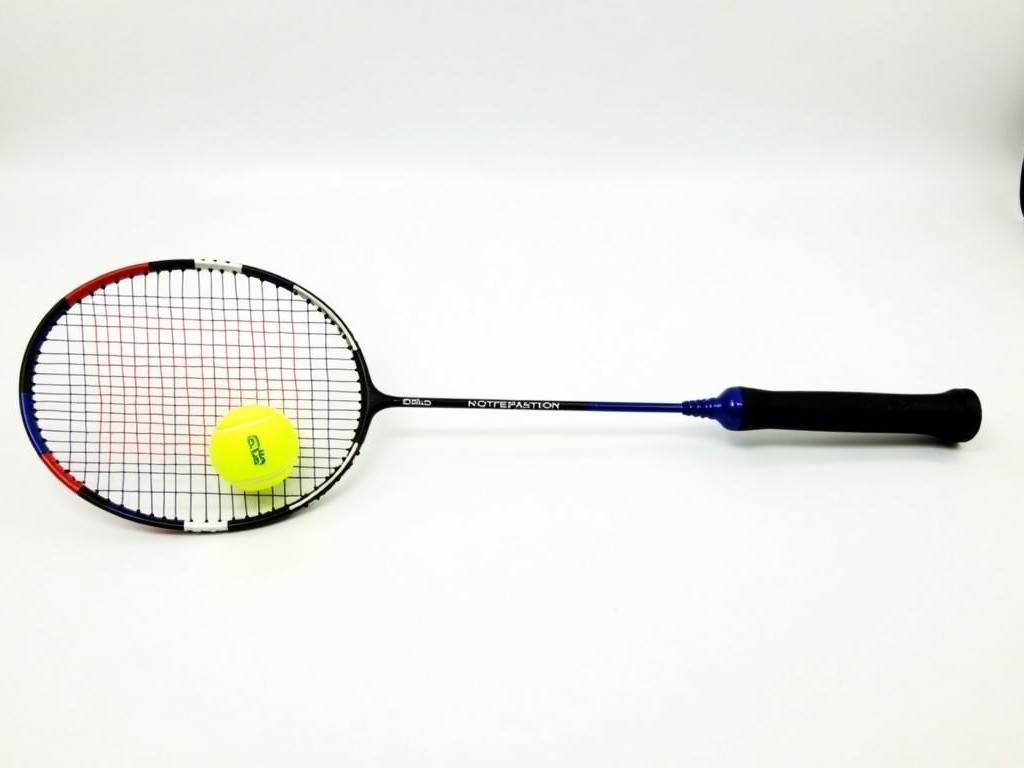
This material uses standard carbon fiber weaves. It is best suited for mass-market distribution where durability and price point are prioritized over absolute weight. The frame is slightly heavier but more forgiving.
- High impact resistance
- Lower manufacturing cost
- Reliable vibration dampening
High Modulus (40T)
Utilizing higher grade carbon fibers allows for a thinner, stiffer profile. This targets professional-grade players who require rapid response times but precise technique to handle the stiffer frame.
- Maximum weight reduction
- Rapid energy recovery
- Sensitive to impact errors
Size, Weight and Specification Range
Production lines accommodate various variations in shaft lengths and grip diameters to meet regional market requirements. Standard length typically measures at 670mm, while head circumference varies from 660mm to 700mm depending on the aerodynamic profile.
- Grip Size: G2, G3, or G4 (standardized-wrapped).
- Shaft Diameter: 7.0mm to 7.8mm tapered.
- Finish Type: Multi-layer powder coating or UV-paint.
Volume Planning and Lead Time
Lead times are dictated by the complexity of the graphite layup and the volume of the order. For standard configurations, a 30-day production cycle is typical after sample approval. Custom tooling for specific frame geometries or branding may require an additional 15-21 days for mold fabrication and testing.
Export Packaging and Handling Protection
To prevent frame warping during international sea freight, each racket is individually sleeved in reinforced protective cardboard tube. These are then packed into high-burst corrugated master cartons designed to withstand stacking pressure. This method ensures the graphite frames do not experience compressive stress that could lead to delamination.
Ordering, Tooling and Lead-Time Questions
What is the minimum order quantity for custom-branded rackets?
The MOQ is typically 500 units per specification to cover the setup costs of the printing and coating machinery. For smaller batches, un-branded frames can be used at a higher per-unit cost.
Can we provide our own artwork for the frame graphics?
We accept high-resolution vector files (AI or EPS). Our team provides a digital mock-up for approval before any physical printing begins to ensure color accuracy.
How long does the sample approval process take?
A pre-production sample is shipped within 7-10 days of design finalization. Once you receive and sign off on the sample, the main production run is scheduled.
Ready to finalize your technical specifications and review production timelines?
Contact for artwork-and-branding-review

