OEM hi qua badminton racket manufacturer: What Buyers Should Check Before Ordering
The Core Trade-off: Stiffness vs. Durability
Selection between high-modulus and standard carbon fiber determines the racket's return rate and impact resistance. A 40T graphite frame increases stiffness for energy transfer but increases susceptibility to brittle fracture during off-center hits. Conversely, a 30T weave provides the flexibility needed for recreational-level durability where impact stress is more frequent.
Materials and Construction Trade-offs
The build method decides the structural integrity of the frame. We utilize a vacuum-bagging process to minimize internal air pockets within the carbon layers. Air pockets are the primary cause of delamination when the frame is subjected to tension exceeding 28lbs. By controlling the resin-to-fiber ratio, the frame maintains its aerodynamic profile over thousands of cycles.
Layup orientation affects the torsional rigidity of the joint. Placing fibers at specific angles around the throat increases stability, which prevents frame twisting during smashes. However, this increases the swing weight, potentially affecting the maneuver speed for agile players. Buyers must balance these material properties against the target weight class, typically between 3U and 4U for competitive market segments.
Measured Performance in Real Use
Consistency in balance point is the primary metric for manufacturing control. A variance of more than 3mm across a batch leads to inconsistent feedback for professional players. Our molds utilize precision CNC machining to ensure the isometric head shape remains perfectly symmetrical under high string tension.
Weight distribution determines the long-term feel of the racket. Standard manufacturing processes often see drift in weight toward the head-end if the paint application thickness is uneven. We implement a calibrated spray-system to maintain coating wall thicknesses, ensuring the final weight stays within a ±2g tolerance across the entire production run.
Usage Scenarios and Buyer Segments
| Finish Type | Application | Technical Benefit |
|---|---|---|
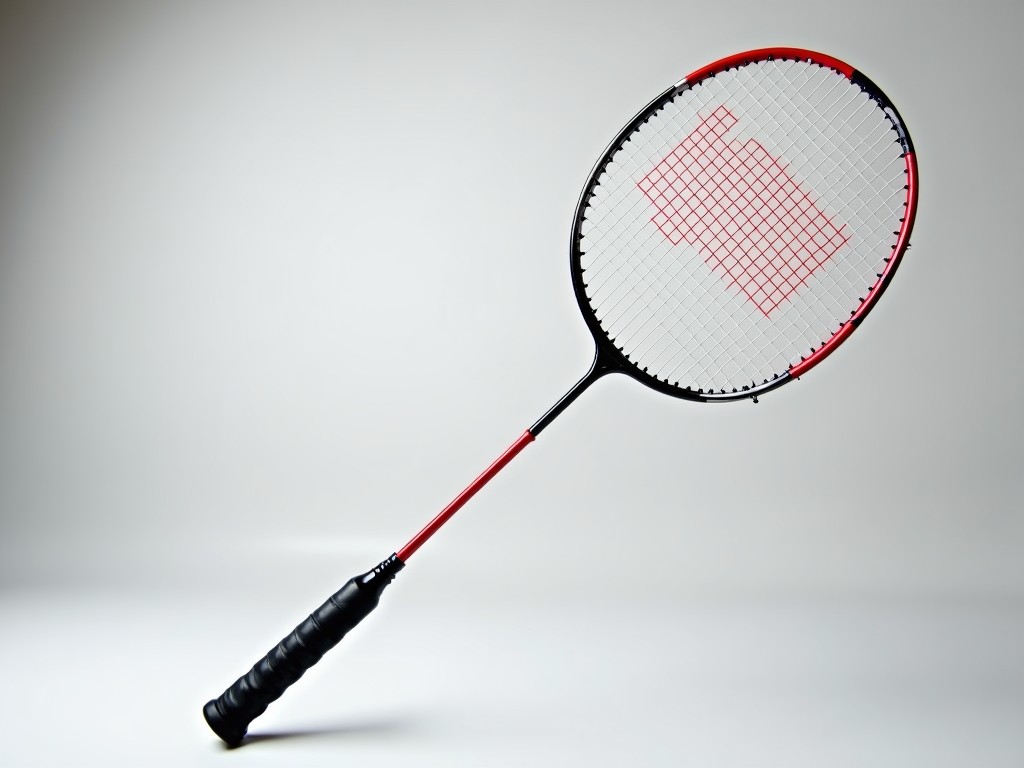
| Matte Carbon Finish | Professional Tournament Gear | Reduces glare under high-intensity stadium lighting.
 |
| Glossy UV Coating | Retail/Consumer Brands | Higher resistance to surface scratches and UV fading. |
| Textured Grip Paint | Club and Academies | Enhances moisture absorption for high-frequency use. |
Inspection Items and Test Methods
- Tension Retention Testing: We measure the drop in lbs after 48 hours of initial stringing to ensure the grommets do not deform.
- Impact Stress Analysis: Frames are subjected to weighted loads at the throat to identify the point of structural failure.
- Dimensional Verification: Laser calipers verify the head shape and shaft length within a 0.5mm tolerance.
- Vibration Profiling: Testing the damping frequency of the frame to ensure consistent shock absorption for the user.
Volume Planning and Lead Time
Production cycles are dictated by the complexity of the carbon layup. Custom mold creation requires an initial lead time of 4 to 6 weeks for steel-tooling. Once tooling is established, repeat orders of 1,000 units typically ship within a 30-day window.
Larger volumes allow for more consistent thermal curing cycles in the autoclave. Small-batch production may experience slight variations in resin distribution which affects the final weight of the racket. For retail-grade consistency, we recommend batches that ensure material uniformity across the entire inventory.
Ready to review the technical specifications for your private label?
Request a specification-review

