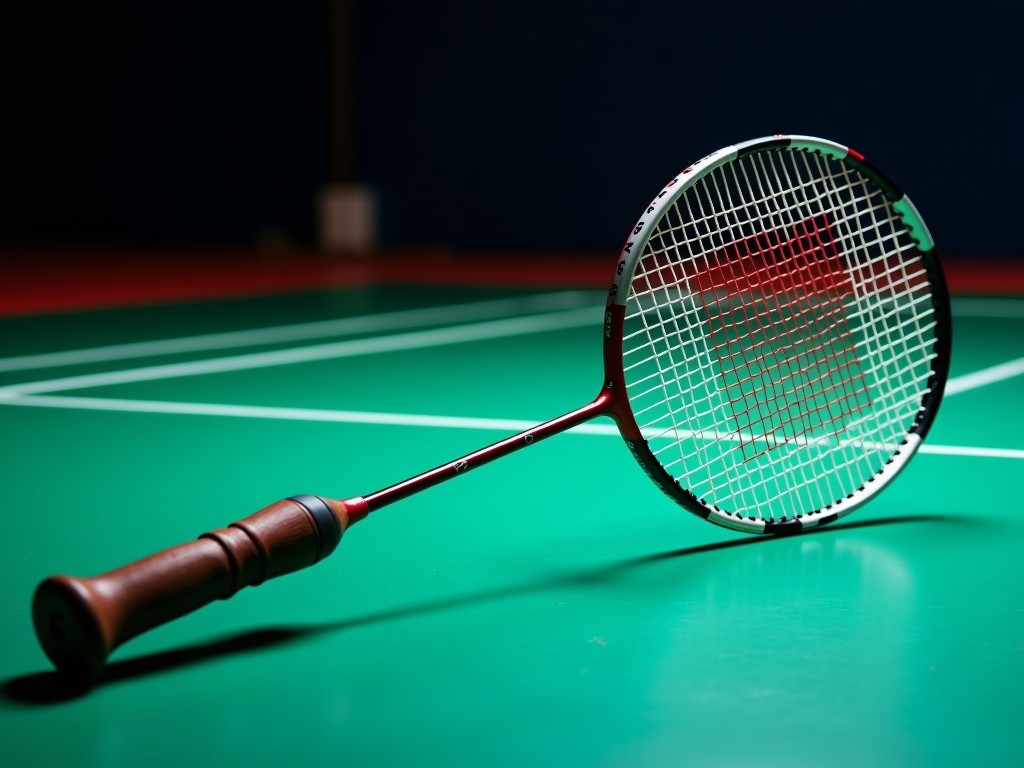
Wholesale badminton racket for professional players Factory: Specification, Ordering and Quality Notes
Repeat loading drives the failure. High-tension setups, often exceeding 30kg, place immense stress on the frame throat. Professional-grade rackets must utilize 40T high-modulus carbon fiber to prevent delamination during explosive smashes. The structural integrity of the layup determines how well the racket recovers its shape after impact, directly impacting the shuttlecock velocity consistency.
Weight and stiffness trade off against each other. A stiffer frame increases energy transfer but raises the vibration transferred to the player's arm. A lighter 3U or 4U frame allows for faster manipulation but increases the risk of material fatigue if the carbon modulus is not sufficient for high-level play.
Scope of Supply and Physical Form
The factory supply typically includes the un-strung frame, tapered shaft, and the grip assembly. For professional-tier orders, the factory focuses on the aerodynamic profile of the beam to reduce air resistance during the swing. The beam width varies from 7.0mm to 9.0mm, affecting the trade-off between torsional stability and swing speed.
Standard Component Specifications
- Main Frame: High-modulus carbon fiber with resin infusion control.
- Throat Joint: T-joint or slim-joint construction to minimize torque twist.
- Shaft: Variable flexibility design (Flexible to Stiff) based on player preference.
- Grip: Non-slip synthetic polyurethane with high-moisture absorption.
How to Choose Before Requesting a Quote
The limiting factor is rarely the headline specification; it is the balance point and swing weight distribution. A buyer must define the target player's style to ensure the carbon layup matches the mechanical demand.
- Identify the primary movement requirement:
- If the player requires explosive power for smashes:
- Selectheavy balance point (300mm to 315mm).
- Prioritize a thicker beam for increased stability under high tension.
- If the player requires rapid defensive recovery and drives:
- Select an even-balance or head-light frame (280mm to 295mm).
- Prioritize a thinner shaft profile to reduce aerodynamic drag.
- If the player requires explosive power for smashes:
- Determine the required tension tolerance:
- For club-level play (24-26kg), standard 30T carbon is sufficient.
- For professional play (28-32kg+), 40T or higher modulus carbon is mandatory to prevent frame collapse.
What Can Be Customised and What Cannot
Customization is primarily limited to the aesthetic and surface-level components. OEM buyers can specify custom paint patterns, heat-transfer decals on the frame, and specific material choices for the grip. However, the internal carbon fiber orientation and the geometry of the mold cannot be altered without developing entirely new steel molds, which significantly increases initial tooling costs and lead times.
| Feature Category | Customizable | Constraint |
|---|---|---|
| Visuals | Colors, Decals, Logos | Limited by paint adhesion limits |
| Material Specs | Grip material, Overgrip | Frame modulus is fixed per mold |
| Geometry | Shaft length (standard) | Frame shape requires new tooling |
Usage Scenarios and Buyer Segments
Professional tournament play demands a racket that can withstand high humidity and sweat-induced corrosion. In these environments, the grip material must maintain its friction coefficient to prevent slippage. Our factory processes utilize moisture-resistant coatings to ensure the finish does not peel after hours of intense play.
Brand managers targeting sports academies often require consistency across hundreds of units. If one racket in a batch of 500 has a balance point significantly different from the others, it disrupts the player's muscle memory. We mitigate this by calibrating weight scales to a +/- 2g tolerance across production runs.
How Consistency Is Held Across Batches
Batch consistency is maintained through automated pre-preg cutting and temperature-controlled curing ovens. These methods ensure that the resin-to-fiber ratio remains uniform in every frame. This uniformity prevents "weak spots" that lead to premature cracking under high-tension strings.
Every batch undergoes a tension stress test where a sample frame is subjected to its rated load to measure the deformation rate. If the frame does not return to its original state, the batch is flagged for rejection or diverted to lower-tier applications.
Stock Availability and Reorder Planning
Reorder planning must account for the lead time of specialized carbon fiber raw materials. Standard professional frames are often kept in base stock, but custom OEM-branded rackets require a 60-90 day production window. Importers should maintain a safety stock of 20% of monthly volume to mitigate shipping delays during peak tournament seasons.
Ordering, Tooling and Lead-Time Questions
Tooling costs for new frame geometries are a one-time investment involving steel molds. Once these molds are established, the unit cost drops, but the flexibility remains locked. For standard frames, the lead time is primarily determined by the volume and the complexity of the custom-painting process.
Frequently Asked Questions
Typically, these frames are rated up to 32kg. Exceeding this increases the risk of micro-fractures in the carbon matrix.
We use synthetic polyurethane materials that do not absorb water, preventing the grip from becoming heavy or losing traction in tropical climates.
The minimum order is usually 300 units per colorway to offset the costs of the specialized paint-mask setup.
Need to verify carbon modulus specifications for your brand line?
Request a Technical Sample and Quote

