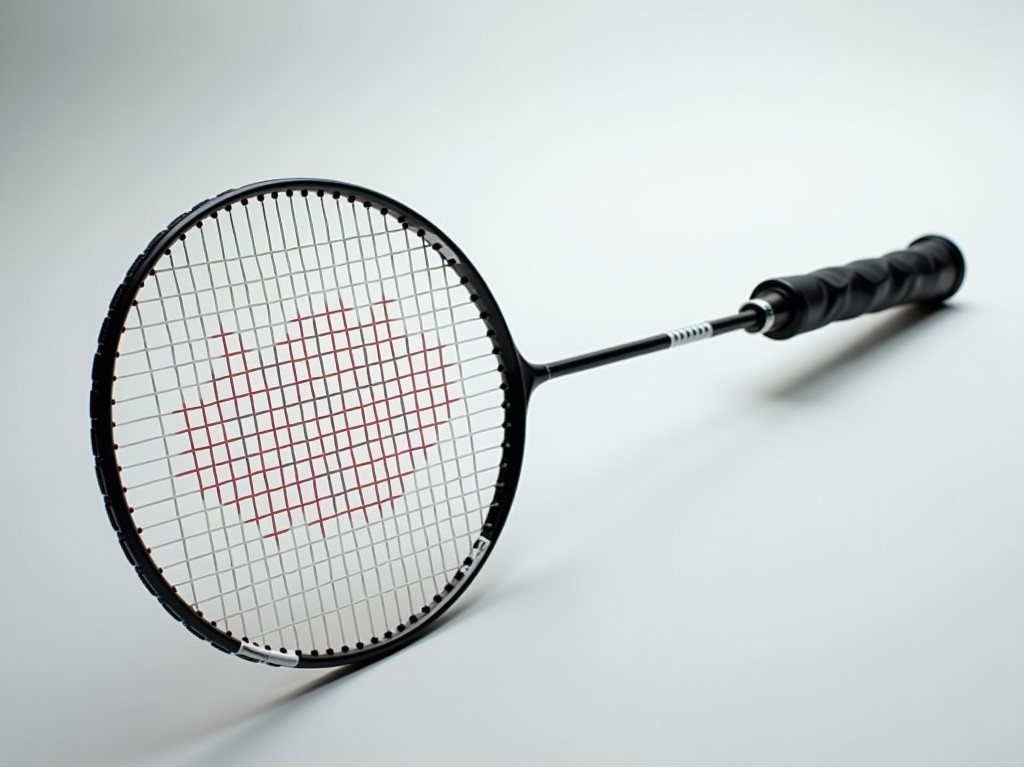
Wholesale light weight badminton racket Factory - Bulk Supply and Specification Guide
Replacement rate, not unit price, dictates the long-term profitability of private-label equipment for distributors serving de-centered sports academies and high-volume retail channels. Lightweight rackets, typically categorized in 4U (80–84g) and 5U (75–79g) ranges, require specific material densities to maintain structural integrity under the lateral forces of high-speed smashes. When a factory prioritizes weight reduction without adjusting the carbon modulus, the resulting frame often suffers from premature fatigue at the throat when tension exceeds 26kg.
Scope of Supply and Physical Form
Our production output focuses on high-modulus graphite fiber frames designed for rapid-swing-and-recovery cycles. We utilize a multi-layered layup process to ensure that the wall thickness remains consistent between 1.5mm and 2.2mm across the shaft length. This consistency prevents the balance point drift that frequently leads to wholesale returns when players notice inconsistencies during long-duration tournament cycles.
Technical Configuration Note
Lightweight frames (5U) necessitate a reinforced T-joint construction to prevent torsional instability. Without a carbon-fiber wrap at the junction, the reduced mass significantly lowers the frame's ability to recover energy rapidly after an off-center hit.
| Parameter-Category | Standard Range | Tolerance Limit |
|---|---|---|
| Total Weight (U-rating) | 75g - 84g | ±2g |
| Balance Point | 290mm - 305mm | ±5mm |
| Max Tension | 24kg - 32kg | N/A |
Design Constraints Behind the Specification
The physics of a lightweight racket involves a direct inverse relationship between frame mass and structural stiffness. To achieve a sub-80g weight, the factory must employ higher-modulus carbon fibers, which increases the material cost per unit. This trade-off is critical for buyers to understand: a lower price point usually indicates a lower modulus fiber that is prone to buckling under high-tension strings.
Cheaper stock options fail at the worst point in the season because they use low-grade resins that become brittle in high humidity. We utilize an epoxy-stabilized resin system to ensure the frame does not delaminate when exposed to tropical climates where humidity levels exceed 85%.
Buying Mistakes That Lead to Returns
| Operational Stress Condition | Reported Failure Mode | Preventative Technical Spec |
|---|---|---|
| High string tension (28kg+) | Frame throat warping | High-modulus carbon reinforcement |
| High humidity/sweat | Grip delamination | UV-resistant resin infusion |
| Impact-heavy play | Lateral head cracking | T-joint carbon wrap density |
What Can Be Customized and What Cannot
Customization for private-label buyers is primarily limited to surface aesthetics and peripheral components. We offer full-frame heat decals, silk printing, and various grip material selections (synthetic vs. PU). However, the internal frame geometry—specifically the aerodynamic profile and the isometric hoop angle—is fixed by the steel molds used in production.
Tooling amortisation decides the feasibility of custom frame shapes. While we can modify the weight distribution by adding weights, a completely new frame geometry requires a significant tooling investment which is typically only viable for orders exceeding 5,000 units.
OEM and ODM Programme Structure
Our OEM program follows a structured approval workflow to ensure technical alignment before mass production. The process begins with a technical specification sheet where the buyer defines the target weight, followed by a physical sampling phase to verify the balance point and swing weight.
- Technical drawing review and material modulus selection.
- Digital artwork approval and color-matching verification.
- Pre-production sample testing for tension and vibration.
- Final specification sign-off for batch production.
Inspection Items and Test Methods
Quality control is maintained through rigorous testing that targets the specific failure points of lightweight equipment. Every batch undergoes a weight check to ensure the ±2g tolerance is met across all units. We also perform static tension testing to ensure the frame can handle the advertised maximum tension without permanent deformation.
Tension Analysis
Frames are mounted on digital tension gauges to measure the rebound of the grommets and the stability of the frame under load.
Impact Testing
Randomly selected units undergo drop tests from specific heights to verify the shock resistance of the T-joint and head.
Volume Planning and Lead Time
Lead times are contingent upon the complexity of the carbon layup and the volume of the order. Standard lightweight frames typically have a production lead time of 30–45 days after artwork approval. For custom-molded frames or specialized material blends, this timeline extends to 60 days to account for the curing time of the specialized resin layers.
Questions Buyers Ask Before Ordering
What is the minimum order quantity for custom-branded lightweight rackets?
The MOQ for custom decal application is 500 units per colorway, while unbranded stock frames require a minimum of 50 units.
Can these rackets handle 30kg of string tension?
Yes, provided the frame is specified with high-modulus carbon fiber; standard-grade frames are rated up to 26kg to prevent structural failure.
How do you ensure weight consistency across the batch?
We utilize precision digital scales at the final assembly stage; any unit falling outside the ±2g tolerance is re-weighed or rejected.
Ready to finalize the technical specifications for your private-label line?
artwork-and-branding-review

