Specifying wholesale badminton rackets Company for Wholesale and OEM Orders
On a club programme that reorders twice a season, the primary challenge is maintaining structural integrity across batches of 500 units. When low-grade carbon fiber is utilized, the throat of the racket often develops micro-fractures under high tension loads exceeding 28kg. We utilize 40T high-modulus graphite to ensure the frame maintains its stiffness rating through thousands of high-impact cycles without permanent deformation. This consistency is what allows a distributor to guarantee a uniform product experience to players who expect predictable equipment feedback.
Low-cost manufacturers often employ inferior epoxy resins that lead to delamination when exposed to high humidity in indoor gym environments. This structural failure causes the carbon layers to separate within months of competitive play. Our process involves a vacuum-pressure resin infusion to ensure the bond between carbon weaves remains chemically stable and mechanically rigid, preventing the peeling common in cheaper-market alternatives.
Where Cheaper Alternatives Fall Short
Weight drift is a frequent complaint point in mass-produced equipment where the molding process is not calibrated. A 4U racket intended to weigh 83g may fluctuate by 5 grams across a production run, significantly altering the swing weight and balance point. We implement rigorous weight-control protocols to ensure every unit stays within a +/- 1.5g tolerance. This precision prevents the return rates seen by distributors who receive inconsistent stock in a single shipment.
Technical Trade-offs
Choosing a higher-modulus carbon increases power transfer but also increases vibration transmitted to the arm. Conversely, a lower-modulus frame provides more flexibility for recreational players but increases the risk of frame collapse under high-tension stringing.
Measured Performance in Real Use
String tension stability is the true metric of a professional racket. In competitive play, the frame must withstand the constant stress of high-tension stringing without losing its geometric shape. Our frames utilize a reinforced carbon joint in the throat area to distribute stress more evenly across the head. This construction ensures that the racket does not warp after multiple re-stringing cycles, extending the service life for club academies.
| Finish Type | Application Method | Durability Rating |
|---|---|---|
| Matte Finish | Electro-static spray | High (Scratch Resistant) |
| Gloss Finish | Multi-layer lacquer | Medium (High Shine) |
| Metallic Flake | Vapor deposition | Medium (UV Sensitive) |
Specification Range and Customisation Limits
Frame geometry changes are limited by the physical properties of the carbon layup. While we can offer various aerodynamic profiles, such as aero-shaped or isometric-head frames, the structural stiffness varies with each shape. We provide specifications ranging from 3U (85-89g) to 5U (75-79g) weights, allowing distributors to cater to different skill-level segments.
Customisation Options and Their Limits
Personalized branding is applied via heat-transfer decals or silk-screening. Screen-printed inks are prone to abrasion from string contact if not coated with a protective clear layer. We apply a multi-layer top coat to prevent the logo from peeling during high-velocity impacts. However, complex gradient prints are limited by the resolution of the silk-screen process on curved surfaces of the racquet.
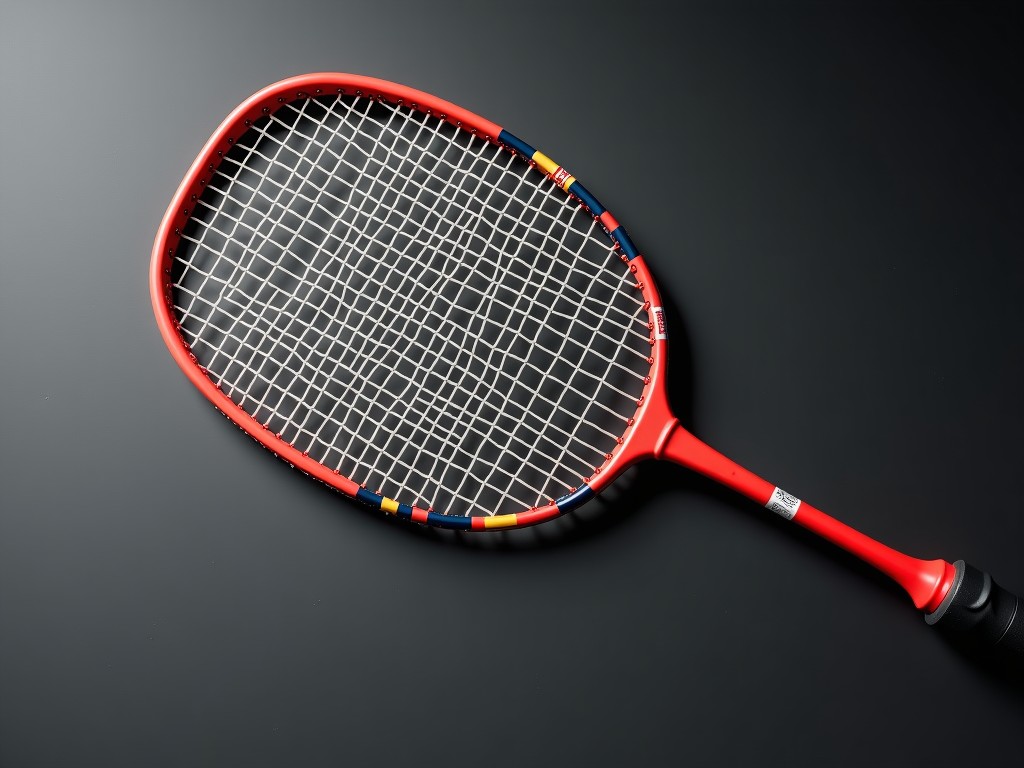
- Custom grip colors and materials (synthetic vs natural PU).
- Personalized grommet patterns for specific string tension requirements.
- Engraved shaft identifiers for premium-end professional lines.
Working as a Production Partner, Not a Catalogue Supplier
When a brand extends an existing range, they require a partner who understands the existing technical data. We do not simply offer off-the-shelf items; we adjust the carbon density to match your specific stiffness requirements. This ensures that a new racket in your series feels like an evolution of the previous model, maintaining brand trust among loyal customers.
What Gets Checked Before Shipment
Quality control is handled through statistical sampling and physical testing. We perform tension testing on 10% of every batch to verify the frame holds the specified kg load without deformation. We also conduct dimensional checks to ensure the head profile matches the approved mold to within a millimeter. These steps minimize the risk of defective units reaching your retail-ready stock.
Keeping Repeat Orders Supplied
Maintaining core mold profiles allows for shorter lead times on repeat orders. By keeping the digital molds of your personalized designs on file, we bypass the initial tooling phase for subsequent production runs. This capability is vital for distributors who need to restock quickly during seasonal peaks or tournament cycles.
Ordering, Tooling and Lead-Time Questions
| Order Type | Standard Lead Time | MOQ |
|---|---|---|
| Prototype Tooling | 30-45 Days | 5 Units |
| Bulk Production | 45-60 Days | 200 Units |
| Repeat Orders | 21-30 Days | 100 Units |
Ready to finalize your production specifications?
Request an artwork and branding review

