wholesale professional badminton rackets factory - Bulk Supply and Specification Guide
Replacement rate, not unit price, dictates the total cost of ownership for academy-level equipment. When procurement officers evaluate bulk orders for clubs, the initial cost of the frame is secondary to the frequency at which the material fails under repeated high-intensity impact cycles.
A factory must focus on the consistency of the carbon fiber layup to ensure that every unit in a 500-piece shipment maintains the same balance point and swing weight. Variations in weight of more than 2 grams or a shift in balance point by more than 3mm across a batch can lead to inconsistent player performance, resulting in high return rates from professional training environments.
Scope of Supply and Physical Form
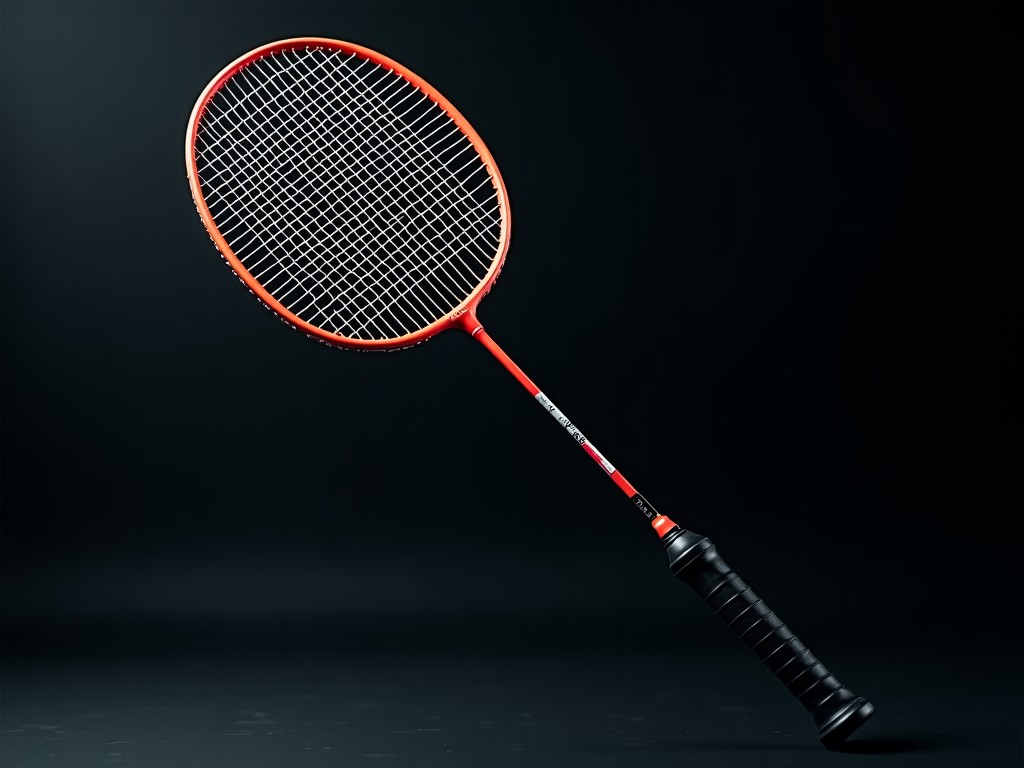
The physical geometry of the racket determines its aerodynamic drag and sweet spot area. We produce isometric head shapes that expand the effective hitting zone compared to traditional oval frames, reducing the margin for error on off-center strikes. The frame thickness typically varies between 6.6mm and 7.2mm to balance aerodynamic speed with structural rigidity.
Technical Configuration Standards
Standard production orders require specific weight and tension limits. We test all grommet sets for tension stability up to 30kg to ensure the frame does not undergo permanent deformation during the stringing process.
| Parameter | Standard Grade | Professional Grade |
|---|---|---|
| Weight Class (3U/4U/5U) | 85g - 89g | 78g - 84g |
| Balance Point | Even-balance | Head-heavy (295mm-305mm) |
| Max Tension | 24kg | 32kg |
Construction Method and Its Effect on Consistency
Structural integrity in a racket is a function of the carbon-fiber modulus and the resin-system interface. Using high-modulus carbon fiber (HMCF) allows for thinner walls without sacrificing frame stiffness, which reduces air resistance. However, the trade-off is increased brittleness if the carbon-fiber orientation is not precisely engineered to dissipate impact energy.
The manufacturing process involves pre-impregnated carbon sheets wrapped around a precision mold. This ensures a uniform resin-to-fiber ratio, preventing the internal voids that lead to delamination in cheaper alternatives. We control the curing cycle temperature to minimize internal stresses, which are the primary cause of frame warping in large batches.
Material Analysis
Standard graphite constructions offer higher flexibility, which is suitable for recreational-level academy play where shock absorption is prioritized over raw power transfer and tension stability.
Reinforced Layup
Nano-infused resins increase the matrix strength, allowing the frame to maintain its flex recovery profile even after thousands of cycles of high-velocity smashes.
Assumptions Buyers Should Stop Making
Cheaper stock options fail at the worst point in the season, usually during tournament play when demand for replacement rackets is highest. Many importers assume a lower unit price indicates better savings, but the reality is often a frame cracking at the throat within three months of heavy use.
Tooling amortisation decides the long-term viability of a custom-branded racket. If a buyer demands a unique frame shape without investing in high-precision steel molds, the resulting structural consistency will be compromised, leading to unpredictable material failure rates across the production run.
| Usage Condition | Typical Failure Mode | Mitigation Specification |
|---|---|---|
| High-tension smashing (28kg+) | Throat cracking | Reinforced T-joint carbon-fiber layup |
| Prolonged academy use | Frame warping | High-modulus graphite with stable resin matrix |
| High humidity storage | Paint delamination | UV-resistant primer-base coating |
Working as a Production Partner, Not a Catalogue Supplier
Effective bulk procurement begins with a rigorous technical agreement before the first carbon sheet is cut. We provide CAD drawings that define tolerances for frame weight and balance distribution within ±0.5mm. This ensures that the final product matches the specific performance requirements of the buyer's target demographic.
Our OEM services include prototype approval phases where material testing results are shared. By validating the flex-recovery rate of a sample early, we eliminate the risk of a mass-production batch failing to meet professional-grade standards. Request a technical specification sheet here.
Care, Storage and Service Life
The service life of a professional racket is heavily influenced by thermal exposure. Storing finished rackets in environments exceeding 45°C can cause the resin matrix to soften, leading to a permanent loss of frame stiffness and a shift in balance point.
To maintain the structural integrity of the frame, rackets should not be left at high tension for long periods when stored. The constant stress on the grommets and the frame can lead to micro-fractures that eventually manifest as catastrophic failure during a high-impact stroke.
Ready to discuss your bulk production requirements?
Request a sample

