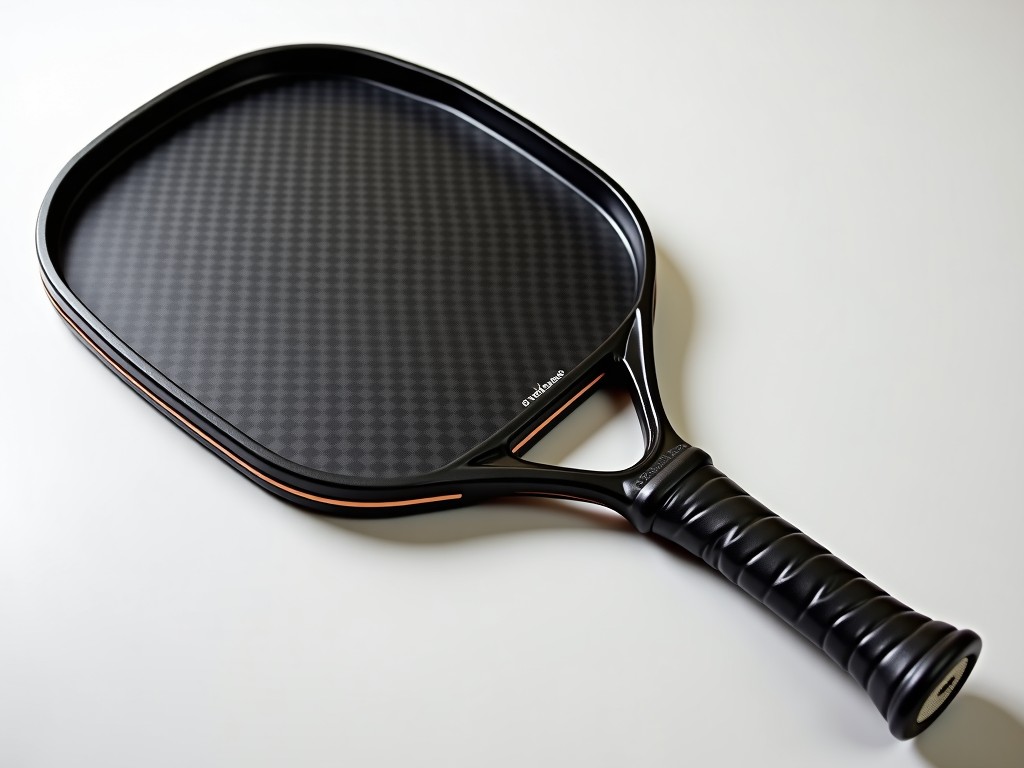
Custom beach tennis racket carbon fiber Factory - Bulk Supply and Specification Guide
Replacement rate, not unit price, dictates the actual ROI for academy-level equipment procurement. Lower-grade resin systems often lead to delamination at the throat after consistent exposure to high humidity and salt air. Selecting a pre-pregated carbon fiber process maintains structural integrity across 500+ hours of competitive play.
What Actually Determines Performance
Cheaper stock options fail at the worst point in the season when the internal EVA core loses its rebound due to thermal fatigue. A high-density EVA foam provides a consistent ball-coefficient response, whereas cheaper foams soften after repeated impact. The structural stiffness of the carbon layup determines how much energy returns to the ball during high-velocity serves.
Layup Density
12K or 24K carbon weaves balance weight reduction against impact resistance for professional-grade tournament play.
Core Density
EVA Shore hardness from 40 to 50 prevents core bottoming out during heavy play.
Surface Finish
Matte-resistant coatings prevent abrasion from sand contact and high-friction grips.
Size, Weight and Specification Range
Tooling amortisation decides whether to invest in custom molds or utilize standard frames for private-label distribution. Standard dimensions typically range from 455mm to 500mm in length, with weight targets hovering between 320g and 340g.
| Component | Material Option | Failure Mode | Mitigation Strategy |
|---|---|---|---|
| Frame | 30K / 24K Carbon | Throat Cracking | Reinforced resin joints |
| Core | EVA Foam | Compression Loss | High-density injection |
| Surface | Glass/Carbon Weave | Delamination | UV-stabilized coating |
Segment-Specific Requirements
Academy-level rackets require higher vibration absorption to prevent fatigue in younger players during long training sessions. Professional-grade models prioritize frame stiffness and weight distribution to maximize power transfer in smashes.
Technical Note:
Exposure to salt water and sweat necessitates a non-porous surface finish. Without a marine-grade moisture barrier, the graphics will fade and peel within one season of heavy coastal use.
Volume Planning and Lead Time
Production cycles for carbon fiber rackets depend on the curing time of the resin systems. Bulk orders of 500+ units typically follow a 45-60 day lead time, whereas smaller private-label batches may require additional time for mold validation.
Export Packaging and Handling Protection
Individual poly-bagging is mandatory to prevent surface abrasion on the carbon fiber weave during transit. Each pallet is reinforced with desiccant packs to manage internal humidity levels during long-haul ocean freight transport.
Questions Buyers Ask Before Ordering
- Can the balance point be adjusted? Yes, by varying weights in the head or handle during the assembly phase.
- What is the MOQ for custom graphics? Custom printing typically starts at 100 units per design to maintain cost-efficiency.
- Are the frames UV-resistant? All carbon fiber models include a UV-protective layer to prevent yellowing and resin degradation.
Ready to review technical specifications for your private-label brand?
Request a formal quotation-review

