OEM artengo beach tennis balls Wholesale - Bulk Supply and Specification Guide
Primary Specification Trade-off
Selecting beach tennis balls requires balancing core compression against felt abrasion resistance. A higher density core increases rebound consistency but accelerates felt thinning when exposed to abrasive sand.
Material Options and Their Trade-offs
Weight and stiffness trade off against each other. In wholesale beach tennis applications, a slightly heavier rubber core provides a predictable flight path but risks internal deformation under high-impact play. Conversely, a softer core absorbs energy, suited the sport's signature slow-ball dynamics but loses its bounce height faster as temperature fluctuations affect the internal air.
The felt covering is the first point of mechanical failure in coastal environments.Pure wool blends offer superior grip but absorb moisture, which increases the ball's weight during play. Synthetic-nylon blends maintain their structural integrity and weight after multiple sand-exposure cycles, though they lack the "thwack" sound preferred by professional-grade tournament players.
How It Is Built and What That Changes
Repeat loading drives the failure. Most beach tennis balls utilize a pressureless construction to ensure the ball does not lose its internal air pressure over time. This eliminates the need for pressurized canisters but places higher structural demands on the seam. We utilize a machine-stitched seam rather than simple glued heat-seams to prevent delamination when the ball expands and contracts during heat-heavy matches.
The limiting factor is rarely the headline specification. It is the tension of the thread used to join the two felt panels. If the tension is too low, the seam bulges under impact; if too high, the thread cuts through the felt fibers, leading to premature ball bursting in the field.
Specification Range and Customisation Limits
Standard beach tennis balls typically range in weight from 57g to 64g with a diameter of 65mm to 68mm. For OEM orders, we can adjust the core density to meet specific rebound requirements for different altitudes or environmental conditions. A high-wind environment demands a slightly more mass-to-surface-ratio to prevent the ball from drifting off-course.
Option Comparison by Usage Level
| Grade | Material Type | Service Life |
|---|---|---|
| Club/Recreational | Recycled Nylon | 15-20 Hours |
| Tournament | High-Density Synthetic | 30-40 Hours |
| Professional | Premium Wool/Nylon Blend | 50+ Hours |
Customisation Options and Their Limits
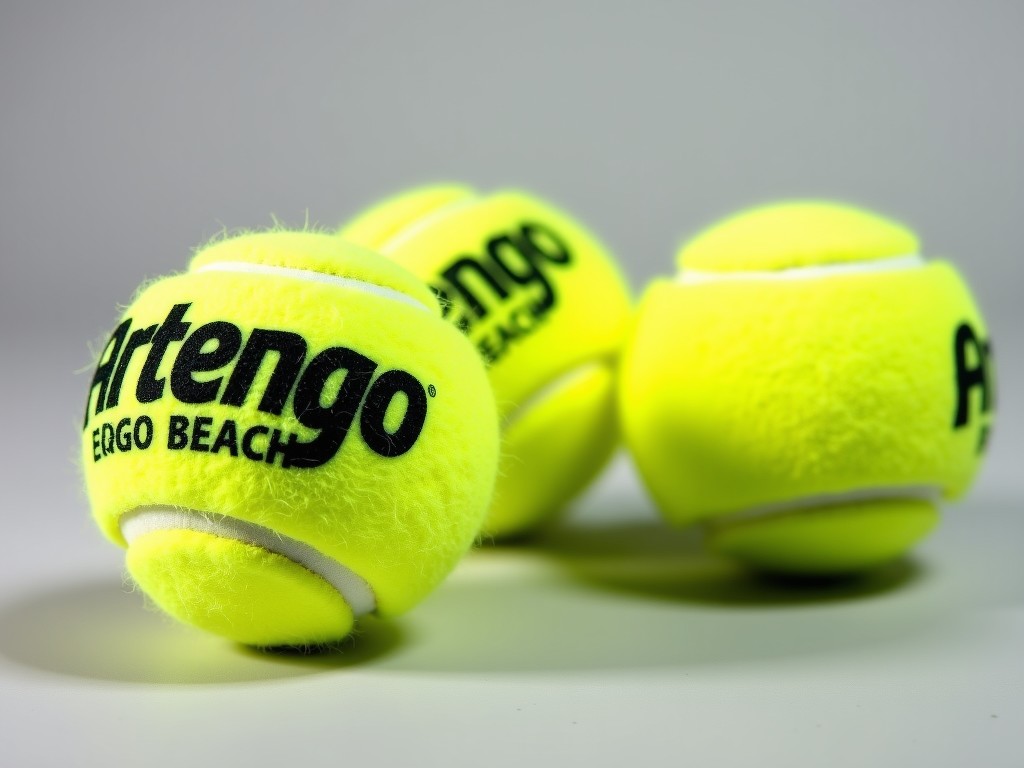
Branding is applied via screen-printing or heat-transfer sublimation. Screen-printing is more durable for high-volume wholesale but can feel thick on the surface of the felt. We recommend heat-transfer for complex logos to ensure the surface remains flush with the ball fibers, preventing aerodynamic drag. Request custom branding samples for your specifications.
Working as a Production Partner, Not a Catalogue Supplier
Private-label buyers require more than just a product; they require batch consistency to ensure that the last ball in a 5,000-unit order behaves exactly like the first sample approved. We provide batch traceability for every production run, allowing procurement officers to track specific core-formulas or felt batches used in their shipment.
Quality Control and Batch Consistency
| Test Metric | Method | Tolerance |
|---|---|---|
| Rebound Height | Drop test (2m surface) | ±5% |
| Weight Variance | Electronic scale | ±0.5g |
| Seam Integrity | Tensile pull | No rupture < 150N |
Setup, Use and Replacement Parts
To maximize service life in wholesale inventory, balls must be stored in climate-controlled environments. Cold causes the rubber core to harden, leading to inconsistent bounce. For club distributors, we recommend a replacement cycle based on play hours, as felt abrasion is the primary indicator of performance degradation regardless of the ball's internal condition.
Ready to finalize your OEM specifications for beach tennis balls?
Request a Technical Sample and Bulk Quote

