Primary Selection Trade-off: Weight vs. Structural Integrity
Junior padel rackets require a balance between low mass (typically 200g–240g) and structural integrity to prevent elbow strain in developing players. Lower-density EVA cores increase comfort and power assistance but risk faster foam collapse and delamination under high-impact play compared to higher-density variants.Specifying b2b newest junior padel racket supplier for Wholesale and OEM Orders
How It Performs in Use
Younger players lack the swing speed and muscle mass required to compress adult-specification frames. A junior-specific balance point, usually head-light, extends the sweet spot across the smaller face, allowing for more forgiving off-center hits without the torque that typically causes wrist injuries.
Vibration absorption is the primary metric for academy procurement officers. By utilizing soft-grade EVA cores (SH A hardness rating), the frame dampens high-frequency shocks upon ball impact before they reach the player's arm, reducing the rate of overuse complaints during multi-hour training sessions.
Material Options and Their Trade-offs
Choosing between fiberglass and carbon fiber dictates the racket's lifespan and response. Fiberglass faces offer a higher flex-coefficient, which benefits beginners who struggle to generate power, but the material is more prone to surface fatigue. 3K or 12K carbon weaves maintain frame stiffness over longer cycles but require better technical proficiency to utilize effectively.
Fiberglass Construction
High-flexibility surface ideal for entry-level school academy programs.
- Lower unit cost for high-volume retail
- Increased "trampoline" effect
- Higher risk of surface micro-cracking over time
Carbon Fiber Construction
Low-weight ratio with high stability for competitive juniors.
- Premium price point positioning
- Superior impact resistance
- Stiffer response for precise control
Construction Method and Its Effect on Consistency
Vacuum molding ensures that the EVA core is bonded uniformly to the face layers without air pockets. Manual layup methods often result in inconsistent adhesive thickness at the throat, which leads to premature delamination in the first three months of heavy use. A standardized injection-molding process maintains a weight variance of only ±3g across a 1,000-unit batch.
Consistency in the bridge reinforcement is equally vital for private-label brands. If the bridge width varies by more than 1mm, the aerodynamic profile of the racket shifts, leading to high return rates from distributors who expect uniform performance across their entire inventory.
Where This Product Beats Standard Alternatives
Standard adult rackets adapted for smaller players are often too heavy and have an incorrect grip diameter, leading to poor technique development. Our junior-specific geometry utilizes a shorter beam (typically 33mm vs the standard 38mm) to lower the swing weight, making the racket maneuverable for smaller hand spans.
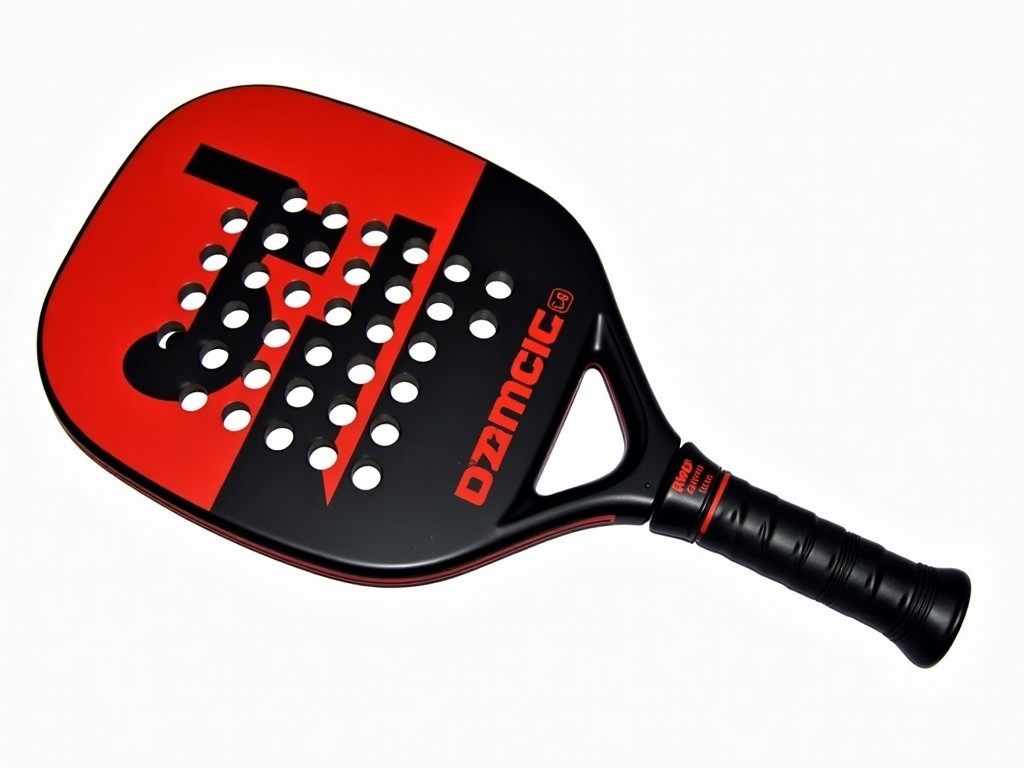
| Component | Junior Optimized Spec | Standard Adult Frame |
|---|---|---|
| Weight Range | 200g - 240g | 350g - 375g |
| Core Density | Soft EVA (19-22 HR) | Hard EVA (35-45 HR) |
| Grip Size | Size 0 - 1/8 | Size 4 - 4/16 |
Usage Scenarios and Buyer Segments
Sports academies prioritize durability and ease of maintenance, as rackets are frequently checked out by rotating student groups. Retail chains focus on aesthetic variety and brand alignment, requiring high-definition print finishes that resist abrasion during display and handling. Distributors look for batch-level consistency to ensure that every reorder matches the performance profile of the initial shipment.
Capacity, Tooling and Scheduling
Tooling for new junior molds requires a 4-to-6-week lead time for CNC-machining and testing. Once molds are verified, production capacity typically reaches 5,000 units per month under standard line configurations. Seasonal launches require planning 90 days prior to the target date to secure production slot time and account for material curing cycles.
Export Packaging and Handling Protection
International shipping demands moisture control to prevent humidity-induced warping. We utilize individual poly-wrapped sleeves within reinforced corrugated master cartons to prevent surface-to-surface friction during transit. Desiccant packs are included in each master carton to maintain a stable internal environment during long-sea freight transport.
Ready to finalize your junior padel line specifications?
discuss project specifications with our engineering team

