best price padel tennis rackets for sale - Bulk Supply and Specification Guide
The limiting factor is rarely the headline specification when sourcing padel rackets at scale; rather, it is the consistency of the core density and the structural integrity of the face bond. For private-label buyers and wholesale distributors, the choice between EVA (Ethylene Vinyl Acetate) and foam rubber cores determines the service life of the unit. High-density EVA maintains its rebound properties over thousands of impacts, whereas cheaper foam variants tend to lose structural elasticity after repetitive play.
Technical Trade-off: Core Density
A softer 3mm EVA core increases the sweet spot for intermediate players but increases the risk of delamination under high-velocity impacts. A stiffer 4mm high-density core provides maximum power and preserves frame shape, but requires better technique to avoid vibration fatigue.
How It Performs in Use
Exposure to sweat and high humidity accelerates the degradation of surface resins in poorly manufactured rackets. Professional-grade rackets utilize a UV-resistant matte coating to prevent the paint from becoming brittle when stored in outdoor club environments. The bond between the carbon layup and the internal core must withstand significant thermal expansion and contraction without developing internal cracking at the throat of the frame.
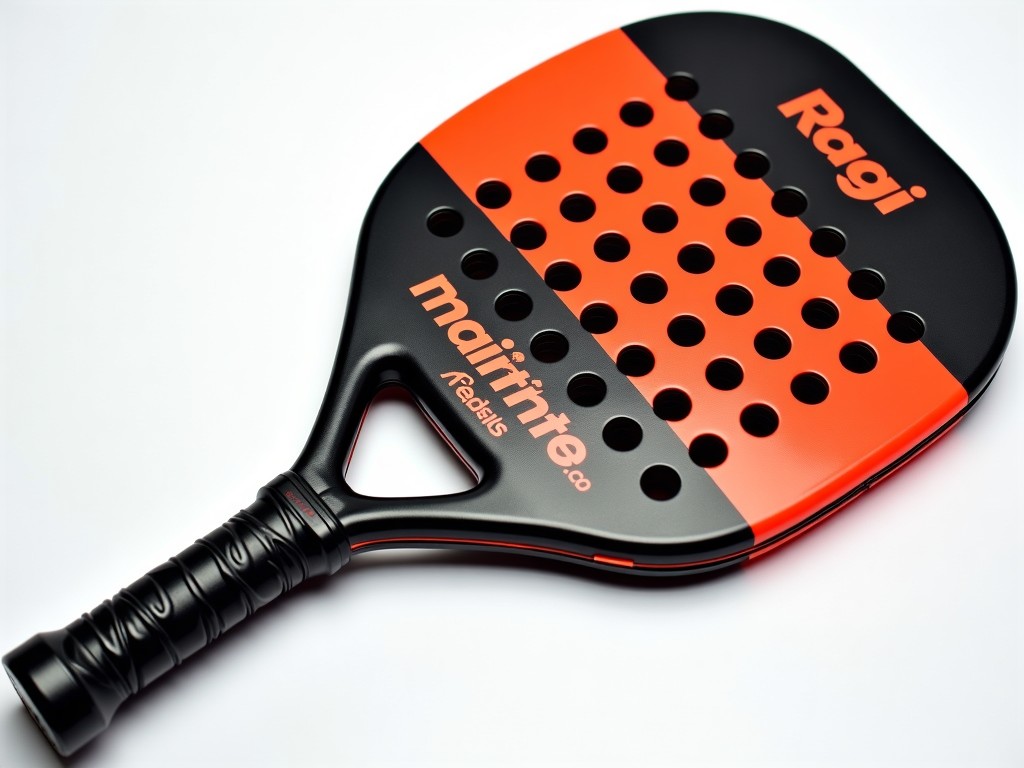
Serviceability is also dictated by the perforation pattern. Larger holes reduce aerodynamic drag but create stress concentration points that can weaken the face over time. Our manufacturing process utilizes a reinforced perimeter bridge to distribute load around these holes, ensuring the frame does not warp during high-torque smashes.
Where This Product Beats Standard Alternatives
Weight and stiffness trade off against each other in the construction of the frame walls. Standard entry-level rackets often use fiberglass, which is flexible but lacks the energy transfer of carbon fiber. By integrating 12K or 18K carbon weaves, we achieve a higher RA rating (stiffness) without increasing the overall weight of the racket.
| Feature | Fiberglass Hybrid | Carbon Fiber (12K/18K) |
|---|---|---|
| Power Transfer | Moderate (Flexible) | High (Rigid) |
| Durability Rating | Prone to abrasion | High impact resistance |
| Weight Distribution | Heavier | Optimized balance |
Specification Range and Customisation Limits
Fatigue appears at the stress concentration points where the handle meets the head. To manage this, we vary the beam thickness from 22mm to 38mm to accommodate different player level requirements. A thicker beam increases the stability of the racket but raises the swing weight, while a thinner profile allows for faster maneuverability required in defensive play.
Weight Range
Typically 340g to 375g with +/- 5g tolerance per batch.
Balance Point
Low (265mm) to High (275mm) based on core distribution.
Core Thickness
Standard 38mm; custom 20mm available for control.
Customisation Options and Their Limits
Surface texture is the primary variable for spin-control. We offer sandblasted finishes which provide a grit-like texture to increase ball dwell time. However, these textures are more susceptible to wear compared to standard 3D-molded rubber patterns.
- Custom UV-printed decals (limited to 4 spot colors).
- Removable bumper protectors for increased impact life at the frame.
- Customized hole patterns for specific aerodynamic de-tuning.
Who Uses It and Where It Matters
Padel academies require high-volume orders of rackets that can withstand daily use by multiple students. For these buyers, the focus is on the cost-per-hour-of-play. Retail chains, conversely, prioritize the aesthetic consistency and grip ergonomics to ensure high-turnover rates in competitive environments.
| User Segment | Preferred Material | Key Metric |
|---|---|---|
| Academies | Fiberglass / Foam Core | Impact Resistance |
| Professional Clubs | 18K Carbon / EVA Pro | Power & Control |
OEM and ODM Programme Structure
Our OEM service allows for private-labeling on existing frame geometries to minimize lead times. For brands seeking unique designs, the ODM program involves custom tooling for frame shapes and weight distribution mapping. This process requires an initial investment in steel molds to ensure dimensional consistency across large production runs.
Export Packaging and Handling Protection
Delamination during sea freight often occurs if rackets are not packed with sufficient vertical support. We utilize individual shrink-wrap for each unit to prevent surface-to-surface abrasion. Master cartons are reinforced with corrugated cardboard dividers to prevent the weight of the stack from crushing the lower layers during containerization.
Ordering, Tooling and Lead-Time Questions
Minimum order quantities (MOQ) for stock-frame rackets are typically 500 units per specification. Custom tooling for new frame shapes adds 30-45 days to the production cycle. Lead times for standard bulk orders range from 30 to 60 days depending on raw material availability for carbon resins.
What is the tolerance for racket weight?
We maintain a weight tolerance of +/- 5 grams across the entire batch to ensure consistent feel for the buyer's customers.
Can we specify different core densities?
Yes, we can match specific EVA hardness ratings (Shore C) to meet your brand's performance requirements.
How long does the surface coating last?
Standard UV-resistant coatings are rated for 12 months of regular indoor/outdoor use before visible fading occurs.


