china carbon fiber padel racket supplier - Bulk Supply and Specification Guide
Where Cheaper Alternatives Fall Short
Before comparing quotations, procurement officers must evaluate the failure points of the face-core interface. Low-cost manufacturers often utilize fiberglass faces or low-grade resin systems that lead to delamination within the first 30 hours of competitive play. When the face separates from the EVA foam core, the racket loses its power rebound, resulting in inconsistent ball exit speeds. True carbon fiber construction provides a structural bond that maintains the frame stiffness even after repeated high-velocity impacts.
Weight drift is another common complaint in sub-standard batches. If a batch shows a variance of more than 50 grams between the head and the handle end, the balance point shifts, altering the player's timing. Professional-grade manufacturing lines maintain a weight tolerance of +/- 3 grams across the entire run, ensuring that every racket in a club-level order performs identically for the members.
Construction Method and Its Effect on Consistency
Unit price and service life diverge based on the resin-to-fiber ratio and the molding process. Manual layup methods often result in air pockets, which act as stress concentrators where cracking begins. Vacuum assisted transfer molding (VARTM) ensures a uniform distribution of resin throughout the carbon layers, eliminating these voids and increasing the fatigue life of the throat area.
The core material also dictates the "feel" of the racket. High-density EVA foam (60 degrees) offers longer structural life, whereas lower-density foams provide more immediate comfort but bottom out faster over seasonal use. Distributors must match the core density to the target player level to avoid high return rates regarding "dead" feeling in performance under varying humidity and temperature conditions.
Option Comparison by Usage Level
Unit price settles the question only after the technical specifications align with the market demographic. A club-level focus on durability requires different materials than a tournament-grade racket focused on weight reduction.
| Specification | Club/Entry Level | Professional/Tournament |
|---|---|---|
| Face Material | Fiberglass / 3K Carbon | 12K / 18K Carbon |
| Core Density | Soft EVA (36-38D) | Hard EVA (50D+)+) |
| Balance Point | Head Heavy | Balanced / Head Light |
| Weight Range | 360g - 375g | 355g - 365g |
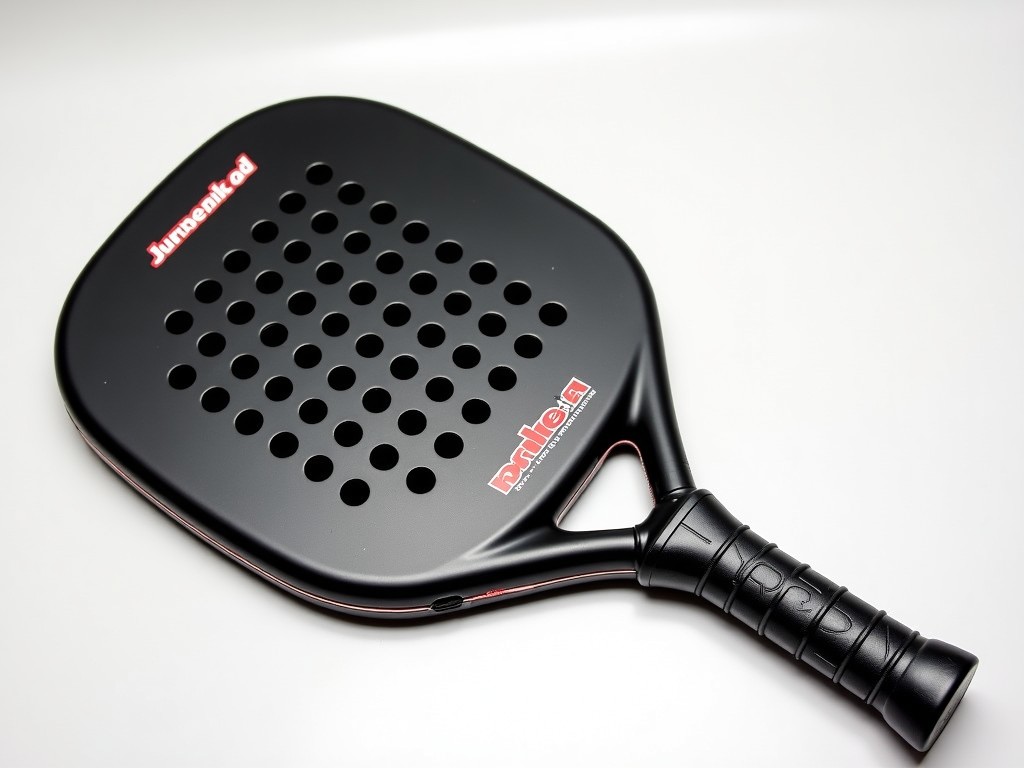
How to Choose Before Requesting a Quote
-
Identify the target demographic's power requirements:
- If players are beginners, prioritize a softer EVA core to increase the "sweet spot" size.
- If players are advanced, select a 12K carbon weave for maximum energy transfer and frame stiffness.
- Determine the surface finish for spin control: Rough-textured surfaces or sandpaper finishes increase friction but are more prone to abrasion wear compared to matte finishes.
- Evaluate the structural protection: Ensure the frame includes carbon fiber reinforcement guards to prevent the edges from twisting during off-center overhead shots.
Quality Control and Batch Consistency
Consistency across orders is the primary metric for a reliable manufacturing partner. A technical factory must implement a 100% weight check on every unit produced. If the balance point fluctuates by more than 5mm from the master sample, the internal distribution of the core is compromised, leading to customer dissatisfaction and high returns.
Impact testing also plays a role. We simulate hyper-thermal aging to ensure the resin bond does not delaminate when the core expands and contracts at different rates than the carbon face. This ensures the rackets survive the rigors of international shipping in non-controlled containers.
| Order Volume | Production Lead Time | Sample Availability |
|---|---|---|
| 500 Units | 25-30 Days | 7-14 Days |
| 1000+ Units | 45-60 Days | Priority-queueing |
To verify the material density and weight tolerances for your specific brand, request a technical sample today.


