China IANONI padel racket supplier - Bulk Supply and Specification Guide
Replacement rate, not unit price, is the primary metric for procurement officers managing padel racket inventories. Relying on a single source creates supply chain vulnerabilities, especially when manufacturing batch quality fluctuates during peak tournament seasons. A secondary China IANONI padel racket supplier ensures that retail distribution remains consistent even if primary production lines face bottlenecks or material shortages.
Cheaper stock options often fail at the worst point in the season when core fatigue occurs or face delamination begins under high-impact play. Technical evaluation focuses on the structural bond between the carbon-face and the EVA core to prevent the common failure modes seen in low-volume OEM runs.
Scope of Supply and Physical Form
Standard production typically covers three primary geometric profiles: round, teardrop, and diamond. The round shape features a low balance point for control-oriented play, while the diamond profile shifts the weight toward the head to increase power output. All models adhere to the standard 38mm thickness requirement to ensure compliance with international padel regulations.
Technical Tolerance Note
Weight variance is maintained within +/- 3 grams across a single batch. Deviations beyond this range often indicate inconsistent resin density or uneven foam distribution, which affects the swing weight perception by the end-user.
What Actually Determines Performance
Performance is dictated by the interaction between the face stiffness and the internal core density. A 12k carbon fiber weave provides a stiffer surface, which transfers more energy back to the ball during high-velocity impacts. Conversely, a 3k carbon weave offers more flexibility, benefiting players with slower swing speeds but reducing the maximum power ceiling.
Surface roughness also plays a critical role in spin generation. We utilize sand-finish or 3D-textured patterns to increase the friction coefficient between the ball and the face, a feature requested by professional-level brands seeking to differentiate their competitive rackets.
Materials and Construction Trade-offs
| Material Choice | Technical Benefit | Buyer Trade-off |
|---|---|---|
| Fiberglass Face | High elasticity and comfort | Lower durability; faster fatigue |
| 12k/24k Carbon | Maximum stiffness and power | Higher unit cost; more vibration |
| Hard EVA Core | Consistent rebound and control | Weight increases over time |
| FOAM Core | Lightweight; shock absorption | Higher price point; lower power |
How to Choose Before Requesting a Quote
Procurement begins with a detailed technical specification sheet that defines the RA rating for stiffness and the specific balance point range. Without these parameters, the factory cannot guarantee consistency across different cycles of the compression molding process. We require approved CAD files for frame geometry to ensure aerodynamic stability before the first steel mold is cut.
- Specify the core density (e.g., 50 HRD vs 60 HRD) for desired feel.
- Define the weave type (3k, 12k, or 24k) for the surface material.
- State the required finish (matte, glossy, or textured-grit).
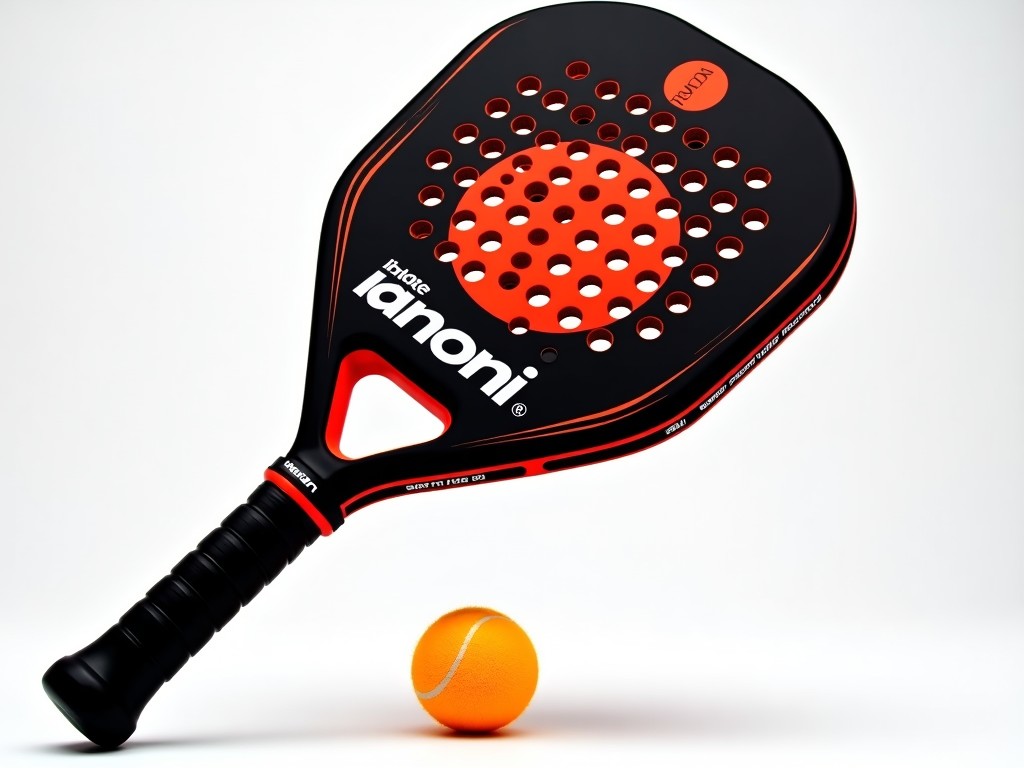
Requirements by Buyer Segment
Club-level distributors typically prioritize durability and cost-efficiency, opting for fiberglass faces and softer EVA cores to withstand high-frequency recreational use. Professional-grade brands focus on performance materials like carbon fiber and specialized vibration damp systems to appeal to competitive players.
OEM/Private Label
Focus on custom branding, unique frame shapes, and specific material blends tailored for market differentiation.
Importers
Focus on volume-optimized packaging, bulk shipping compliance, and consistent QC testing documentation.
How Consistency Is Held Across Batches
Tooling amortisation decides the long-term viability of private-label lines. We utilize compression molding rather than manual layup to ensure that the resin-to-fiber ratio remains uniform in every unit. This prevents the delamination that occurs when resin pockets form unevenly during curing.
| Usage Condition | Typical Failure | Preventive Specification |
|---|---|---|
| High-impact smashing | Frame cracking at throat | Reinforced carbon bridge layup |
| Repeated compression | Core delamination | Vacuum-pressure curing cycle |
| High humidity/heat | Adhesive softening | UV-resistant resin system |
Stock Availability and Reorder Planning
Strategic reordering must account for the lead time required for custom mold maintenance and material sourcing. We maintain a buffer of standard core components to accelerate production for repeat-orders, though bespoke surface artwork requires a 30-day window for testing and approval.
Packing, Marking and Freight Configuration
Rackets are packed in individual moisture-barrier sleeves to prevent surface oxidation during sea freight. Bulk cartons utilize reinforced corrugated cardboard with internal dividers to prevent crushing of the frame edges during palletized handling.
Ready to review technical specifications for your next batch?
Request a tooling review and sample protocol

