custom durable ianoni padel racket factory: Specification, Ordering and Quality Notes
What This Product Is and Where It Fits
Before comparing quotations, the service life of a padel racket batch is determined by the failure rate of the EVA core and the bond strength of the carbon face. This factory produces ianoni-style rackets designed for private-label brands where high-frequency use is the baseline. The construction focuses on maintaining structural integrity to prevent the common delamination seen in lower-grade manufacturing during high-impact play.
Procurement officers for large sports academies must evaluate the trade-off between material cost and return rates. While a fiberglass face reduces the initial unit price, it often results in faster loss of rebound characteristics compared to 12K or 18K carbon fiber weaves. Our process ensures that the layup density remains consistent across thousands of units per run.
The Problem Buyers Keep Paying For
Unit price and service life diverge when a factory uses inconsistent resins for the frame perimeter. Many importers report that cheaper rackets experience frame cracking at the throat because the reinforcement layup does not account for the torque generated during professional smashes. This leads to high warranty claims that erode the profit margins of the initial distributor-level price.
Critical Failure Modes in Bulk Batches
Internal core collapse occurs when the EVA foam density is uneven during injection molding. If the curing temperature is not strictly controlled, the foam loses its elasticity within the first 50 hours of exposure to outdoor humidity.
What the Design Has to Balance
Engineers must balance the stiffness of the frame with the vibration absorption of the internal core. A stiffer frame increases power transfer but raises the stress on the player's elbow, leading to vibration-related returns. We utilize a variable thickness beam—thicker at the impact zone and thinner at the sweet spot—to distribute these stress forces more effectively.
The balance point also dictates the racket's market positioning. A head-heavy configuration increases leverage but increases the structural load on the joint. For custom durability orders, we adjust the weight distribution within a +/- 3g tolerance to ensure consistency across the entire production lot.
Size, Weight and Specification Range
| Test Parameter | Target Standard | Inspection Method |
|---|---|---|
| Weight Variance | +/- 3g per unit | Digital scale audit |
| Rebound Consistency | Min 25cm at 1m drop | Drop test cycle |
| Face Adhesion | > 5 N/mm | Peel stress test |
| Frame Stiffness | 600-1200 N/mm | Deflection load test |
What Can Be Customised and What Cannot
Customization is limited to surface treatments, material weave density, and core hardness. Buyers can select between 30K, 12K, or 18K carbon fiber to alter the tactile feel and power output. However, the internal geometry of the frame and the core-hole pattern are fixed by the primary molds to ensure aerodynamic stability and structural safety.
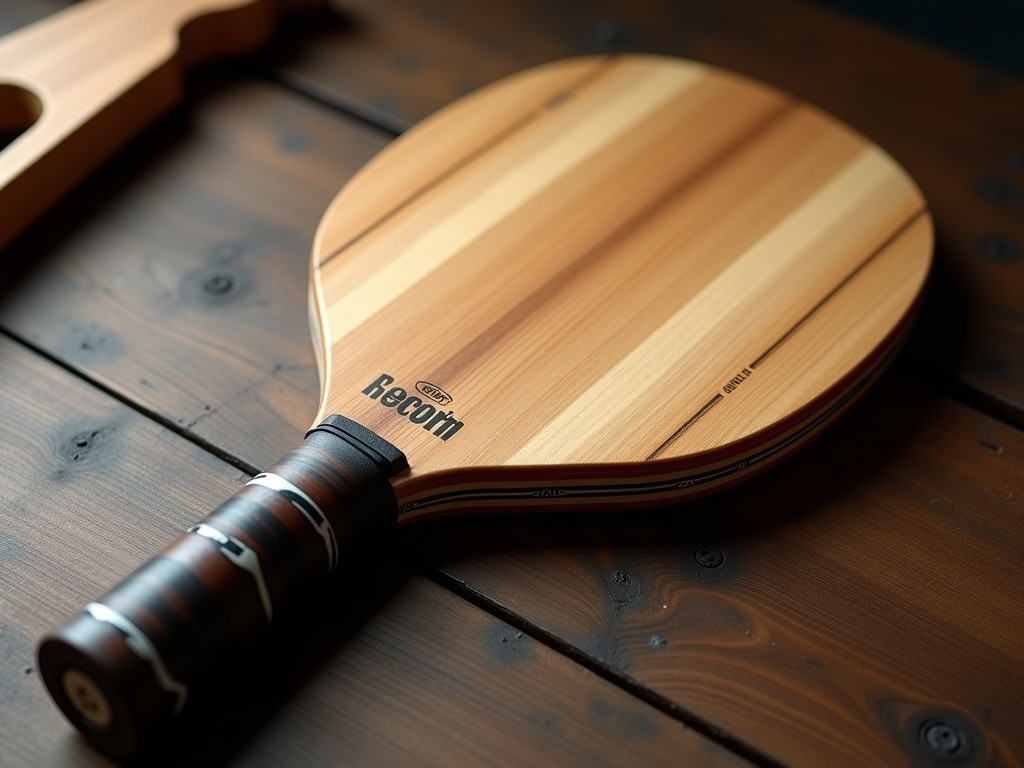
- Surface UV-resistant coatings and digital screen printing.
- EVA foam density (Soft, Medium, Hard) measured in Shore A.
- Custom grip textures and handle patterns.
Usage Scenarios and Buyer Segments
Academy purchasing managers require rackets that withstand the frequent impact of students who have improper technique. These segments benefit from a softer EVA core to prevent wrist injuries. In contrast, retail-focused brands focus on high-modulus carbon faces to appeal to competitive players seeking maximum power.
Club Academies
Focus on de-durability and shock absorption for high-volume rental fleets.
Professional Brands
Focus on weight-to-stiffness ratios and premium carbon fiber finishes.
Working as a Production Partner, Not a Catalogue Supplier
Unit price settles the question only after the technical specifications are verified against a sample batch. We do not offer off-the-shelf stock; we manufacture based on the specific material requirements of your brand. This ensures that every racket in a 5,000-unit order matches the approved prototype's weight and rebound profile.
Reliable supply chains require transparency in material sourcing. We provide technical data sheets for the resins and foam used, to guarantee that the final product will not degrade prematurely in maritime or humid shipping conditions.
Volume Planning and Lead Time
| Order Volume | Typical Lead Time | Production Focus |
|---|---|---|
| 500-1,000 units | 45 Days | Tooling and sample validation |
| 5,000+ units | 75-90 Days | Batch-optimization and scaling |
Ready to discuss technical specifications for your next production run?
Initiate project discussion

