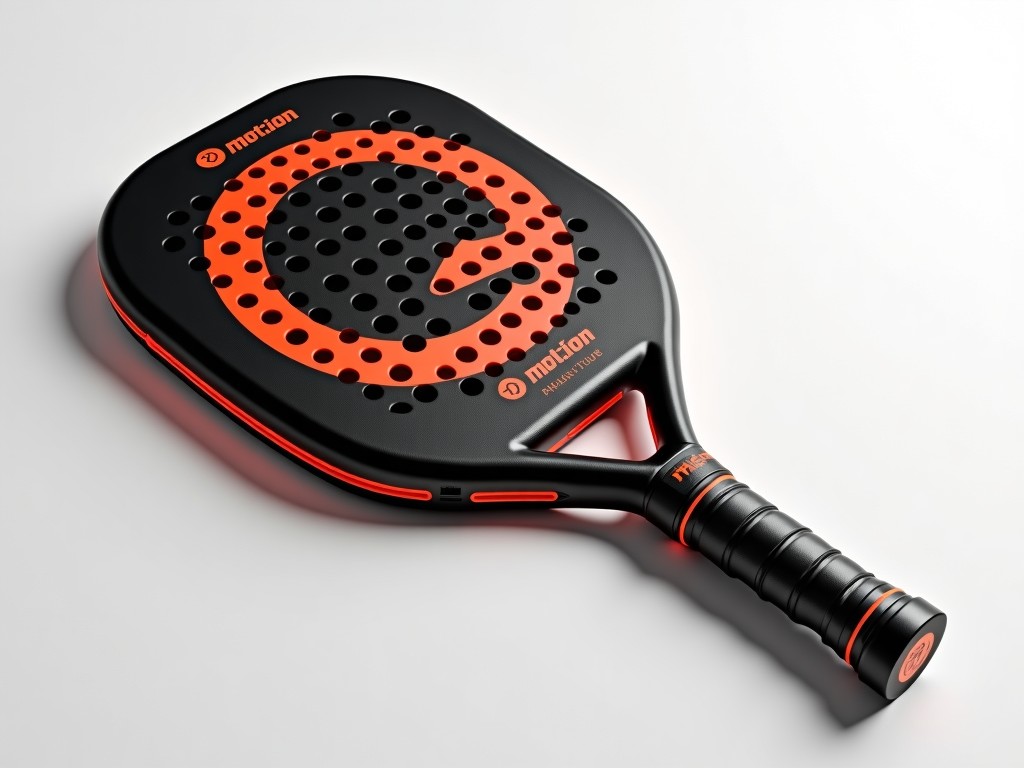
Custom flow motion padel racket manufacturer: What Buyers Should Check Before Ordering
The primary trade-off in padel racket manufacturing involves the balance between carbon fiber density (e.g., 12K vs 32K) and core EVA hardness. Higher-density weaves increase power transfer but also elevate the risk of frame delamination if the resin system is not calibrated for the specific vibration frequency profile.
The interface between parts determines the structural integrity of a padel racket under high-impact play. When wholesale buyers evaluate custom-label options, the focus must shift from aesthetic finish to the mechanical bond between the carbon face and the internal core. A professional-grade manufacturing process requires a consistent distribution of resin across the entire surface to prevent soft spots that lead to premature structural failure during competitive matches.
Scope of Supply and Physical Form
Geometric configuration dictates the racket's center of gravity and swing weight. Diamond-shaped frames concentrate mass at the head, which increases torque for power-oriented players, while round-shaped frames maintain weight closer to the handle for better maneuverability. Our manufacturing process ensures that the geometric tolerances remain within a ±0.5mm range across the production batch to ensure the aerodynamic profile remains consistent with the technical specifications.
Frame Geometry Variables
The bridge design is a critical factor for lateral stability. A reinforced bridge structure reduces torsion during off-center hits, which is a common complaint in lower tier rackets. We utilize reinforced carbon layers in the bridge area to manage the stress-load cycles generated during high-frequency impacts.
Material Options and Their Trade-offs
Material selection directly impacts the rebound speed and durability of the racket. 12K carbon fiber offers a more flexible feel that suits intermediate players, whereas 32K or 18K carbon provides a rigid surface for elite-level power generation. The core material—typically EVA foam or FOAM—determines the memory effect of the racket. Hard EVA maintains its shape longer but requires more technique, while softer FOAM provides comfort but degrades faster over high-volume usage.
Balance and load analysis shows that heavier cores increase the structural demand on the frame walls. If the manufacturer uses a low-grade layup for a heavy core, the frame will likely crack within the first six months of use. We provide various fiber-glass combinations to match the specific shock absorption requirements of your target market segment.
| Material | Performance Benefit | Durability Risk |
|---|---|---|
| 32K Carbon Fiber | Maximum stiffness and power | Brittle under impact |
| Fiberglass Face | High rebound and comfort | Lower energy return |
| Hard EVA Core | Long-lasting-response | High vibration transfer |
Construction Method and Its Effect on Consistency
Consistency depends on the curing cycle and the molding technique. Hand-molded rackets allow for more precise fiber orientation, which optimizes the weight distribution but increases the price point. In contrast, injection-molded components offer higher repeatability for mass-market orders but may lack the performance-tuned balance. We utilize vacuum-bagging technology to eliminate air pockets within the layup, which is the primary cause of internal delamination.
The surface treatment also affects the longevity of the racket. A matte sand-finish provides better grip for the ball but is more prone to abrasion than a glossy coating. We apply a multi-layer UV resistant coating to ensure the branding does not peel after repeated exposure to sweat and ball friction.
Comparing Two Standard Configurations
| Feature | Professional Series | Club Series |
|---|---|---|
| Weight Range | 360g - 375g | 340g - 355g |
| Core Material | High-Density EVA | Soft FOAM/Low EVA |
| Face Material | 12K Carbon | Fiberglass/Carbon Hybrid |
Matching the Product to the Buyer's Need
Selecting the right specification requires understanding the end-user skill level. An importer targeting the recreational market should prioritize lighter rackets with softer cores to prevent elbow-related injuries in beginners. Conversely, a brand focusing on competitive tournaments requires high-stiffness frames that can respond to the fast swing speeds of advanced players. You can review our technical tooling capabilities to align with these requirements.
Segment-Specific Requirements
Club academies often require high-durability models because rackets undergo frequent impacts. For these segments, we recommend reinforced edge protectors and core systems that can withstand daily use. Retail-focused brands may prioritize aesthetic variety and ergonomic comfort, requiring custom-printing techniques and smooth-touch finishes on the handle.
Export Packaging and Handling Protection
Shipping logistics represent a risk for structural damage if not handled correctly. We utilize individual protective poly-sleeves to prevent abrasions during transit. Master cartons are constructed from double-walled corrugated cardboard with internal dividers to prevent the racket frames from shifting, which can lead to stress fractures during maritime freight.
Questions Buyers Ask Before Ordering
| Requirement | Standard Compliance |
|---|---|
| What is the minimum order for custom carbon weaves? | Typically 50 units per design |
| Can you provide material-grade certifications? | ISO 9001 Process Process |
| What is the lead time for prototype samples? | 14-21 days depending on complexity |
Ready to finalize your production line?
Contact our engineering team to discuss your specific material and tooling-review requirements.
Request a Technical Consultation

