Custom latest design IANONI padel racket Factory: Specification, Ordering and Quality Notes
Tooling amortisation decides the long-term unit cost for private-label padel programs. Precision-engineered steel molds ensure that the frame geometry and balance point distribution remain consistent across high-volume production cycles.
The production line focuses on the structural interface between carbon fiber laminates and the internal core. By controlling vacuum infusion pressure, the factory reduces the risk of delamination, a common failure mode in high-impact sports equipment. This technical approach allows distributors to offer a product that maintains its stiffness even after months of competitive play.
How It Is Built and What That Changes
The construction begins with a multi-layered layup of carbon fiber, typically ranging from 3K to 12K weaves, depending on the desired stiffness-to-weight ratio. Following the frame molding, the EVA foam core is injected into the cavity, which dictates the rebound rate and vibration absorption capabilities. A higher-density foam increases power but reduces the sweet spot's tolerance, whereas a softer core enhances comfort for intermediate-level players.
Comparing Two Standard Configurations
| Parameter | Performance Carbon | Fiberglass Hybrid |
|---|---|---|
| Frame Stiffness | High (modulus focus) | Medium (flexible flex) |
| Weight Range | 360g - 375g | 350g - 365g |
| Vibration Control | Standard damping | High absorption |
How to Choose Before Requesting a Quote
Selecting the correct core density requires an analysis of the target demographic's skill level. A head-heavy balance point provides more leverage for aggressive smashes but increases the load on the elbow over time. Conversely, an even-balance configuration offers better maneuverability for academy environments where players prioritize defensive control over raw power.
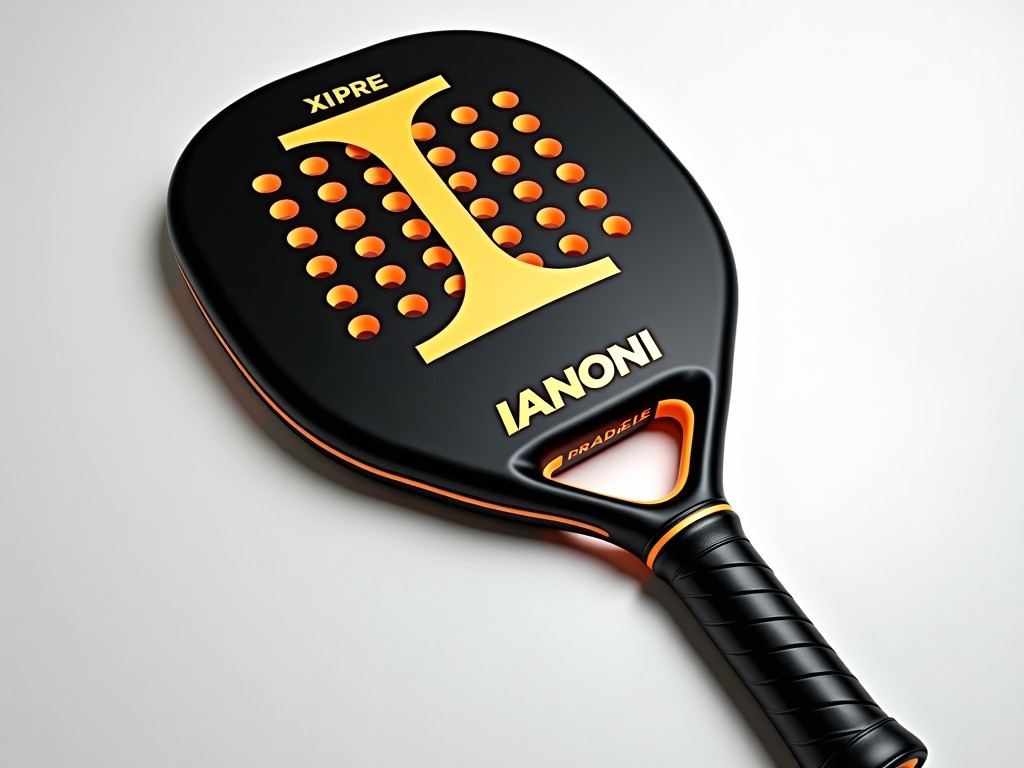
Surface texture also impacts the ball friction. A sand-like surface finish increases spin-rotation potential, while a smooth finish is more resistant to abrasion from repeated impacts. Buyers must weigh these performance metrics against the expected lifecycle of the racket in stock.
Customisation Options and Their Limits
- Weight Distribution: Adjusting the balance point by +/- 10g by adding material to the handle or throat.
- Surface Finish: UV-resistant matte or gloss coatings; limited by the thickness of the paint de-lam layer.
- Core Thickness: Options from 33mm to 38mm; thicker cores alter the overall aerodynamic profile.
- Custom Branding: Full-surface digital printing or silk-screening; requires high-resolution vector files.
Requirements by Buyer Segment
Distributors
Focus on batch-consistency and shipping-box-reliability. Priority is placed on materials that prevent paint peeling to reduce return rates.
Academies
Focus on durability and branding-visibility. Needs rackets that withstand high-frequency use and exposure to outdoor UV environments.
Export Packaging and Handling Protection
International shipping requires rigorous protection against humidity and temperature fluctuations during sea transit. Each racket is individually wrapped in a protective sleeve and moisture-barrier-bagged to prevent the EVA core from absorbing atmospheric moisture. Bulk orders are packed in double-ply corrugated cardboard boxes with internal dividers to prevent frame compression during stacking.
Ordering, Tooling and Lead-Time Questions
What is the minimum order quantity for custom molds?
The standard MOQ for custom designs is 100 units per design to offset the CNC mold machining costs.
How long does the tooling phase take?
Steel mold production typically requires 30 to 45 days from the approval of the technical specifications and final art files.


