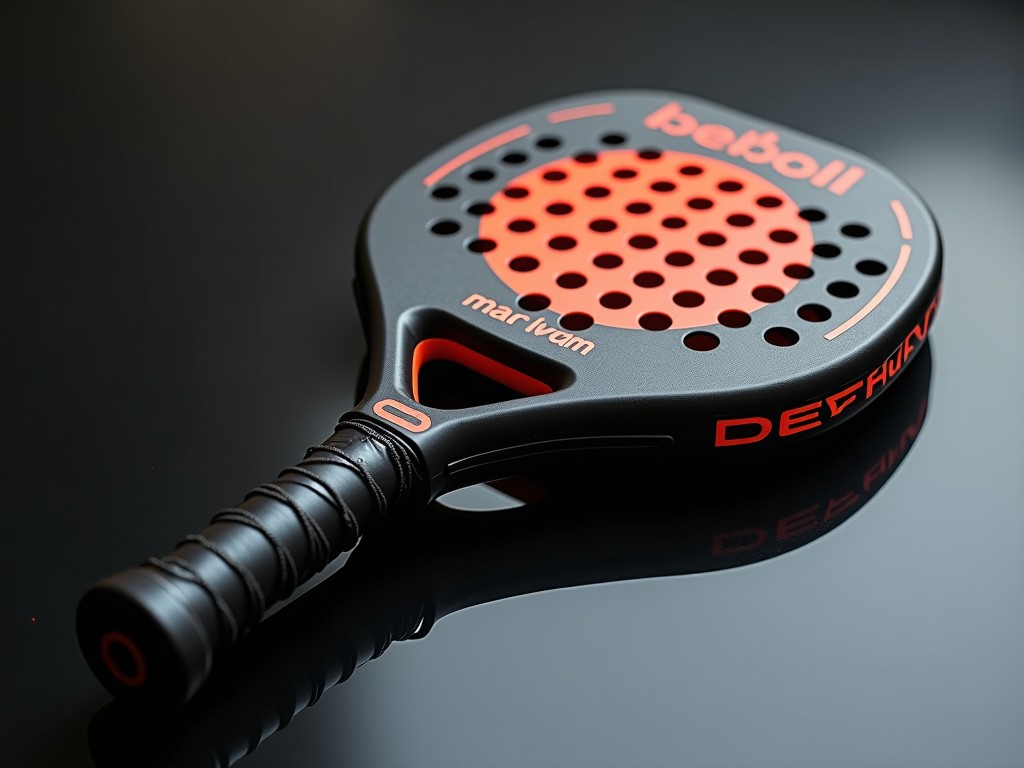
direct factory carbon fiber padel racket exporter: Specification, Ordering and Quality Notes
Design Constraints Behind the Specification
Deflection under load governs the structural fatigue life of the racket frame. A diamond-shaped frame concentrates stress at the throat, requiring a higher carbon weave count to prevent delamination during high-impact play. Manufacturers must balance the thickness of the carbon layers against the overall weight of the racket; if the layup is too thin, the balance point shifts beyond the desired range as the material loses its elasticity over time.
Consistency depends on the resin-to-fiber ratio during the vacuum infusion process. Improper curing leads to internal air pockets, which manifest as microscopic fractures when the racket is subjected to repetitive torsional forces. For private-label buyers, specifying a tolerance of +/- 3 grams for weight is critical to ensure that every unit in a batch feels identical to the end user.
Technical Tolerance Note
The surface roughness (measured in grit scale) significantly affects the spin-rate coefficient. A 1200-grit surface finish increases ball lift but accelerates the wear rate of the coating compared to a smooth matte finish.
How It Performs in Use
Balance and load analysis shows that the core density dictates the power return curve. High-density EVA foam provides a crisp response for aggressive players but increases the vibration transfer to the arm's elbow. Conversely, softer foam-based cores offer a larger sweet spot but lose their "pop" effect after approximately 150 hours of competitive match play.
The frame stiffness (RA rating) determines the energy transfer efficiency. A stiffer frame minimizes energy loss during the ball impact, but it requires more precise timing to avoid off-center hits. Distributors often find that mid-stiffness frames better for academy-side rackets to maximize forgiving rates for intermediate-level students.
3k Carbon Weave
Standard grade providing a balance of flexibility and durability. Best for high-volume club rackets where price-sensitivity is a factor.
12k/18k Carbon Weave
Higher fiber counts increase stiffness and weight reduction. Targeted at professional-grade lines requiring maximum energy return and aerodynamic speed.
Material Options and Their Trade-offs
Choosing between carbon fiber and fiberglass reinforcement alters the racket's vibration profile. Fiberglass has a lower modulus of elasticity, which creates a softer, forgiving feel but adds weight. Carbon fiber allows for a lighter frame with higher structural integrity, enabling a trade-off between the comfort of the player and the performance-ceiling of the equipment itself.
The core construction also impacts the lifecycle. In-mjected EVA cores maintain their shape longer than standard bonded foams but are prone to cracking if exposed to excessive heat during transport. Specialized polymer cores are more heat-resistant but increase manufacturing cost per unit significantly.
Specification Range and Customisation Limits
| Parameter | Standard Range | Custom Impact |
|---|---|---|
| Total Weight | 350g - 385g | Affects balance distribution. |
| Core Thickness | 33mm - 38mm | Controls power vs control. |
| Face Shape | Round, Teardrop, Diamond | Defines sweet spot location. |
| Surface Finish | Matte, Sand, Rough | Influences ball friction. |
Assumptions Buyers Should Stop Making
Many buyers assume that a higher carbon fiber count always equals a better racket. In reality, a 18k weave in a poorly designed frame will result in brittle failure faster than a well-executed 3k layup. The quality of the resin system is more critical for preventing delamination than the fiber grade itself.
Weight consistency is also frequently misunderstood. A batch might average 360g, but if the variance is 10g, the retail experience will be inconsistent. Professional-grade manufacturing focuses on narrowing the standard deviation across the entire production rather than just hitting a target number.
Requirements by Buyer Segment
- Academy Managers: Prioritize round frame shapes and softer EVA cores to minimize student injury and maximize learning speed.
- Distributors: Require high durability ratings and UV-resistant coatings to reduce return rates from diverse retail environments.
- Private-Label Brands: Focus on unique surface aesthetics and specific weight tolerances to differentiate their product in a saturated market.
Working as a Production Partner, Not a Catalogue Supplier
The production process begins with a technical drawing phase where the internal geometry of the frame is defined. This includes the bridge reinforcement structure which determines the torsional stiffness of the racket. Once the digital model is approved, the factory produces a pre-production sample for physical testing, including weight-balance checks and impact-test-driven validation.
After sample approval, the tooling is locked for mass production. This phase ensures that the final product matches the exact specifications agreed upon in the technical sheet. You can discuss your specific technical requirements with our engineering team.
Stock Availability and Reorder Planning
Lead times are dictated by the complexity of the carbon layup and the availability of specific core materials. Standard private-label orders typically require a 45-60 day window from final artwork approval. We recommend reordering 30 days prior to current stock depletion to maintain batch consistency and avoid shipping cost fluctuations.


