direct factory pro padel rackets quotation supplier: Specification, Ordering and Quality Notes
During a private-label launch with a fixed ship date, the primary challenge is maintaining weight consistency across multi-batch production runs. A variance of 5 grams in balance point significantly alters the player's swing, leading to high return rates from professional academies. Select a supplier that guarantees a ±2g tolerance to mitigate this risk and ensure retail uniformity.
The manufacturing of a professional-grade racket relies on the precision of the resin infusion process and the density of the internal core. If the resin-to-fiber ratio is uneven, the frame will experience premature delamination under high-impact play. We focus on vacuum infusion to ensure structural integrity throughout the carbon layup.
Scope of Supply and Physical Form
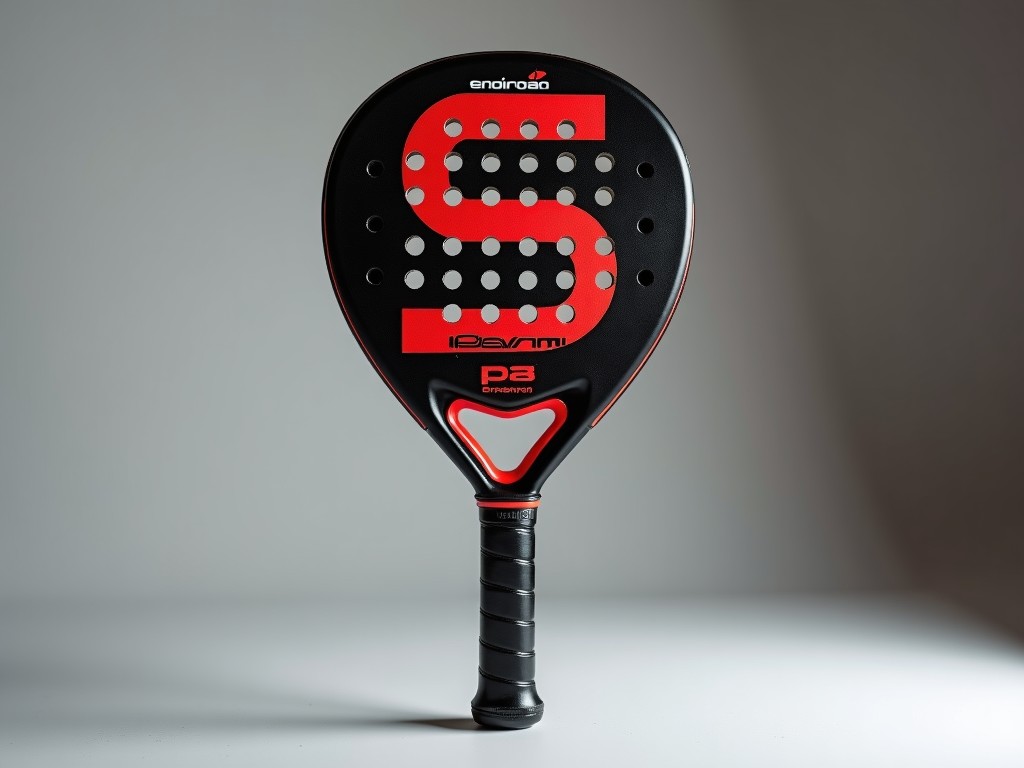
Padel racket geometry dictates the distribution of mass relative to the sweet spot. Diamond-shaped frames concentrate weight at the head for maximizing leverage and power, while round shapes distribute weight near the handle for maneuverability. Teardrop shapes offer a hybrid compromise for players requiring both spin and stability.
Standard Dimensional Parameters
- Length: Standard 45.5cm (regulation compliant)
- Weight range: 350g to 380g depending on core density
- Thickness: Typically 36mm to 40mm profile width
- Grip circumference: 110mm to 125mm options
How It Is Built and What That Changes
The material selection for the face directly determines the modulus of elasticity of the racket. 12K carbon fiber provides more flexibility and a larger sweet spot compared to 30K carbon, which is stiffer and transfers more energy to the ball. This choice affects the trade-off between player comfort and raw power output.
Internal cores utilize EVA (Ethylene-Vinyl Acetate) or FOAM. A higher-density EVA core maintains its shape over longer cycles but requires more physical force to generate depth. Conversely, a softer foam increases the rebound time, aiding intermediate players but may suffer fatigue after 20+ hours of competitive play.
| Customization Option | Technical Specification | Performance Impact |
|---|---|---|
| Face Weave | 12K / 24K / 30K Carbon | Higher weave count increases stiffness and power. |
| Core Density | Soft / Medium / Hard EVA | Harder cores reduce vibration dampening. |
| Surface Finish | Sandpaper / Rough Pattern | Rougher surfaces increase friction for spin rates. |
Measured Performance in Real Use
In competitive environments, the racket is judged by its vibration absorption profile and rebound consistency. A frame with high torsional stability reduces the impact load on the elbow, decreasing the risk of injury during long sessions. This is achieved by integrating elastomers or specific carbon layers in the throat of the racket.
Consistency in ball exit velocity is measured across the face surface. If the velocity varies significantly on off-center hits, it indicates an uneven core distribution or poor fiber-resin bonding, which devalues the product for professional-level buyers.
Buying Mistakes That Lead to Returns
Sourcing based solely on unit price often overlooks the hidden cost of batch delamination. Low-grade resins react poorly to humidity changes, causing the face to peel from the frame within three months of retail exposure.
Another common error is the lack of balance-point control. If one batch is head-heavy and the next is even-balanced, the brand's reputation becomes inconsistent, leading to mass rejections by distributors and clubs.
Inspection Items and Test Methods
To ensure OEM-grade standards, we implement specific testing protocols per production lot. This includes Shore hardness testing of the EVA core to ensure the density matches the specified technical data sheet.
- Weight Verification: Every unit is weighed to ensure the ±2g tolerance is met.
- Drop Testing: Impact testing at specific heights to check for internal structural fractures.
- Abrasion Test: Testing the surface texture to ensure the grip does not degrade prematurely.
Stock Availability and Reorder Planning
Lead times for custom-molded rackets are dictated by the tooling phase and the curing cycles of the carbon. For existing designs, reordering 60 days prior to stock exhaustion allows for a buffer against seasonal demand spikes.
- Identify the target market segment:
- Professional-level (requires high-modulus carbon).
- Club-level (focuses on durability and price-point).
- Determine the volume tier:
- Small batches (<300 units) may incur higher tooling overheads.
- Bulk orders (1,000+ units) optimize the cost per unit.
Care, Storage and Service Life
The EVA core is sensitive to extreme temperature fluctuations. Storing rackets in vehicles above 40°C can soften the foam, leading to a loss of structural integrity and rebound speed. Maintaining a climate-controlled environment extends the service life of the racket to several competitive seasons.
UV exposure also affects the paint and the resin bond. Using UV-resistant coatings prevents fading and ensures the aesthetic quality of the branded product is maintained for retail display.
Ordering, Tooling and Lead-Time Questions
Common Procurement Inquiries
What is the lead time for a new mold? Typically 30-45 days are required for the CNC-machined steel molds before the first sample run begins.
Is there a minimum MOQ for custom branding? Our standard MOQ is 300 units per SKU to ensure the efficiency of the printing and finishing lines.
How do you handle weight variance reports? We provide a weight-report for every batch, documenting the standard deviation within the specified tolerance range.
Ready to review the technical specifications for your next production line?
Request a quotation-review

