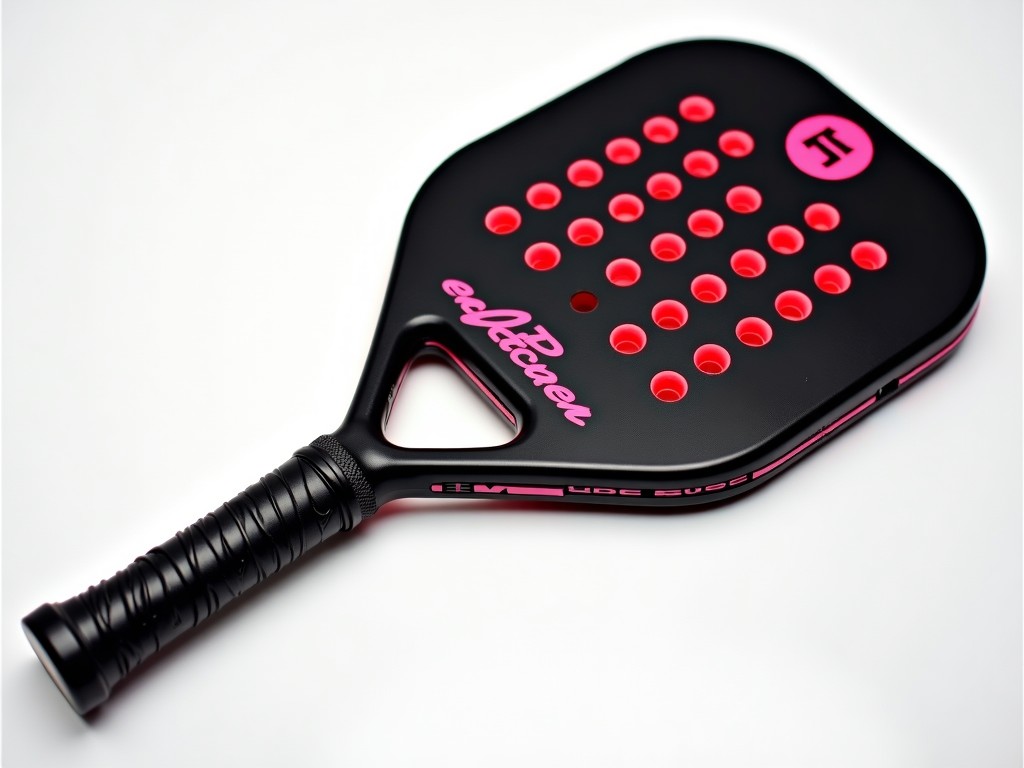
oem custom padel rackets for women manufacturer: What Buyers Should Check Before Ordering
Technical Trade-off: Material Density vs. Weight
Selecting the face material for women's padel rackets requires balancing structural stiffness with swing weight. A 12K carbon fiber weave increases frame stiffness but raises the total weight by approximately 10-15g for every layer added. Conversely, fiberglass-infused faces reduce weight and expand the sweet spot, though they increase the risk of delamination under high-impact torque.
What This Product Is and Where It Fits
The build method decides whether the final racket maintains its structural integrity under high-impact play. For women-specific padel rackets, manufacturers typically target a weight between 320g and 350g to accommodate different swing speeds without sacrificing power output. This requires a precise layup of carbon fiber or fiberglass to prevent the frame from becoming brittle or heavy.
OEM buyers utilize these custom builds to fill market gaps or cater to competitive players versus recreational players. The focus remains on the balance point, often shifting the center of gravity toward the handle to reduce elbow fatigue during long matches.
What Actually Determines Performance
Process choice shows up later as the rebound characteristics of the EVA foam core. A lower-density foam provides more comfort and vibration absorption for recreational players, while higher-density foam offers better energy return for aggressive smashes. We control the foam injection pressure to ensure the core does not delaminate from the carbon-fiber face during the first 100 hours of play.
Frame Geometry and Beam Width
The width of the beam, typically ranging from 34mm to 38mm, dictates the aerodynamic profile of the racket. A thicker beam increases stability on offset hits but increases air resistance. We use precision-molded molds to maintain uniform wall thickness across the entire perimeter.
Where This Product Beats Standard Alternatives
Consistency is set at the forming stage through vacuum-impregnated carbon layers. Standard mass-market rackets often use generic molds that lead to weight drift across a batch of five-hundred units. Custom OEM production allows for specific balance point adjustments, ensuring every unit in a shipment meets the exact technical specification requested by the brand manager.
Mass-produced models often utilize lower-grade resins that crack at the throat after repeated heart-shaped stress stress. Our process utilizes high-pressure curing cycles to eliminate air pockets, which reduces the likelihood of structural failure and maintains a +/- 3g tolerance across the entire production run.
What Can Be Customised and What Cannot
While the aesthetics and surface textures are highly flexible, the core structural geometry of the frame is limited by the initial tooling selected during development.
| Finish Type | Material | Technical Trade-off |
|---|---|---|
| Matte Carbon | Non-reflective coating | High grip; shows scratches easily. |
| Textured Surface | Sand-grit finish | Increased spin; higher production cost. |
| Glossy Resin | UV-resistant polymer | High durability; slicker when wet. |
Requirements by Buyer Segment
Wholesale Distributors
Wholesale buyers typically prioritize cost-per-unit and durability. This usually involves fiberglass faces and standard EVA cores to maintain a competitive retail price point for entry-level club players.
Private-Label Brands
Brand managers focus on differentiation through material blends. Requirements often include custom-mold printing and specific carbon-fiber weave counts to distinguish the product from generic market competitors.
Stock Availability and Reorder Planning
Tooling amortization is the primary factor in determining lead times. Custom molds require an initial lead time of 6-8 weeks for CNC machining and mold testing. Once the tooling is established, production runs of 500+ units typically ship within 30 days.
We recommend a reorder trigger point when 25% of current stock is depleted. This buffer accounts for raw material fluctuations and the specific curing cycles required for high-resin frames.
Ready to discuss technical specifications for your custom racket line?
request a technical sample

