OEM latest design carbon fiber padel racket Company - Bulk Supply and Specification
Design Constraints Behind the Specification
| Parameter | Standard Range / Option | Technical Impact |
|---|---|---|
| Face Material | 3k, 12k, or 18k Carbon | Higher weave count increases stiffness and reduces weight. |
| Core Density | EVA (Soft, Medium, Hard) | Density dictates the vibration absorption and ball rebound. |
| Total Weight | 350g - 385g | Heavier frames increase power but decrease maneuverability. |
| Balance Point | Low, Medium, or High | High balance shifts weight to the head for more power. |
Returns usually trace back to the same weak point: the interface between the carbon fiber face and the EVA core. If the resin infusion process lacks uniform pressure, the layers delaminate under high-impact smashes. We mitigate this by utilizing vacuum-molding techniques that ensure no air pockets remain within the laminate.
What Actually Determines Performance
Most quality disputes start with a consistency gap in core elasticity across a batch. A racket that feels soft in the first sample but hard in the hundredth indicates an inconsistent cell-expansion rate in the EVA foam. The carbon fiber weave also plays a critical role; a 12k weave offers more flexibility than a 3k weave.
Wear shows up at the same point every season if the edge protector is insufficient. We apply a high-density rubberized guard around the perimeter to prevent the carbon frame from abrasion during wall-based play. This protection maintains the structural integrity of the frame-geometry over hundreds of hours of competitive use.
Technical Trade-off: Stiffness vs. Comfort
Increasing carbon fiber density decreases the sweet spot size. For club-level brands targeting intermediate players, a lower-stiffness frame provides a more forgiving surface for off-center hits.How It Is Built and What That Changes
3k Carbon Layup
The 3k weave uses thicker fibers, resulting in a more flexible frame. This construction is ideal for entry-level OEM orders where players need the racket to help generate ball speed without high-swing speed requirements.
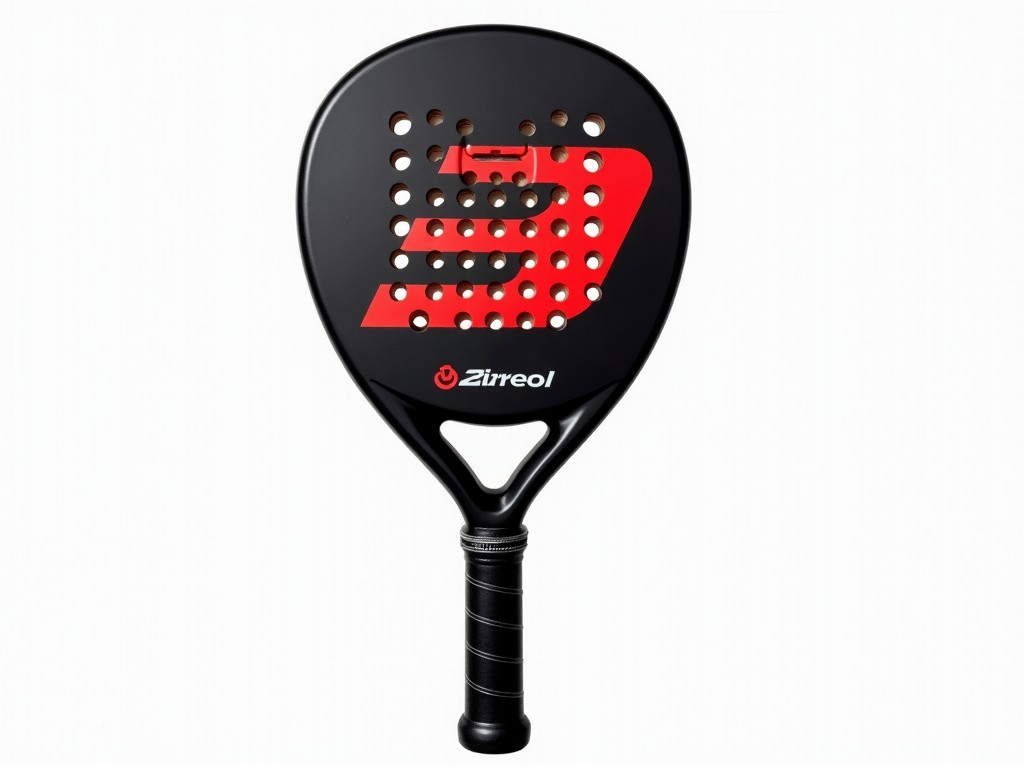
12k Carbon Layup
The 12k weave utilizes thinner threads, allowing for a much stiffer surface. This setup maximizes energy transfer for professional players who generate their own power and require precise control over ball trajectory.
The manufacturing process involves pre-impregnating carbon sheets with resin before the curing cycle. This ensures every fiber is saturated before the racket is placed in the mold. The temperature curve in the oven determines the final hardness of the resin, which directly affects how the racket reacts to thermal shock.
Size, Weight and Specification Range
Standard padel rackets follow fixed dimensions to ensure tournament compliance, but internal weight distribution varies based on the market target.
- Thickness is typically maintained at 38mm to balance volume-power with aerodynamic drag.
- Hole diameter varies from 10mm to 13mm; smaller holes increase the structural tension of the face.
- Grip circumference is usually 120mm to 125mm to accommodate different overgrip preferences.
Matching the Product to the Buyer's Need
A private-label buyer must match the core hardness to the intended player's skill level. A hard core with a 18k carbon face will fail in the recreational market because it lacks the vibration damping required by amateur players.
For wholesale buyers looking for high turnover, a medium-density EVA with a fiberglass hybrid face offers the safest investment. This configuration satisfies the widest range of play styles while reducing the risk of high return rates.
Usage Scenarios and Buyer Segments
Club Academies
Academies require high-durability builds. We focus on reinforced throat joints and abrasion-resistant protectors to withstand the daily impact of multiple student players.
Premium Retail Brands
These brands demand specific aesthetics and weight precision. We provide 12k carbon weaves and custom surface textures to meet this highly competitive market segment.
What Gets Checked Before Shipment
Final inspection begins with a weight-balance check for every single unit. Any racket deviating more than 3 grams from the specification is rejected to ensure batch consistency across the entire order.
We also perform a tap test to identify internal delamination or hollow spots. A hollow sound indicates a bonding failure between the carbon skin and the foam core, necessitating an immediate structural review.


