Specifying oem most powerful padel racket for spin Company for Wholesale and OEM Orders
What This Product Is and Where It Fits
| Parameter | Standard Range / Specification |
|---|---|
| Total Weight | 360g - 385g (+/- 5g) |
| Balance Point | High (365mm - 375mm from handle) |
| Core Thickness | 38mm - 40mm |
| Frame Width | 38mm - 42mm (variable profile) |
Cost and durability pull in opposite directions once high-modulus carbon fiber weaves are introduced. High-performance padel rackets designed for spin prioritize surface friction and structural rigidity to maximize energy transfer during high-impact strokes. These units target professional-grade players and academies where the technical requirements of the ball's rotation justify the higher manufacturing cost of carbon-fiber faces.
Academy-level purchasing managers often require equipment that can withstand daily training cycles while maintaining a consistent balance point. A head-heavy balance increases power output but elevates the risk of delamination at the throat when subjected to constant vibration. This specific OEM configuration addresses this by utilizing reinforced resin systems that maintain structural integrity under repeated impact.
The Problem Buyers Keep Paying For
Low-cost alternatives frequently suffer from core softening within the first three months of intensive use. When the EVA foam core loses its cellular memory, the racket loses its "pop," forcing the player to swing harder to achieve the same depth. This degradation leads to high return rates for retailers and brand damage because the product fails to meet the initial performance metrics.
Surface abrasion is another common failure point in rackets marketed for spin. Standard painted coatings wear off quickly, removing the mechanical grip required for the ball to "grip" the face. Our manufacturing process utilizes an integrated 3D textured surface or a grit finish that ensures the friction coefficient remains constant throughout the functional life of the frame.
What Actually Determines Performance
Material choice starts with the conditions the product will meet. A 12k carbon weave offers a more flexible face than a 30k weave, which can increase the contact time but reduce the raw power transfer. However, for a "powerful" racket, a stiffer frame is often preferred to prevent energy loss during deformation high-velocity smashes.
12K Weave
Lower fiber count allows for more elasticity. This results in a more comfortable feel for players with elbow concerns, reducing vibration transmission during play.
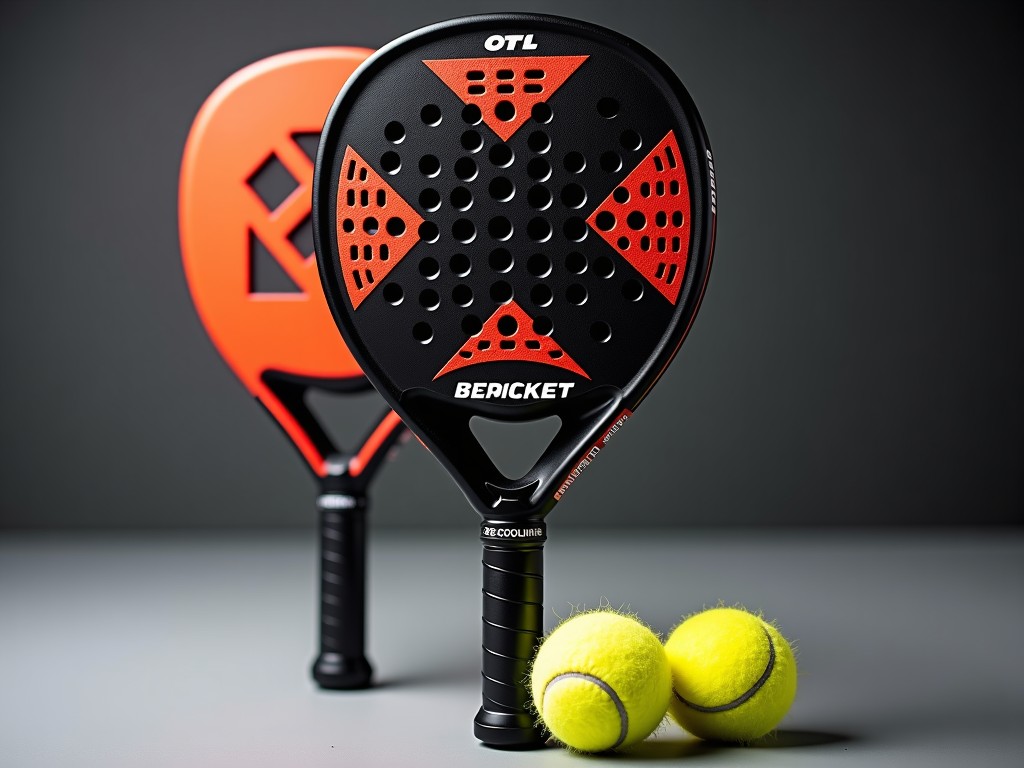
30K Weave
Higher fiber density increases stiffness. This configuration maximizes power output but requires a more precise technique to manage the impact forces effectively.
Where chlorine, sweat or UV exposure is routine in outdoor clubs, the chemical stability of the resin is critical. Standardized resins prevent the frame from becoming brittle. We use UV-stabilized polymers to ensure the racket does not crack after several months of direct sunlight exposure.
Measured Performance in Real Use
Serviceability is measured by the rebound consistency of the core. A high-density EVA foam provides a consistent response but can feel punishingly hard on the arm. For OEM buyers targeting the mass market, a dual-density core offers the best balance between power and long-term comfort.
Feel is subjective but dictated by the balance point. A head-heavy racket increases the swing weight, making the racket feel more powerful but reducing maneuverability. We can adjust the weight distribution within a 10g window to meet the specific performance requirements of the target player demographic.
Comparing Two Standard Configurations
| Feature | Power Configuration | Control Configuration |
|---|---|---|
| Face Material | 30K Carbon | 12K Carbon |
| Core Density | Hard EVA (High HR) | Soft EVA (Low HR) |
| Surface Finish | Rough Sand Texture | Matte Finish |
| Balance | Head-Heavy | Even-Balance |


