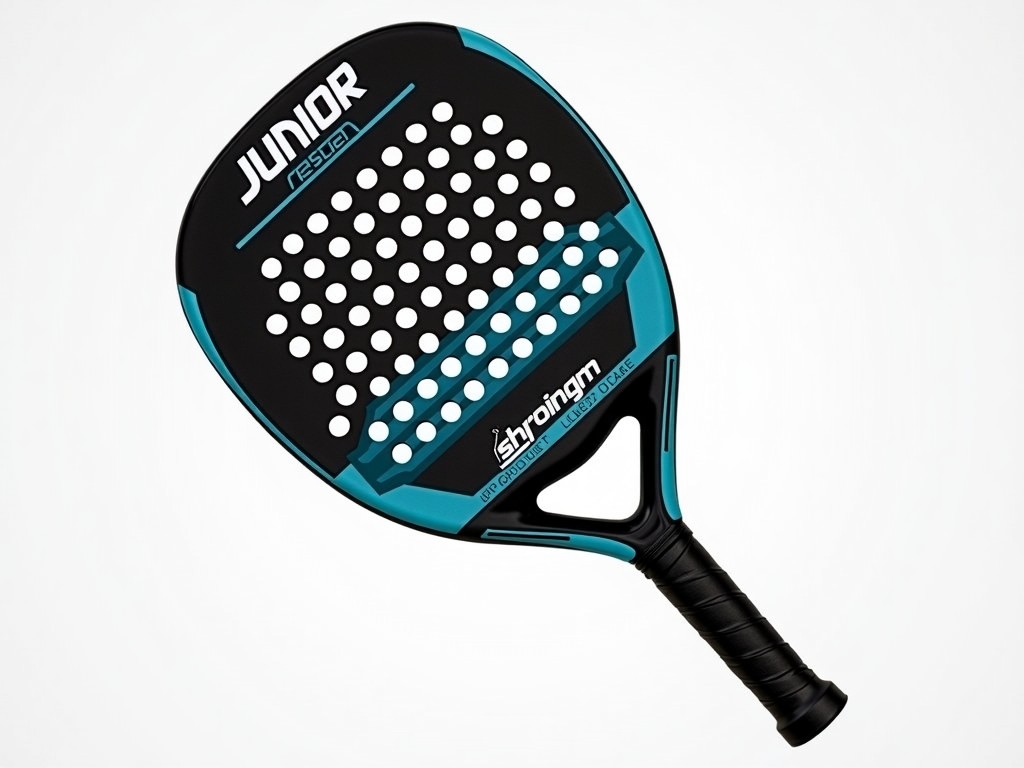
Wholesale junior padel rackets wholesale price Supplier - Bulk Supply and Specification Guide
Consistency is set at the forming stage through pressure-controlled compression molding, which ensures the carbon-fiberglass layers maintain a uniform density across the entire frame. First-article tooling determines the dimensional tolerance of the frame bridge across the production run, preventing the structural weaknesses often found in lower-volume manufacturing batches. Process choice shows up later as variations in the density of the EVA foam core, where a consistent cell structure dictates the rebound rate and vibration absorption for younger players.
Where Cheaper Alternatives Fall Short
Low-cost manufacturing often utilizes manual hand-layups that result in uneven resin pockets between the face material and the core. This inconsistency leads to delamination within the first three months of regular use, as the bond fails under the repetitive stress of impact. Furthermore, generic-grade foam cores lose their structural integrity quickly, causing a "dead spot" effect where the racquet no longer provides predictable power consistently.
Distributors report high return rates when wholesale batches use thinner, less stable resins that lack UV resistance and impact durability. When the frame stiffness fluctuates by more than 5% across a batch, the performance experience becomes unpredictable for academies relying on standardized equipment sets.
What the Design Has to Balance
Engineering a junior-level racquet requires a specific balance between weight to prevent wrist fatigue and stiffness to ensure proper ball exit. A weight range of 200g to 230g is standard for this demographic, but the balance point must remain centered to facilitate maneuverability.
Technical Trade-off: Core Density
Using a softer EVA (20-degree) increases comfort for children with less strength but reduces the lifespan of the core. A harder EVA (30-degree) offers better durability and power but requires a higher swing speed to generate power effectively.
Construction Method and Its Effect on Consistency
Automated layup processes ensure that the carbon-to-fiberglass ratio is identical in every unit. This precision eliminates the human error factor that leads to weight drift in hand-assembled rackets.
Frame Composition
- Tri-weave fiberglass face
- Reinforced carbon fiber bridge
- 38mm uniform profile
Surface & Finish
- Sand-texture grip coating
- UV-stable matte paint
- Anti-shock edge guard
Where This Product Beats Standard Alternatives
Our manufacturing process utilizes a multi-stage curing cycle that prevents moisture ingress into the core. This weather resistance is critical for junior rackets used in outdoor academies where humidity changes cause standard foam cores to delaminate.
The use of high-density polymers in the edge guard ensures the frame remains intact even after ground impacts, a common failure point in entry-level wholesale models.
Who Uses It and Where It Matters
Padel distributors and academy managers require these specifications to maintain low warranty claims across large fleets. When a club orders 500 rackets, they expect every unit to feel identical to avoid confusion and frustration among student players.
Brand managers benefit from the lot-to-lot consistency, ensuring that private-label branding remains uniform across different production cycles.
Inspection Items and Test Methods
| Test Parameter | Tolerance Tolerance | Methodology |
|---|---|---|
| Weight Variance | ±3g | Digital scale calibration |
| Core Rebound | ±5% coefficient | Drop test from height |
| Balance Point | ±5mm | Static balance measurement |
| Finish Options | Application Detail |
|---|---|
| Matte Neon | High-visibility academy gear |
| Gloss Carbon | Premium retail-ready branding |
Ready to discuss bulk production requirements and custom technical specifications?
Initiate a project discussion today

