Specifying wholesale padel rackets carbon fiber 18k supplier for Wholesale and OEM Orders
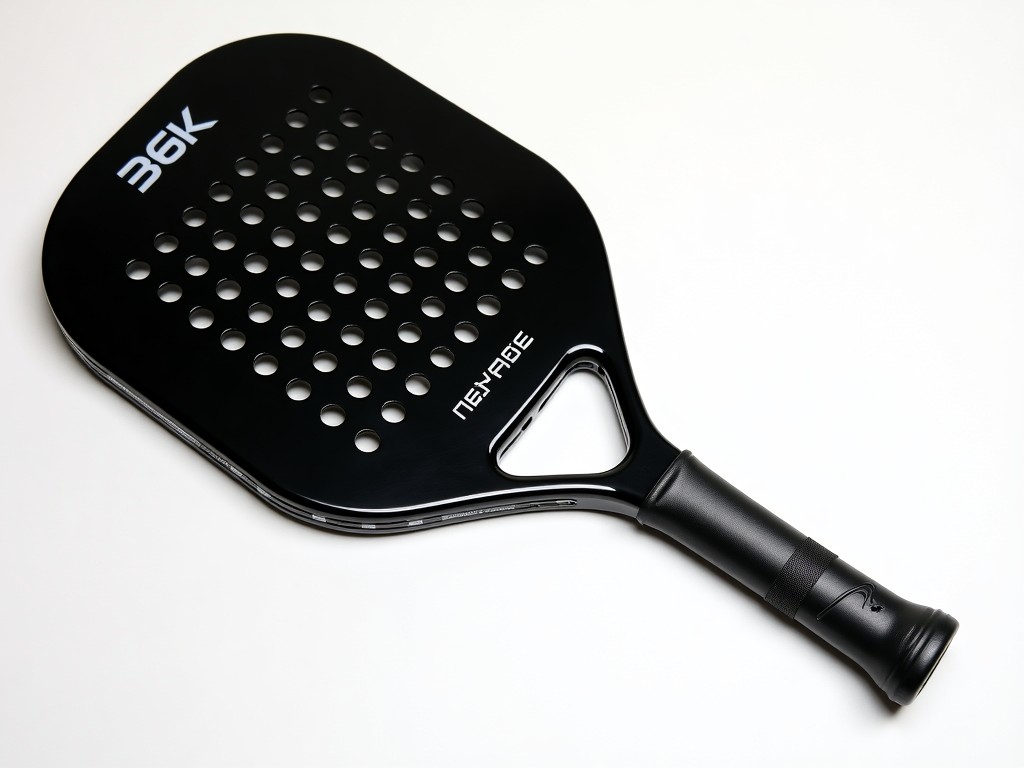
Selecting a wholesale padel rackets carbon fiber 18k supplier requires an understanding of how weave density affects structural rigidity and feedback. 18k carbon fiber utilizes a lower thread count compared to 12k variants, resulting in a slightly softer surface that expands more upon impact. For a private-label brand, the trade-off lies between the power output of a stiffer frame and the error tolerance of more flexible weaves. High-density carbon layers demand precise resin application during the curing process to prevent delamination under repeated high-velocity impacts.
Technical Note: 18k Weave Dynamics
The 18k configuration provides a higher tensile-to-weight ratio than lower carbon grades. This allows manufacturers to maintain a target weight of 360g-375g while increasing the thickness of the throat walls to prevent torsional fatigue during long tournament cycles.Size, Weight and Specification Range
Weight distribution is the primary metric for retail performance in padel rackets. A head-heavy balance shifts the center point 25mm above the handle, increasing leverage for smashes, whereas a balance-point setup improves maneuverability for defensive players. Manufacturers must specify the weight variance; a +/- 3g tolerance across a batch of 1,000 units ensures a consistent market experience for the end-user.
Standard dimensions typically follow a length of 45.5cm and a width of 38mm. The internal core thickness—varying from 33mm to 40mm—dictates the "ball effect." A thicker EVA core absorbs more energy but provides more control, while a thinner foam requires more physical effort to generate exit speed on the ball.
Comparing Two Standard Configurations
| Feature | 12k/14k Carbon Fiber | 18k Carbon Fiber |
|---|---|---|
| Surface Stiffness | High (Stiff) | Medium (Flexible) |
| Power Transfer | Direct/Sharp | Elastic/Forgive |
| Vibration Absorption | Lower | Higher |
Buying Mistakes That Lead to Returns
The most frequent return driver stems from poor bonding between the carbon face and the EVA core. If the adhesive-to-fiber ratio is incorrect, the face delaminates within the first month of competitive play. This often occurs when wholesale suppliers use low-grade resins to cut costs on 18k carbon models.
Another failure point is neglecting the core density consistency. Low-quality foam loses its "memory" quickly, leading to a racket that feels "dead" after only a few sessions. Procurement officers should demand hardness-testing data (Shore A scale) to ensure the foam maintains its rebound characteristics over the expected months of use.
Customisation Options and Their Limits
| Option | Application | Technical Limit |
|---|---|---|
| Surface Texture | Sandpaper, Matte, or Grit | Extreme grit can wear down over time. |
| Edge Protection | Rubber or TPU guards | Thicker guards add weight significantly. |
| Core Density | Soft, Medium, Hard EVA | Harder affects vibration comfort. |
Quality Control and Batch Consistency
Batch consistency is verified through weight-balancing and structural stress tests. A factory must measure every 50th unit to ensure the center of gravity remains within a 2mm radius of the master sample. Without this, a brand risks shipping products that feel fundamentally different to customers, leading to negative reviews and high churn.
Visual inspection focuses on the surface finish and carbon fiber alignment. Bubbles in the gel coat indicate improper curing, which leads to premature structural failure. We utilize UV-exposure testing to ensure the printed graphics do not peel when exposed to outdoor court conditions.
Volume Planning and Lead Time
- Prototype development and mold approval require 30-45 days for new geometry designs.
- Mass production of 18k carbon rackets typically spans 60-90 days depending on order volume.
- Material sourcing for specific high-density foams can add 2 weeks to the standard lead time.
Export Packaging and Handling Protection
International sea freight requires specialized packaging to prevent impact-related fractures at the throat. Each racket is individually wrapped in protective sleeves and placed in reinforced double-walled corrugated master boxes. This method prevents the "racking effect" that occurs when multiple units vibrate against each other during container transit.
Review our tooling capabilities and technical specifications.


