wholesale professional carbon padel rackets supplier - Bulk Supply and Specification Guide
Primary Manufacturing Manufacturing Trade-off: The selection of carbon weave density (K-count) dictates the balance between frame stiffness and vibration damping. Higher-count weaves (12K+) increase structural energy transfer but reduce the effective sweet spot compared to lower-count weaves (3K), which offer more flexibility and forgiving impact zones.
What the Design Has to Balance
Weight and stiffness trade off against each other in the construction of professional-grade padel rackets. A high-balance point shifted toward the head increases leverage for smashes but raises the torque on the wrist during off-center hits. To mitigate this, manufacturers vary the carbon layup in the throat to maintain structural integrity while keeping the total weight within the 360g-375g range.
The internal geometry of the beam also influences the racket's stability. A wider beam profile increases surface area for stability but increases swing weight, which can slow down maneuverability. For private-label buyers, the consistency of these dimensions across a bulk production run is critical to ensuring that the end-user experiences a predictable performance profile across multiple units.
What Actually Determines Performance
Repeat loading drives the failure if the resin-to-fiber ratio is not optimized. High-frequency impacts can lead to internal delamination where the face meets the foam core. Our process utilizes vacuum-pressure molding to eliminate air pockets that serve as stress initiation points for cracks under repetitive strain.
Material density within the core also dictates the rebound rate. High-density EVA (Ethylene Vinyl Acetate) provides a faster energy return for power, whereas lower-density foams provide more control and comfort. The interaction between the carbon face stiffness and the core density defines the "feel" that professional players evaluate over over hundreds of hours of match play.
Material Options and Their Trade-offs
| Material Component | Technical Characteristic | Buyer Implication |
|---|---|---|
| 3K Carbon Weave | High flexibility, tight weave | Increased control for intermediate-level players. |
| 12K Carbon Weave | Medium stiffness, wider weave | Balanced power and durability for retail. |
| 18K Carbon Weave | Maximum rigidity, thin fibers | Professional-level power; high sensitivity. |
| Hard EVA Core | High rebound, low absorption | Targeted at aggressive-hitting players. |
Size, Weight and Specification Range
Fatigue appears at the stress concentration points near the bridge if the thickness is inconsistent. Standard padel rackets follow a maximum length of 45cm, but the internal profile thickness varies between 38mm and 40mm in most models.
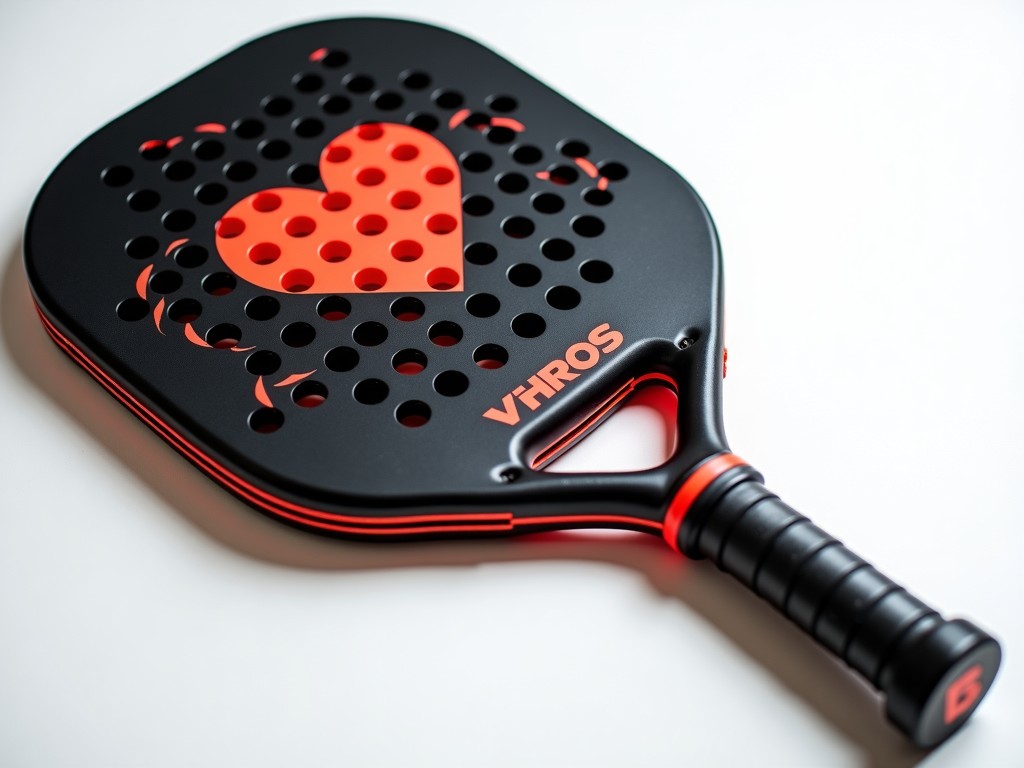
| Parameter | Standard Range | Tolerance |
|---|---|---|
| Total Weight | 350g - 385g | ±5g |
| Core Thickness | 10mm - 50mm | ±0.5mm |
| Balance Point | Head-light to Balanced | ±10mm |
| Surface Finish | Rough Carbon / Sandpaper | N/A |
OEM and ODM Programme Structure
Tooling amortisation is the primary factor in unit cost variance for custom orders. For private-label buyers, the initial cost of steel molds for specific frame geometries is distributed over the first production batch. Orders exceeding 500 units typically allow for custom-frame designs, whereas smaller batches may utilize existing molds with customized branding and material-mix-and-match performance profiles.
Customization extends beyond the aesthetic surface. We offer specific core-density blends and weave-patterns to match a brand's stated performance identity. To discuss lead times and tooling requirements for your specifications, request a technical consultation.
Questions Buyers Ask Before Ordering
How is weight drift managed across a large batch?
Weight drift occurs when the resin distribution is uneven or the core density is inconsistent. We utilize calibrated resin-injection cycles to ensure that every racket stays within a 5-gram tolerance of the target weight, maintaining balance consistency for the retail consumer.
What is the risk of delamination at the throat?
Delamination usually starts at the bond between the carbon face and the EVA core. By using a high-temperature curing process, we ensure a chemical bond that resists the shear forces generated during high-impact smashes.
Can the surface finish be customized for UV resistance?
Standard matte coatings can be prone to fading under prolonged outdoor exposure. We provide UV-stabilized top-coats for wholesale orders to maintain the integrity of the print and finish over multiple seasons.
Ready to review technical specifications for your carbon padel line?
Request Wholesale Quotation

