Specifying white padel racket and balls supplier for Wholesale and OEM Orders
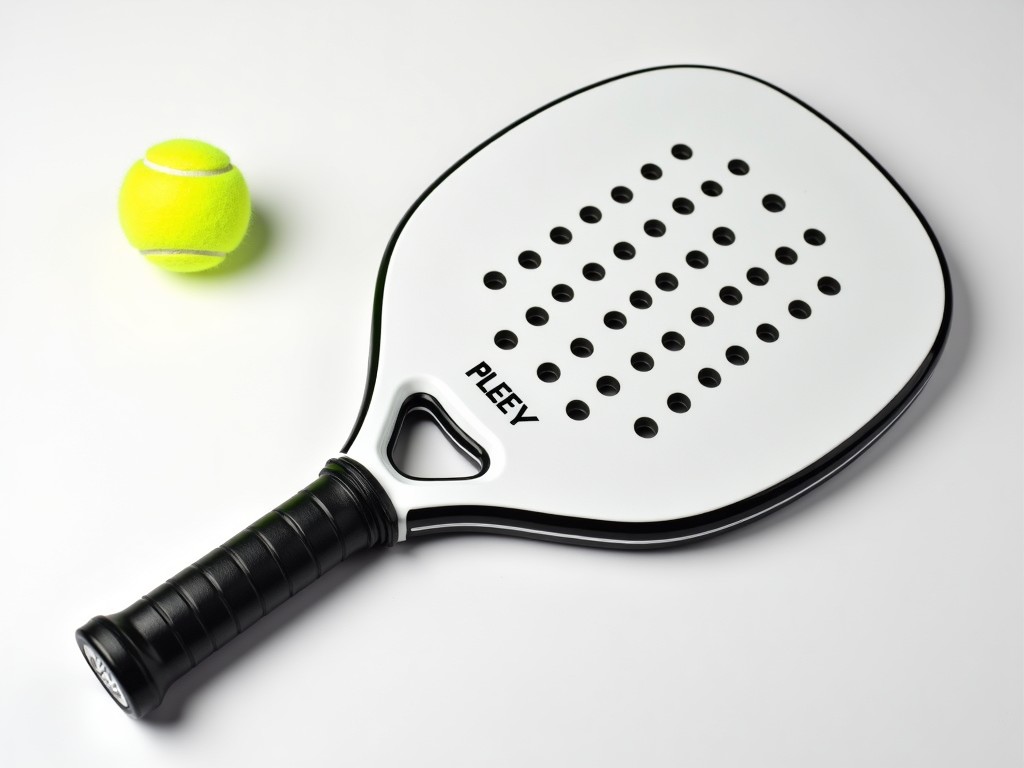
During a private-label launch with a fixed ship date, the focus shifts from aesthetic preference to structural integrity and manufacturing consistency. When sourcing white- equipment, the primary technical challenge involves UV resistance and surface de-bonding. Standard pigments often yellow under outdoor sunlight, so the manufacturing process utilizes UV-stabilized resins and high-density coatings to maintain the white finish without the common cracking seen in lower-grade batches.
What the Design Has to Balance
The performance of a padel racket depends on the trade-off between core density and frame stiffness. A 38mm EVA core increases the sweet spot but increases the swing weight. Conversely, a thinner carbon-fiber frame offers more maneuverability but is prone to delamination if the adhesive bond is not optimized. We balance the balance point—typically head-heavy for power—to ensure the racket remains stable during rapid overhead swings.
Core Material Dynamics
The choice between EVA foam and Poly core determines the vibration damping. A 20-degree EVA provides a softer feel for club players, while a 60-degree hard EVA maximizes energy return for high-level competitive play.
Buying Mistakes That Lead to Returns
Bulk returns often stem from inconsistent weight tolerance across a shipment. If a batch varies by more than 5 grams, the balance point shifts, altering the swing feel and leading to customer complaints regarding unpredictability. Similarly, ball pressure retention is a common failure point. If the felt-to-core seal is imperfect, the ball loses its rebound consistency after only three hours of play.
Another failure mode is the throat cracking of the racket. High-impact zones concentrate stress at the bridge where the face meets the handle. We mitigate this by using a reinforced carbon layup at the throat, which ensures the frame withstands high-velocity strikes without structural fatigue.
Segment-Specific Requirements
Retail buyers for academy programs prioritize durability because the equipment faces high mechanical abrasion from frequent use. In contrast, brand managers for professional lines focus on material specifications like 12K or 18K carbon weaves to provide specific surface friction for spin.
| Feature | Technical Specification |
|---|---|
| Surface Weave | 3K, 12K, or 18K Carbon Fiber options |
| Core Density | EVA (Soft, Medium, Hard) or Foam Core |
| Finish Protection | UV-stabilized white matte/gloss coating |
| Customization | OEM silk-screen printing or heat-transfer branding |
How Consistency Is Held Across Batches
Maintaining identical specifications across container loads requires rigorous control over the curing process. For padel rackets, the temperature-controlled curing cycle of the resin determines the final stiffness of the frame. For the balls, automated pressure-testing machines ensures that every unit in a tub falls within the 56.0g to 59.5g range.
We utilize batch traceability to link every manufactured unit to its specific material lot and production date. This allows for rapid analysis if a distributor reports a weight drift or coating loss over time.
Capacity, Tooling and Scheduling
Moving from sample orders to container loads changes the logistical requirements regarding tooling. Custom frame molds for OEM orders require a 4 to 6 week lead time for steel fabrication and testing. Standard white-model rackets can typically be dispatched within 30-45 days depending on current production volume and raw material availability.
| Product Type | Standard Range/Tolerance |
|---|---|
| Racket Weight | 360g - 375g (±3g tolerance) |
| Racket Thickness | 38mm (standard profile) |
| Ball Weight | 56.0g - 59.5g |
To begin your private-label production, request a technical sample and review our wholesale capacity for the next season.


