Best Price good beginner intermediate pickleball supplier: What Buyers Should Check Before Ordering
Wear shows up at the same point every season in high-volume recreational environments, specifically where the edge guard meets the paddle de-lamination or where the surface grit begins to smooth. When sourcing for the beginner-intermediate segment, the consistency of the honeycomb core density determines the structural life of the unit. Many low-cost options fail to maintain their original balance point after 500 impact cycles, leading to high return rates from retail partners who expect consistent performance.
Returns usually trace back to the same weak point: the adhesive bond between the face material and the polypropylene core. If the manufacturing process utilizes cold-press molding instead of thermal molding, the paddle becomes brittle and prone to delamination under temperature fluctuations. A reliable supplier must demonstrate a control process that ensures the 13mm or 16mm core remains rigid across the entire surface area of the face.
Technical Procurement Trade-off
For intermediate players, a thicker 16mm core offers greater power absorption and vibration control, but it increases the weight by approximately 15-20g. Choosing the core thickness requires balancing the target demographic's swing speed against their control requirements.
How It Is Built and What That Changes
The construction begins with an injection-molded honeycomb core, which provides the necessary stiffness-to-weight ratio. In the beginner-tier, fiberglass faces are common due to their larger "sweet spot," whereas intermediate-grade carbon fiber or graphite weaves allow for more precise spin control. The edge guard is typically an ABS-plastic perimeter frame that protects the core from lateral impacts during ground-strike errors.
- Thermal molding fuses the face to the core, eliminating the air pockets that cause structural fatigue.
- Surface-texture grit is applied via spray-activated resins to maintain friction against the plastic ball over extended use.
- Ergonomic grips vary from 4.25 to 4.5 inches in diameter, utilizing moisture-wick polymers for competitive play.
Measured Performance in Real Use
| Parameter | Standard Range | Buyer Impact |
|---|---|---|
| Total Weight | 210g – 235g | Lower weight increases speed for beginners. |
| Core Thickness | 13mm – 16mm | Thicker cores reduce arm vibration. |
| Swing Weight | 185 – 195 in | Higher swing weight aids power generation. |
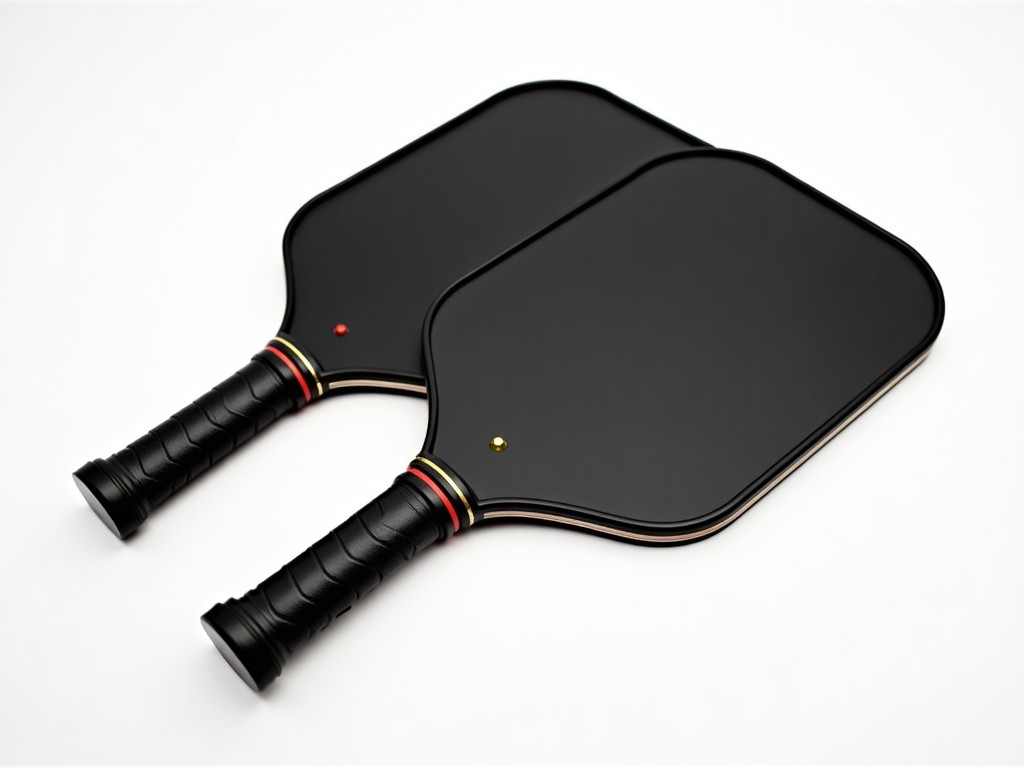
Matching the Product to the Buyer's Need
Retail Brand Focus
Focuses on durability and visual appeal. Fiberglass-faced paddles are often preferred here because they provide a higher tolerance for off-center hits common in learning players.
Club/Academy Focus
Requires high-reorder consistency and grip durability. Bulk orders prioritize paddles that can withstand daily use and sweat exposure in a club-tournament environment.
What Can Be Customised and What Cannot
Customization is primarily limited to surface aesthetics and grip specifications. Buyers can request custom silk-screening or UV-printing for the face, but the internal honeycomb geometry and core material density remain fixed for a specific production run. Altering the core thickness post-tooling requires a new mold set, which increases the unit cost for small batches.
The grip wrap material is another variable; switching from standard foam to moisture-absorbent overgrips allows private-label buyers to differentiate the end-user's tactile experience. However, the structural dimensions of the paddle frame are governed by tournament regulations to ensure fair play standards.
Requirements by Buyer Segment
OEM buyers require detailed technical sheets specifying weight variance across a batch to ensure brand-level consistency. Retail buyers often prioritize the packaging-ready finish and the durability of the edge guard against shipping damage. For distributors, the primary metric is the lead time for replenishment of core-SKUs to maintain inventory levels during peak seasonal demand.
Care, Storage and Service Life
Extended exposure to direct UV sunlight can degrade the resins in the face, leading to surface peeling. Storing paddles in climate-controlled environments prevents the honeycomb core from warping due to extreme temperature shifts. The service life of a beginner-grade fiberglass paddle is typically 12 to 18 months under heavy use, provided the edge guard remains intact from impact.
Questions Buyers Ask Before Ordering
What is the weight variance across a 1,000-unit order?
Standard production maintains +/- 3 grams; tighter tolerances can be negotiated for premium-tier graphite models.
Can the core material be swapped for carbon fiber faces?
Yes, carbon fiber faces are available for intermediate models, though they typically increase the material cost and the final unit price.


