best price pickleball focus training paddles supplier - Bulk Supply and Specification Guide
Technical Trade-off: For beginner-focused paddles, the primary decision point lies between core thickness (13mm vs 16mm) and face material. A 16mm core increases the sweet spot and reduces vibration for novice players, while a 13mm fiberglass face maximizes swing speed and reduces unit cost at the expense of control control.
Where Cheaper Alternatives Fall Short
Unit price and service life diverge when the adhesive bond between the face and the polypropylene honeycomb core fails under thermal stress. Low-grade resin often degrades after 20 hours of high-impact play, leading to delamination that alters the sweet spot and creates dead zones. Buyers should prioritize thermo-pressed edges to prevent this separation in high-volume retail cycles.
Inconsistent core density is another common failure in low-cost manufacturing. When the air cells within the honeycomb are not uniform, the paddle's rebound coefficient becomes unpredictable, making it difficult for a training program to develop consistent muscle memory. Standard-grade molding ensures a consistent cell structure to maintain ball trajectory across the entire face surface.
What the Design Has to Balance
A beginner-focused paddle must balance weight distribution with maneuverability to prevent premature arm fatigue. A head-heavy configuration helps novice players generate power but increases the risk of elbow strain due to higher swing weight during extended sessions. A neutral balance point, typically located 10-15cm from the heel, provides the most versatile entry point for club-level inventories.
Surface friction also presents a trade-off between spin potential and longevity. High-friction grit surfaces offer immediate spin but wear down rapidly through contact with the plastic ball. For training-grade paddles used daily, a molded texture often provides a more durable surface that maintains its coefficient over hundreds of hours compared to spray-on coatings.
Construction Method and Its Effect on Consistency
| Material Combination | Core Thickness | Weight Range | Primary Benefit |
|---|---|---|---|
| Fiberglass / Polypropylene | 13mm | 7.8-8.2 oz | Maximum power & low cost |
| Carbon Fiber / Polypropylene | 16mm | 8.0-8.4 oz | Vibration damping & control |
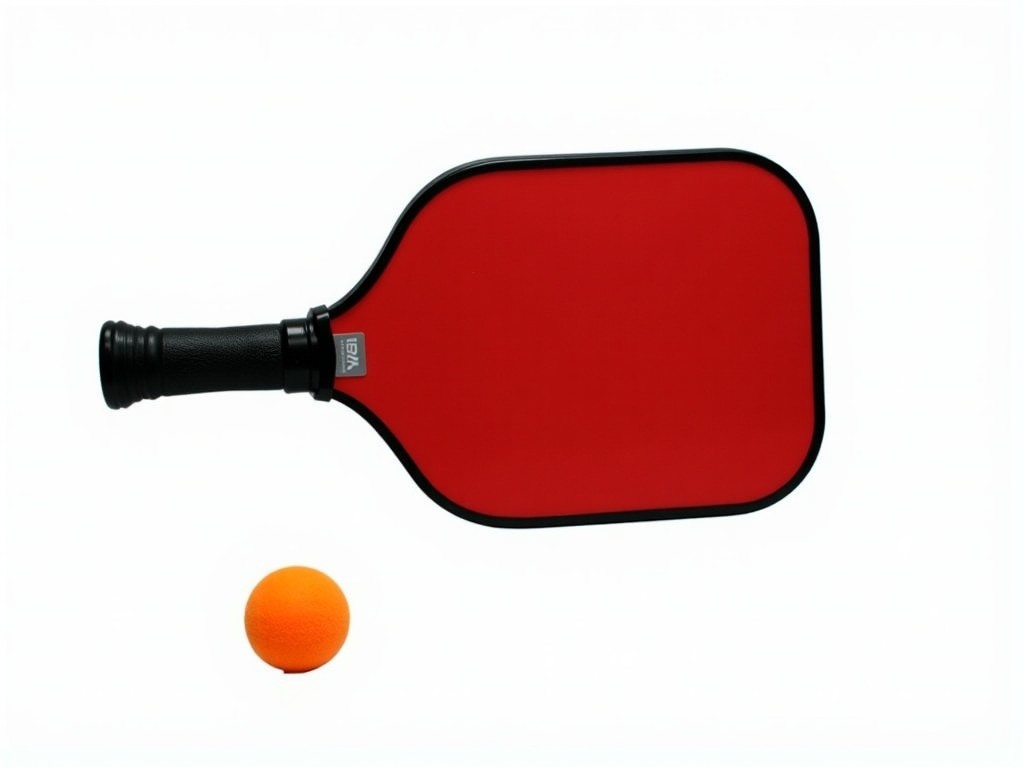
The injection molding of the honeycomb core determines the structural integrity of the paddle. If the pressure during the molding process is inconsistent, the internal walls can collapse, resulting in warping of the paddle face over time. High-pressure compression ensures that each unit remains flat within a 0.5mm tolerance across the length.
Measured Performance in Real Use
Unit price settles the question only after the rebound consistency is verified across the batch. In training environments, the paddle must deliver a predictable ball velocity regardless of where the ball strikes the face. If the energy return rate varies by more than 5% across the sweet spot, the paddle loses its value as a teaching tool, as the student cannot accurately calibrate their swing force.
Vibration damping is a critical metric for beginners who often use improper grip tension. A paddle with a perimeter weight distribution or a foam-infused edge guard absorbs impact energy, preventing the "shock" from transferring to the wrist. This reduces the rate of returns related to discomfort in academy settings.
Inspection Items and Test Methods
- Weight Variance Variance Check: Each unit is weighed to ensure it falls within the +/- 0.2 oz range of the specification.
- Drop Testing: Units are dropped from 2 meters onto a hard surface to check for internal core fracturing or delamination.
- Surface Abrasion Test: A standardized abrasion wheel measures the durability of the grit-to-face bond.
- Flatness Verification: Using digital calipers to ensure the face does not warp beyond 1.0mm.
Capacity, Tooling and Scheduling
Production cycles for private-label orders depend on tooling availability for custom face graphics and edge guard profiles. Standard specifications typically offer a lead time of 30-45 days, whereas custom-molded grips or unique shapes may require an additional 21 days for mold fabrication and de-risking test samples.
Batch capacity is limited by the curing time of the resin-layers. Large-scale importers should plan for orders of 5,000 to 10,000 units per month to ensure consistent supply for regional distributors or seasonal academy launches.
Packing, Marking and Freight Configuration
Moisture control is vital during overseas shipping to prevent the honeycomb core from softening in humid transit hubs. Each paddle is individually wrapped in poly-bags with desiccant packs before being placed in reinforced corrugated master cartons. Master cartons must be marked with weight, SKU, and batch numbers to facilitate rapid customs clearance and inventory tracking.
Questions Buyers Ask Before Ordering
What is the minimum order for custom-label printing?
The MOQ is typically 500 units per design to cover the setup costs of the silk-screen or UV heat-transfer printing equipment.
Can the grip size be varied?
Standard grips are 4.25 inches, but custom lengths can be accommodated in larger bulk orders, though this requires a separate tooling run for the handle injection.
How do the paddles handle UV exposure?
We use UV-stabilized resins in the face layers to prevent fading and brittleness when stored in outdoor facilities for extended periods.


