Custom blue cut grit pickleball factory: What Buyers Should Check Before Ordering
Cheaper stock options fail at the worst point in the season. When surface grit wears down after three months of high-frequency play, the cost per unit spikes due to replacement demands. The total cost of ownership shifts once returns are counted against the distributor's margin-line.
Tooling amortisation decides the unit price for custom molds. High-volume production allows for the distribution of fixed CNC-cutting costs across thousands of units. Selecting a secondary source mitigates supply chain disruptions when a primary manufacturer faces raw material shortages.
What This Product Is and Where It Fits
These paddles utilize a specialized blue-cut abrasive surface designed for high-friction spin generation. They serve tournament academies that require consistent ball response across a large fleet of student equipment.
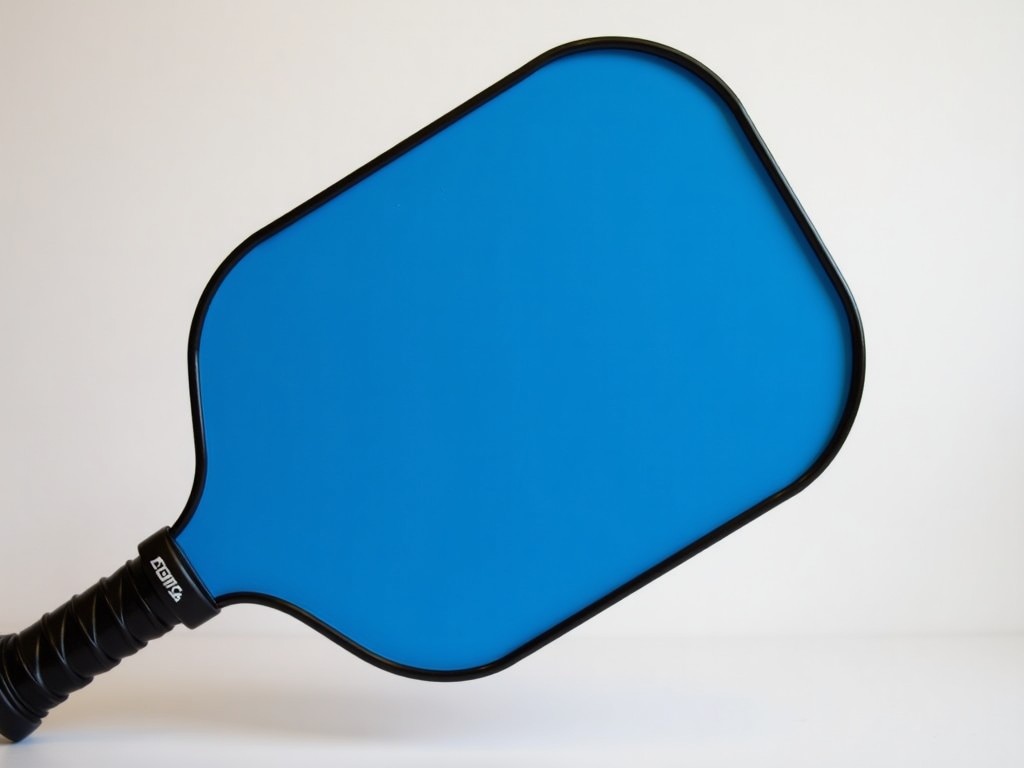
The blue-cut grit refers to the specific mechanical texture applied to the carbon fiber or fiberglass face. This surface is engineered for environments where sweat and constant impact abrasion would normally strip off standard paddle coatings.
What Actually Determines Performance
Performance is dictated by the interaction between the core density and the surface friction. A thicker core increases the dwell time, which allows the player to control the ball trajectory, but it increases the swing weight.
| Parameter | 13mm Control Core | 16mm Power Core |
|---|---|---|
| Swing Weight | Higher maneuverability | Lower/Stable |
| Grit Density | High abrasion friction | Standard friction resistance |
| Sweet Spot Size | Concentrated | Expanded perimeter |
Construction Method and Its Effect on Consistency
Foam-injection molding around the perimeter prevents the common failure point of edge guard peeling. This method reduces the delamination risks seen in high-impact environments.
The bonding process between the polymer honeycomb core and the face determines the lifespan. If the bond is inconsistent, the paddle develops a dead spot after a heavy hit, leading to customer returns.
Customisation Options and Their Limits
Customization is limited by the structural integrity of the carbon fiber layup. Over-printing can affect the thermal properties of the honeycomb core if the ink layers are too thick during the heat curing process.
- Grip diameter varies from 4.15 to 4.25 inches based on ergonomic foam wraps.
- Edge guard material can be TPU for impact resistance or slim-profile.
- Surface grit color is applied via UV-stable resins to prevent rapid fading.
How Consistency Is Held Across Batches
Each batch undergoes weight-checking within a +/- 2g tolerance. This ensures that a buyer receiving 500 paddles experiences uniform balance across the entire order.
UV testing on the blue-cut coating ensures that the abrasive surface does not degrade when exposed to outdoor court sunlight for 500+ hours.
Volume Planning and Lead Time
Standard production runs require 30 to 45 days for custom Molded faces. Smaller orders utilizing existing molds can be fulfilled within 14 days if raw core stock is available.
Packing, Marking and Freight Configuration
Moisture-resistant corrugated cardboard boxes prevent abrasion during sea freight. Each individual paddle is marked with batch codes to maintain traceability for quality control audits.
Request a technical data sheet for your next production cycle.
specification review

