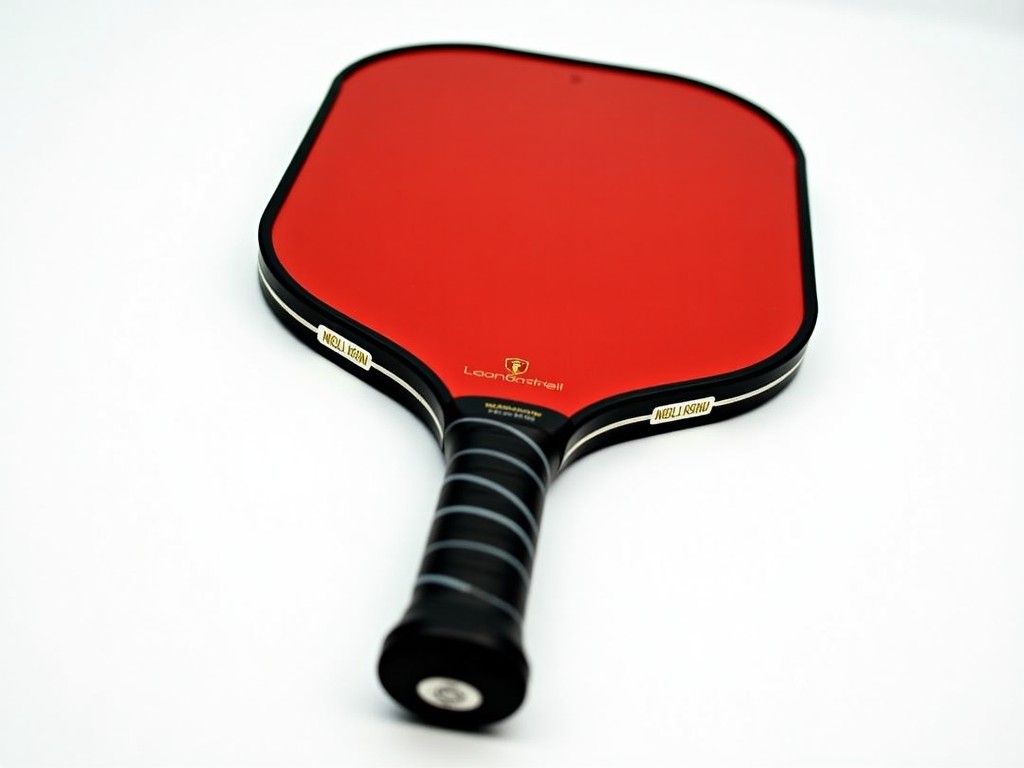
Specifying Custom latest design pickleball paddles Factory for Wholesale and OEM Orders
When a brand extends an existing range, the primary challenge lies in maintaining a consistent sweet spot while reducing the overall gram weight. Lightweight paddles often suffer from vibration transfer if the bond between the face material and the polymer core is not executed with thermal precision. Our manufacturing process utilizes high-pressure vacuum molding to ensure the resin penetrates the carbon fiber cells completely, preventing the delamination frequently seen in lower-pressure assemblies during intense competitive play.
The transition from standard 8-oz paddles to sub-7.5oz designs requires a re-evaluation of the edge guard geometry. A thinner edge guard increases aerodynamic surface area but creates a stress point for impact-related fatigue. We reinforce the perimeter with a reinforced polymer injection to maintain the structural integrity of the throat without adding significant mass to the head section.
Where Cheaper Alternatives Fall Short
Lower-cost production often relies on glued-on faces rather than thermally-bonded structures. This method leads to "dead spots" where the face loses contact with the honeycomb core after a few hours of ball impact. Furthermore, the use of generic fiberglass weaves often results in a surface that wears down rapidly under abrasive play, losing the grit-texture necessary for spin-based control.
UV degradation is another common failure point for mass-market paddles. Exposure to outdoor sunlight causes the polymer resins to become brittle, leading to surface cracking that compromises the internal core. We utilize a UV-stabilized coating that ensures the paddle surface retains its friction coefficient even after months of exposure to direct sunlight.
Assumptions Buyers Should Stop Making
Many buyers assume that a lightweight paddle is inherently less durable. In reality, durability is a function of material density and the curing cycle, not the final weight. By using high-modulus carbon fiber reinforced with aramid polymers, we achieve a weight profile that resists impact deformation better than heavier, poorly-constructed alternatives.
Sweat and moisture resistance are often overlooked during the specification phase. Standard grips absorb moisture, which increases the weight of the paddle over time and degrades performance. Our OEM options include multi-layered moisture-wicking systems that move sweat away from the hand, ensuring the balance-point remains consistent throughout the product's service life.
OEM and ODM Programme Structure
| Material Option | Performance Metric | Primary Application |
|---|---|---|
| 3K Carbon Fiber | High Spin / Control | Professional Tournament Play |
| Fiberglass Weave | Maximum Power | Entry-level / Club Retail |
| Aramid Hybrid | Vibration Absorption | Senior / Recreational Players |
- Custom mold tooling for unique head shapes and aerodynamic profiles.
- Selection of core thickness (13mm, 14mm, or 16mm) for weight optimization.
- Surface texture grit-level specification for specific friction requirements.
- Branded graphics printing using UV-resistant inks.
Stock Availability and Reorder Planning
On a club programme that reorders twice a season, logistics must account for the lead time required for custom face curing. We maintain a baseline stock of standard honeycomb cores and blank frames to accelerate the assembly of custom-branded orders.
Moving from sample orders to container loads changes the focus to batch consistency. For high-volume orders, we implement batch-specific weight testing to ensure that the variance between individual paddles remains within a +/- 2-gram tolerance across the entire shipment.
Export Packaging and Handling Protection
Each paddle is wrapped in a moisture-barrier polyethylene sleeve to prevent condensation damage during sea freight. The outer shipping cartons utilize double-walled corrugated cardboard with internal dividers to protect the edge guards from impact- during mechanical loading and unloading.
Ordering, Tooling and Lead-Time Questions
What is the typical lead time for custom mold tooling?
Initial tooling for a unique paddle shape requires 25 to 35 days. Production runs for these molds typically ship within 30 to 45 days after final sample approval.
Is there a minimum order for custom face textures?
The minimum for specialized grit-coating is 500 units per design. This allows the cost of the application equipment to be amortized across the batch.
How do you ensure weight consistency in bulk orders?
Every paddle undergoes a weight check post-assembly. If a batch exceeds the specified tolerance by more than 3%, it is flagged for manual inspection or rejection.
Review our technical specifications and request a tooling quote


