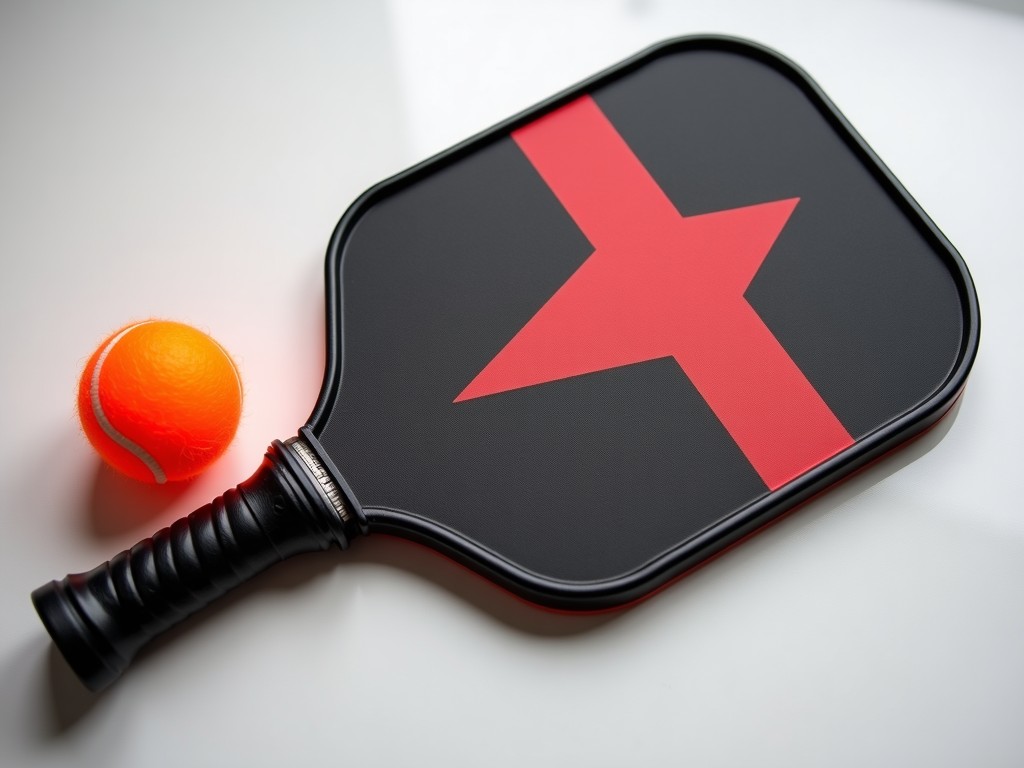
Specifying direct factory carbon fiber pickleball supplier for Wholesale and OEM Orders
Technical Trade-off Analysis: The selection between a 13mm and 16mm polymer honeycomb core dictates the paddle's performance profile. A 13mm core increases energy return for power-oriented play but increases susceptibility to surface delamination under high-velocity impacts, while a 16mm core enhances vibration dampening and control stability at the cost of increased swing weight.
What This Product Is and Where It Fits
When a brand extends an existing range, the construction method determines the long-term viability of the inventory. Industrial-grade carbon fiber paddles utilize a thermal molding process where the carbon fiber faces and the polypropylene honeycomb core are bonded under high pressure and heat. This method eliminates the air gaps often found in cold-pressed alternatives, preventing the face from peeling away from the core after a few weeks of competitive play.
The surface typically consists of a 30K or 36K carbon fiber weave, providing the friction coefficient necessary for spin generation. For wholesale-level retail brands, a 32K weave offers a balance of cost and abrasion resistance, whereas high-performance tournament-grade lines often specify a T7 carbon fiber surface with a textured nano-grit finish to maintain spin-retention rates over months of heavy use.
How It Performs in Use
Performance in the field is measured by the consistency of the sweet spot and the weight distribution. In mass-production, a variance of more than 3 grams across a batch can lead to high return rates from club-level buyers. Our manufacturing process utilizes precision core-cutting to ensure the balance point remains within a 2mm margin of the specification, providing a predictable feel for players transitioning between different racquet deigns.
Material fatigue manifests most frequently at the edge guard. A reinforced TPU-molded edge guard protects the carbon fiber frame from cracking when the paddle strikes the pavement. If the guard is not properly bonded with industrial-grade adhesive, moisture ingress can occur, leading to structural failure and a loss of the "pop" sound expected from the honeycomb core.
Matching the Product to the Buyer's Need
| Parameter | Standard Specification | Market Application |
|---|---|---|
| Core Thickness | 13mm / 16mm | Power vs. Control tiers |
| Face Material | 32K / 36K Carbon Fiber | Surface durability & spin |
| Weight Range | 220g - 235g | Standard retail distribution |
| Bonding | Thermal Molded | Long-term longevity |
Assumptions Buyers Should Stop Making
A common misconception among procurement officers is that all carbon fiber paddles are equivalent. In reality, the weave density and the resin-to-fiber ratio significantly alter the stiffness of the face. A low-resin content results in a brittle face that is prone to cracking, while a high-resin content adds unnecessary weight without improving the tactile "feel" of the ball.
Another error is overlooking the internal geometry of the honeycomb. If the honeycomb cells are not uniform in height across the entire surface, the paddle will warp during the cooling phase of the molding process. This results in an uneven surface that causes inconsistent ball trajectories, leading to immediate batch rejection by professional-level competitive players.
Usage Scenarios and Buyer Segments
On a club programme that reorders twice a season, the priority is cost-efficiency and consistent durability. These buyers require a paddle that can withstand high-volume use by recreational players without losing its structural integrity. Here, a 16mm core with a standard carbon fiber face is often the most resilient choice as it minimizes complaints regarding joint strain.
- Private-Label Brands: Focus on custom grit textures and specific carbon weave patterns to differentiate in a crowded market.
- Regional Importers: Prioritize weight-optimized shipping and robust master carton packaging to minimize transit damage.
- Tournament Academies: Demand specific balance points and aerodynamic edge profiles for high-level performance gear.
Working as a Production Partner, Not a Catalogue Supplier
During a private-label launch with a fixed ship date, the factory's ability to manage the tooling lifecycle is critical. A true partner provides technical feedback on material shrinkage rates during the carbon fiber curing process, ensuring the final dimensions match the buyer's CAD files without deformation. This proactive engineering prevents the mid-production delays that often cripple retail launches.
Collaboration also extends to the selection of grip materials and edge guards. Different synthetic foams offer varying levels of sweat resistance and durability. By selecting the material based on the target market's climate, a buyer can ensure the product does not degrade or degrade prematurely in high-humidity environments.
Volume Planning and Lead Time
Lead times are primarily dictated by the complexity of the carbon layup and the volume of the honeycomb material required. For existing tooling, production cycles typically range from 30 to 45 days for orders exceeding 1,000 units. Custom molds require an additional 21 to 30 days for CNC machining and vacuum-forming testing before the first production run begins.
Review our technical specifications and tooling capabilities here.


