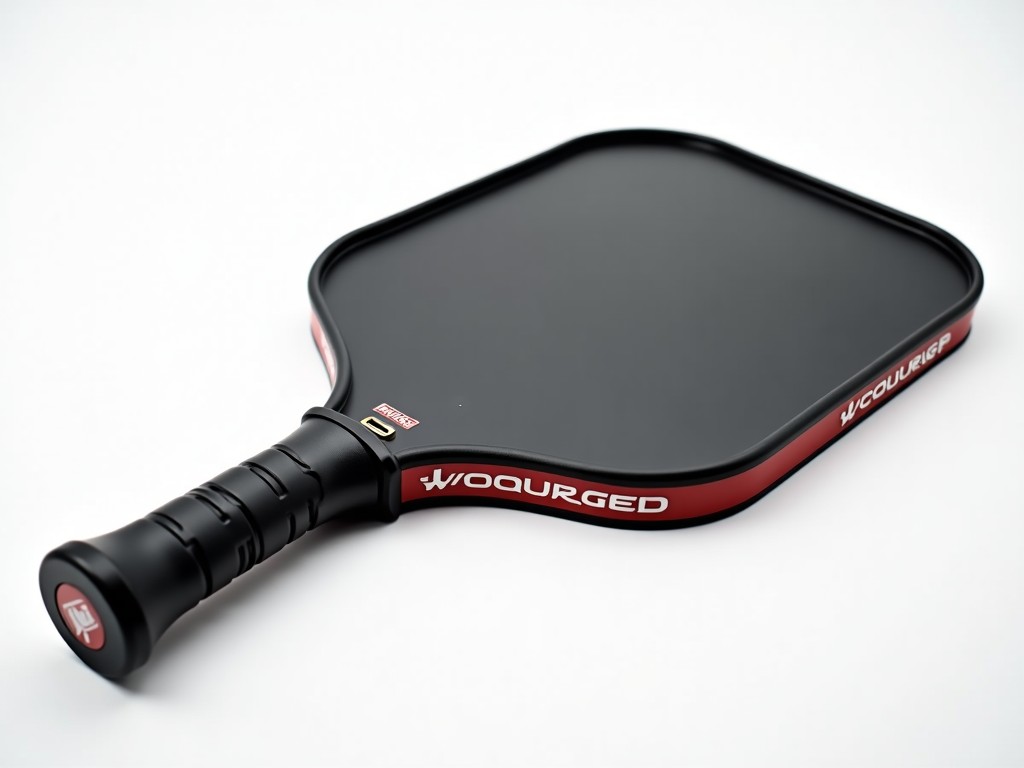
Specifying Direct Factory lightweight professional pickleball paddle pro supplier for Wholesale and OEM Orders
Technical Trade-off: Mass vs. Structural Stability
Reducing paddle mass to sub-8.0oz increases swing speed metrics but elevates the risk of core delamination during high-impact collisions. A 16mm polymer honeycomb core provides the necessary energy absorption to prevent structural fatigue, whereas 13mm cores prioritize power at the cost of durability.
Design Constraints Behind the Specification
Moving from sample orders to container loads changes the focus from aesthetic testing to structural variance across thousands of units. The aerodynamic profile of the paddle face dictates the drag coefficient, but the edge guard thickness determines the resilience against ground abrasion. Manufacturers must balance the perimeter weight to prevent twisting without increasing the overall mass beyond the limits of comfort-play zones.
The balance point is a critical variable for professional-grade equipment. A head-heavy configuration increases stability on deep serves but increases the torque on the wrist during rapid backhand transitions. Procurement officers should specify a reinforced throat withed carbon fiber weave to ensure the stress is distributed evenly across the frame.
Materials and Construction Trade-offs
T7 carbon fiber faces offer a higher friction coefficient for spin but increase raw material costs compared to fiberglass alternatives. Fiberglass faces provide a more flexible rebound surface that enhances power output but often results in faster wear over competitive cycles. The core density also dictates the "feel"; higher-density polymer cells dampen vibration more effectively but add significant grams to the final assembly.
Injected foam molding around the edge guard eliminates the common failure point where the plastic trim meets the paddle face. This construction method adds approximately 5-10 grams of weight but significantly reduces the return rate related to peeling edges in high-impact environments.
Specification Range and Customisation Limits
| Parameter | Standard Range / Options |
|---|---|
| Core Material | Polymer Honeycomb (13mm, 16mm) |
| Face Material | Carbon Fiber, Fiberglass, T7 Carbon |
| Weight Range | 7.7oz - 8.5oz |
| Surface Texture | Raw Carbon, Sanded Grit, Friction Peel |
| Grip Diameter | 4.25" - 4.55" |
Buying Mistakes That Lead to Returns
Ignoring the glue line quality is the primary cause of batch delamination. If the thermal bonding process is not uniform, the paddle face will separate from the core within the first ten hours of competitive play. Buyers should demand a heat-press curing process to ensure a permanent bond between the face and the honeycomb structure.
Another common error is failing to specify the surface grit consistency. If the grit is applied via uneven spray coating, the paddle will exhibit inconsistent spin performance, leading to customer dissatisfaction among professional players. CNC-textured application ensures a uniform friction coefficient across the entire production run.
How Consistency Is Held Across Batches
Consistency is maintained through automated CNC molding of the core edges. Manual cutting often results in weight variations that alter the balance point of each individual paddle. Our quality control utilizes a weight-check station for every 50 units to ensure the variance remains within ±1 gram of the specified target.
Batch-matching involves using the same batch of polymer honeycomb for an entire production run. This ensures that the rebound rate and "pop" remain identical across different orders, which is vital for brands maintaining a consistent product performance identity.
Stock Availability and Reorder Planning
On a club programme that reorders twice a season, lead times must account for the curing time of the resin layers. Standard white cores are typically available for a 30-day production window, while custom-printed carbon faces require 60-90 days due to the multi-layer layup process.
Maintaining a safety stock of unbranded frames allows for a faster turnaround on private-label requests. This strategy mitigates the risk of missing retail launches during peak demand periods like the spring and summer transitions.
Packing, Marking and Freight Configuration
Bulk shipping requires individual poly-wrapping to prevent surface abrasion during-sea transit. Master cartons must be reinforced with double-wall corrugated cardboard to prevent compression of the lower paddles when stacked. Each carton should include the batch number, weight, and material composition to facilitate easy inventory tracking for the importer.
margin: 0;">Request technical specifications and sample units for your next OEM production.
Inquire About Sample Requests

