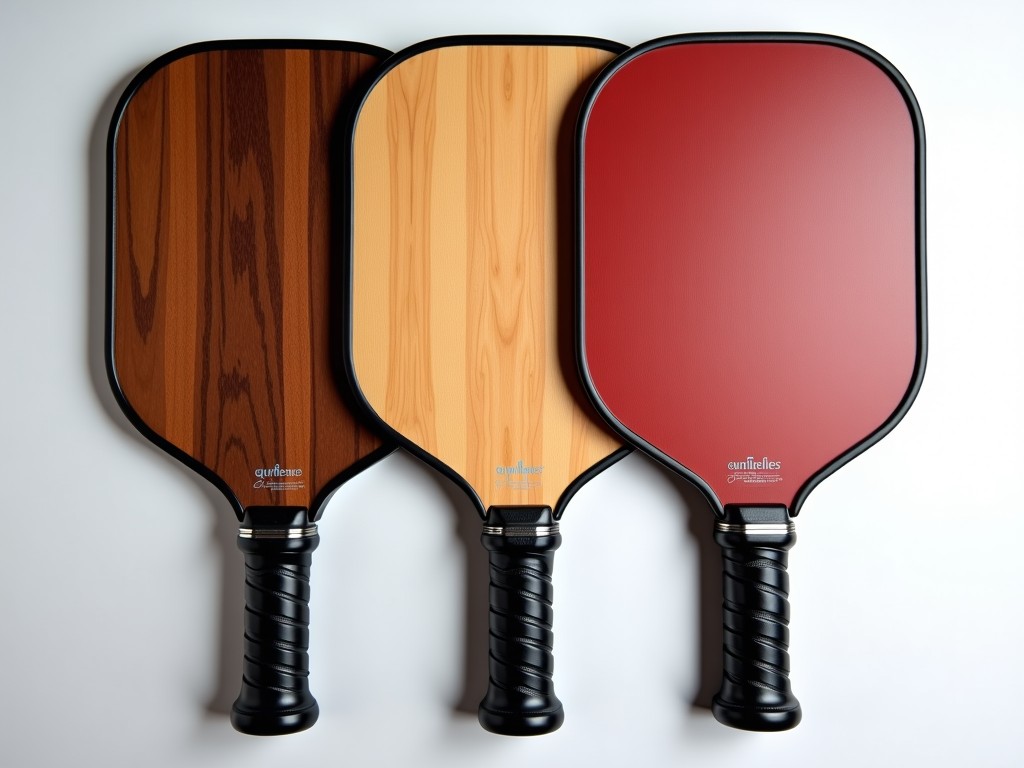
oem custom personalized pickleball paddles Company - Bulk Supply and Specification Guide
Cost and durability pull in opposite directions once carbon-fiber faces are introduced against standard fiberglass. While carbon fiber offers a higher friction coefficient for spin generation, the material cost increases the unit price for retail buyers. Fiberglass provides a greater "pop" or energetic-return effect but is more prone to surface fatigue over high-frequency impact cycles. For bulk-level procurement, the choice of core material—typically 13mm to 16mm polypropylene honeycomb—dictates the paddle's sweet spot size and vibration dampening capabilities.
Material Selection Logic
A 16mm core increases mass and provides better control, which reduces the risk of elbow strain for recreational players. Conversely, a thinner 13mm core reduces swing weight and increases power output, but increases the likelihood of structural deformation under repeated off-center hits.
Materials and Construction Trade-offs
Brand managers must evaluate the trade-off between edge guard weight and overall balance. A paddle with a thermoformed edge guard gains perimeter weight, which stabilizes the frame against twisting but raises the total weight by 5 to 10 grams. Standard glued-edge paddles are lighter and more maneuverable but are susceptible to delamination when the paddle strikes the court surface at acute angles.
- Carbon Fiber (T700): High modulus; superior spin potential; higher manufacturing cost.
- Fiberglass We : Higher elasticity; more energy return; lower price point.
- Polypropylene Honeycomb: Standard core structure; provides thermal stability and impact absorption.
- PEBA Foam Wrap : Used in premium builds to expand the sweet spot and dampen vibration.
Construction Method and Its Effect on Consistency
Where chlorine, sweat or UV exposure is routine, the bonding method determines the lifespan of the personalized finish. Thermoforming uses heat and pressure to mold the face and core into a single monolithic structure. This process eliminates the adhesive seams where moisture ingress often begins. Traditional lamination assembly relies on industrial adhesives that can fail over time when exposed to high temperature fluctuations in outdoor club environments.
Consistency in mass production requires ensuring that every unit in a batch maintains the same balance point. Without precise molding controls, the weight distribution can shift by +/- 3 grams, which is noticeable to competitive-level players who expect a professional-grade product line.
Comparing Two Standard Configurations
| Feature | Control-Oriented Build | Power-Oriented Build |
|---|---|---|
| Core Thickness | 16mm Honeycomb | 13mm Honeycomb |
| Face Material | Raw Carbon Fiber | Fiberglass |
| Target Weight | 8.5g - 9.0g | 7.5g - 8.0g |
| Swing Weight | Head-Light | Head-Heavy |
Who Uses It and Where It Matters
Retail brands launching new equipment lines require high-volume manufacturing that can withstand the friction of retail displays. For these buyers, the focus is on preventing the grip from peeling and the face graphics from cracking. Club purchasing managers often order custom-branded paddles for tournaments, where aesthetic consistency across the batch is the primary driver for the contract.
Outdoor-specific gear demands UV-stabilized coatings. Without these, the personalized graphics will fade within a single season of exposure to direct sunlight, devaluing the brand equity for the end consumer.
Quality Control and Batch Consistency
Our inspection protocol begins with weight tolerance testing. Any paddle deviating by more than +/- 2 grams from the target specification is flagged for manual rebalancing to ensure uniform retail performance. We also perform impact stress testing to ensure the honeycomb core has not been crushed or misaligned during the molding process.
| Usage Condition | Potential Failure | Preventative Specification |
|---|---|---|
| High-impact court play | Edge cracking / Delamination | Thermoformed perimeter frame |
| Sweat and humidity | Grip peeling / Adhesive failure | Heat-activated edge bonding |
| Direct sunlight exposure | Graphic fading | UV-stabilized ink and resins |
Packing, Marking and Freight Configuration
Export orders require moisture-controlled packaging to prevent core warping during sea-freight. We utilize individual poly-wrapped sleeves within reinforced corrugated cartons to prevent surface abrasion during de-transit. Each batch is marked with a QR code for traceability, allowing brand managers to track specific production runs and quality control logs.
Request a technical specification review and sample for your custom line.
Review Quotation and Production Options

