Wholesale Combat Pickleball Padd Supplier - Bulk Supply and Specification Guide
The build method decides whether a paddle maintains structural integrity over thousands of impact cycles or develops delamination. For wholesale importers, the primary risk is weight variance across batches, which affects the balance point and confuses end-users during competitive play. When the weight fluctuates by more than 3 grams across a production run, the swing weight shifts significantly, often leading to high return rates from clubs and academies.
Consistency in the polymer honeycomb core density requires precise control during the resin-infusion process. If the core density is inconsistent, the rebound rate varies, resulting in unpredictable "power pockets" for the player. We focus on stabilizing these manufacturing parameters to ensure that every unit in a bulk shipment matches the technical profile of the initial approved sample.
Scope of Supply and Physical Form
Standard production units typically follow specific dimensional constraints to ensure compliance with tournament regulations. Most wholesale orders focus on a length of 16 inches and a width of 7.5 inches, though elongated variants are available for specific market segments. The edge guard is usually constructed from high-impact plastic to prevent the internal core from cracking during ground-strike impacts.
| Parameter | Standard Range | Wholesale Impact |
|---|---|---|
| Total Weight | 7.5g - 8.5g | Affects balance and swing feel |
| Core Thickness | 10mm - 16mm | Determines power vs. control |
| Grip Diameter | 4.25" - 4.50" | Retail market preference factor |
| Packaging Unit | 12-24 per Master | Shipping cost optimization |
What Actually Determines Performance
Performance is dictated by the interaction between the face material and the internal core elasticity. Carbon fiber weaves provide a higher friction coefficient for spin, which is a primary demand for competitive players, whereas fiberglass faces offer more energy return (pop) due to higher flexibility. The choice of carbon weave density directly affects how much the surface deforms under a heavy load.
The balance point is also a function of the weight distribution within the frame. A head-heavy paddle increases leverage for power but reduces maneuverability in fast-paced net-d exchanges. We manage this by adjusting the weight distribution during the edge-guard installation process, ensuring the center of gravity remains within a ±2mm tolerance of the specification sheet.
How It Is Built and What That Changes
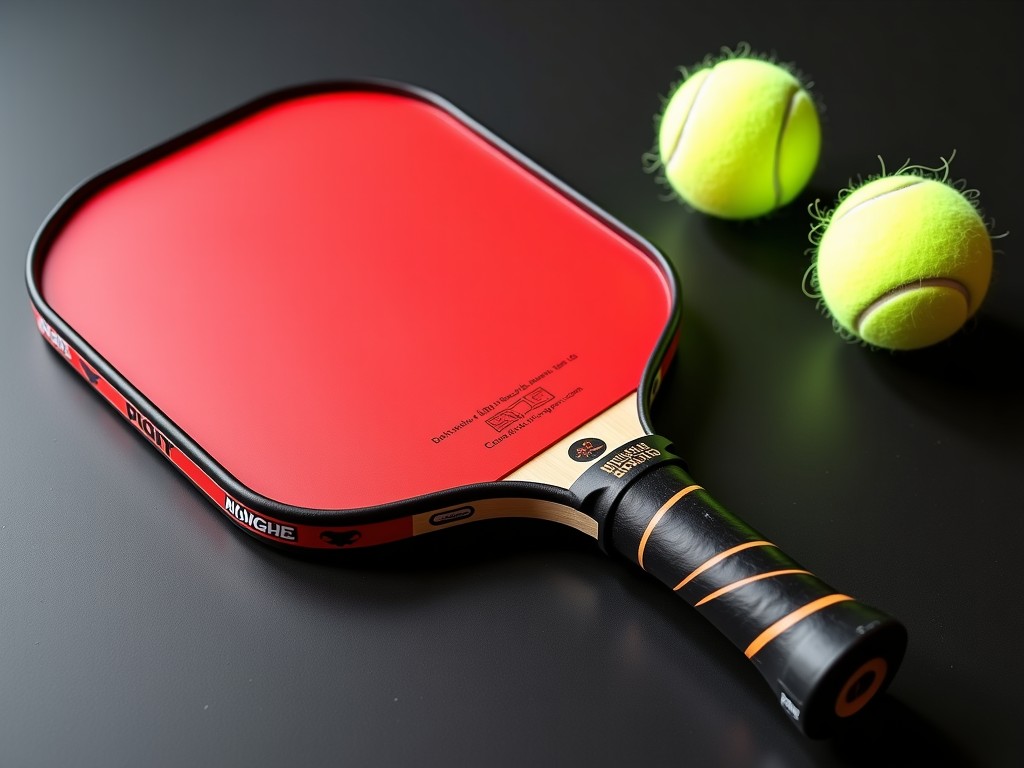
Process choice shows up later as surface friction levels and durability. Using a vacuum-pressed molding technique ensures the face is bonded uniformly to the honeycomb core, which minimizes the risk of delamination. If the temperature during curing is inconsistent, the adhesive bond strength weakens, leading to the face peeling away under high-impact stress.
Carbon Fiber Construction
Utilized for high-stiffness applications. The raw weave structure allows for precise energy control but increases the material cost per unit compared to composite alternatives.
Fiberglass Construction
Offers a more flexible face with increased ball speed. Often used for entry-level wholesale or players who prioritize ease of power over technical spin control.
What Can Be Customised and What Cannot
Branding is typically limited to the surface graphics via UV-printing or heat-transfer sublimation. These methods ensure the logo does not crack or peel after 100+ hours of play. However, the internal core thickness and face material are usually fixed once a production run is initiated, as changing these requires new molds and curing-cycle adjustments.
Customization also extends to the grip material and the edge guard color. We offer various synthetic leather or cushioned grip wraps depending on the target demographic's price point. The structural geometry of the paddle—the throat shape and overall profile—remains standard to ensure aerodynamic performance meets established market play standards.
Volume Planning and Lead Time
Lead times are dictated by the order volume and the complexity of the surface finish. Orders exceeding 500 units typically require a dedicated production window of 6 to 8 weeks. Smaller batches utilizing existing stock core materials can be processed faster, but custom molding always adds time to the tooling-check and approval phase.
Keeping Repeat Orders Supplied
Consistency is set at the forming stage. To prevent lot-to-lot drift, we utilize batch-tracking for resin formulas and carbon fiber sheets. This ensures that a paddle ordered six months later feels identical to the one currently in the retail customer's hand, protecting your brand's reputation for quality and reliability.
Technical Note: To maintain a weight tolerance of ±1 gram across an entire wholesale order, the automated weighing station must be calibrated at the start of every shift to account for material density fluctuations.
Export Packaging and Handling Protection
Long-distance shipping requires robust protection to prevent edge-guard compression. Each paddle is individually wrapped in polyethylene sleeves before being placed in heavy-walled cardboard master cartons. These boxes are reinforced with palletized-shrink-wrapping to prevent crushing during sea or air freight transit.
Questions Buyers Ask Before Ordering
- What is the UV resistance of the surface coating? We use UV-stabilized inks to prevent yellowing and fading under prolonged outdoor sun exposure.
- Can we request specific core thicknesses? Yes, 10mm, 13mm, and 16mm are standard options for bulk-volume orders.
- What is the MOQ for custom-branded paddles? The minimum order is typically 300 units per design to cover the setup and printing plate costs.


