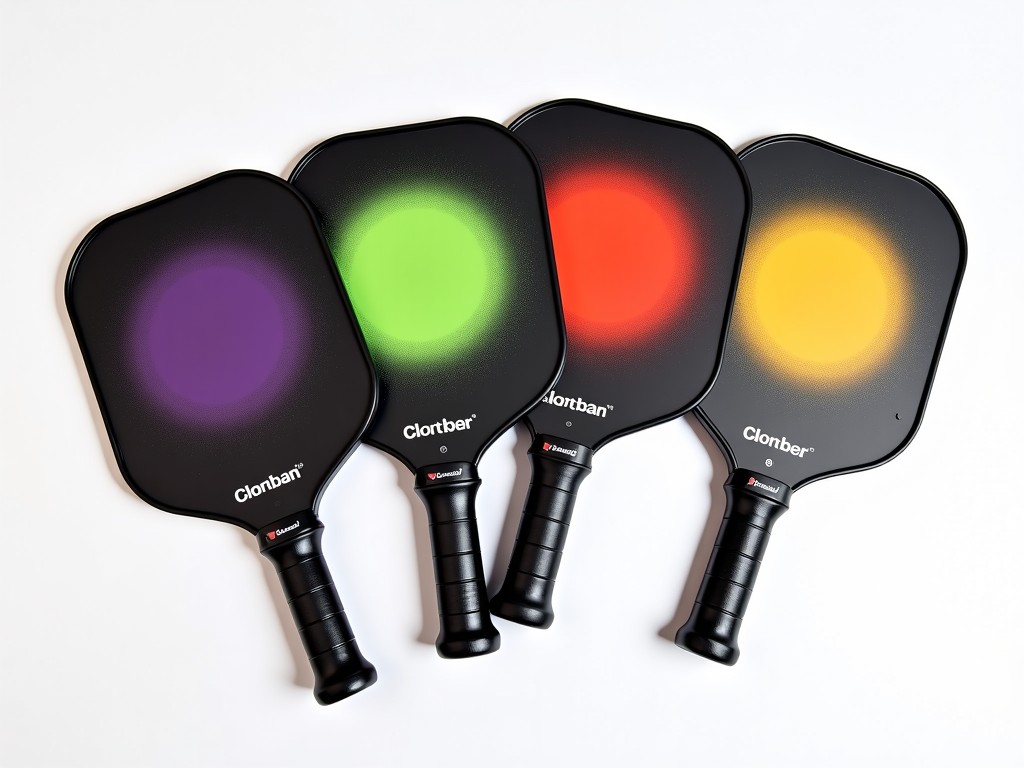
Specifying Wholesale mid level pickleball paddles Supplier for Wholesale and OEM Orders
Technical Selection Trade-off
Unit price and service life diverge when selecting core-density honeycomb structures. A 13mm core reduces total weight and increases power output but increases vibration transfer, whereas a 16mm polymer core enhances energy damping and spot-landing control for mid-level competitive play.
The Problem Buyers Keep Paying For
Retailers often report high returns when lot-to-lot weight variance exceeds 3 grams. If a shipment averages 8.2 ounces instead of the specified 7.8 ounces, the balance point shifts, significantly altering the player's swing weight. This inconsistency usually stems from uneven resin injection pressures during the honeycomb curing process or inconsistent foam density in the edge guard molding.
Surface delamination represents another frequent failure mode in mid-tier paddles. When the bonding agent between the fiberglass face and the polymer core fails under thermal expansion, the paddle loses integrity during high-impact smashes. This is particularly common in batches using low-grade adhesives that cannot withstand the mechanical stress of outdoor play where temperatures frequently exceed 30°C.
What the Design Has to Balance
Unit price settles the question only after evaluating the material's friction coefficient against its durability. Mid-level carbon fiber offers a higher friction coefficient for spin but wears down faster than abrasive-textured grit-infused faces. Conversely, fiberglass faces provide a softer "pop" but often lack the precision-focused control that mid-level players demand for consistent ball placement.
Construction of the frame also dictates the "sweet spot" size. A wider perimeter weight increases the stable area for off-center hits but adds mass, which can lead to arm fatigue during long tournament matches. For wholesale buyers, the 14mm to 16mm beam width provides the necessary balance of structural stability without the premium cost of aerodynamic aero-shaped frames.
Measured Performance in Real Use
Performance in the wholesale market is measured by rebound consistency across the face. A reliable paddle must maintain a consistent ball exit velocity within a 2% margin across 1,000 strikes. This requires a high-density aluminum honeycomb core that resists cell collapse under repeated impact.
- Core thickness variations maintained between 13mm and 16mm for varied control profiles.
- Surface grit friction levels tested via abrasion resistance to ensure spin-retention over six months.
- Grip diameter consistency held at 4.25" to 4.5" for universal ergonomic standards.
- Edge guard impact resistance rated to prevent cracking during high-velocity drops.
Size, Weight and Specification Range
| Parameter | Fiberglass Face Variant | Carbon Fiber Variant |
|---|---|---|
| Core Thickness | 13mm - 16mm | 14mm - 16mm |
| Average Weight | 7.5 oz - 8.2 oz | 7.8 oz - 8.4 oz |
| Performance Profile | High Power / Soft Feel | High Control / Spin Focus |
Working as a Production Partner, Not a Catalogue Supplier
Reliable procurement requires transparency into the manufacturing sequence. A technical partner provides data on the vacuum-pressing process used to ensure no air pockets remain trapped between the face layers. This process prevents the "hollow sound" often associated with low-quality mass-produced paddles.
For OEM orders, the integration of custom branding must not compromise the surface texture. We utilize high-heat transfer printing that bonds the ink into the polymer top coat, preventing the peeling that occurs with standard decal methods applied to high-friction surfaces. Discuss specific OEM requirements with our engineering team.
Stock Availability and Reorder Planning
Lead time fluctuations often hinge on the availability of specialized-grade honeycomb cores. Standard production cycles for mid-level paddles typically range from 35 to 50 days depending on volume and custom face specifications. To avoid stockouts during peak season, buyers should implement a rolling forecast based on historical club reorder data.
Consistency across reorders is maintained through batch-number tracking. By grouping reorder units into the same production run, we ensure that the weight and balance specifications remain identical to the initial approved samples, protecting the brand's technical reputation.
Ready to finalize technical specifications for your next paddle line?
Request Project Discussion

