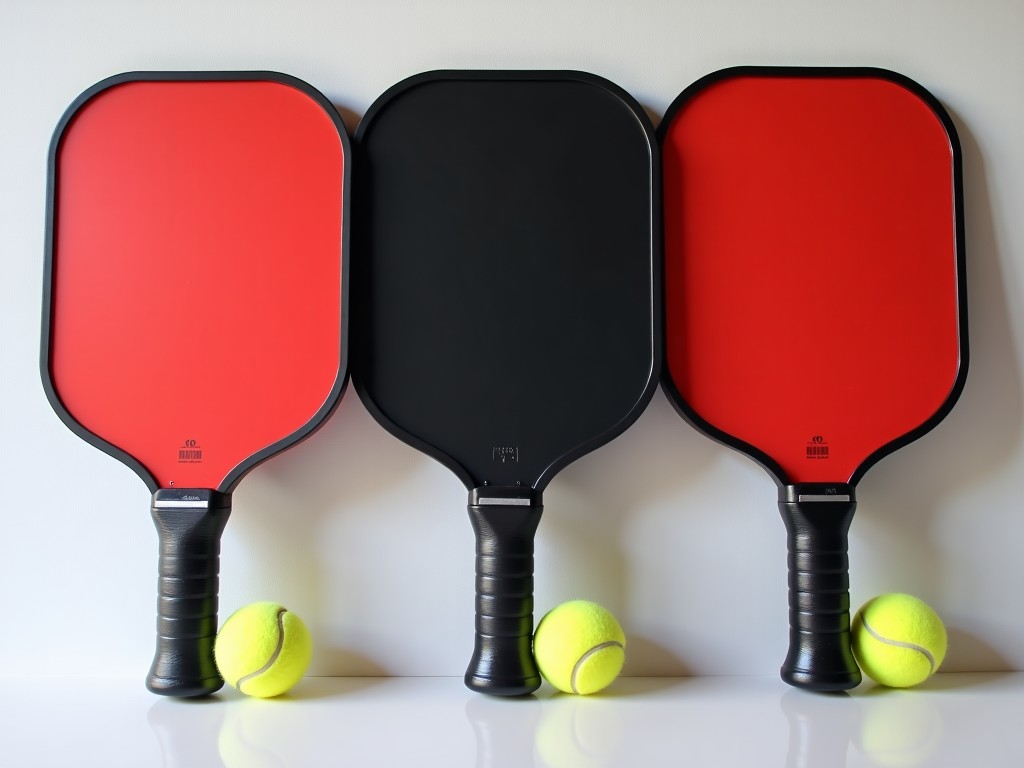
wholesale professional carbon fiber pickleball paddles supplier - Bulk Supply and Specification Guide
The limiting factor is rarely the headline specification. While many buyers focus on the face material alone, the internal density of the polymer honeycomb core determines the paddle's rebound rate over thousands of cycles. A 16mm core provides more energy absorption but increases the overall swing weight compared to a 13mm variant. We calibrate the core density to ensure the balance point remains consistent across a batch of five-thousand units.
Design Constraints Behind the Specification
Fatigue appears at the stress concentration where the carbon fiber face meets the perimeter edge guard. If the bonding pressure during compression molding is inconsistent, the layers will delaminate under high-impact power shots. We utilize a vacuum-pressing process to ensure the layup remains within a +/- 2g weight tolerance across the entire order.
Structural Integrity Protocol
The transition between the carbon fiber weave and the honeycomb core is the most common point of failure. We employ a thermal-set adhesive interface that prevents structural cracking at the throat during high-velocity play.
What Actually Determines Performance
Weight and stiffness trade off against each other. A T700 carbon fiber weave offers a higher friction coefficient for spin, yet it requires more precise resin control to prevent structural fatigue. We balance the resin-to-fiber ratio to ensure the paddle does not warp during prolonged play in high-humidity environments.
Surface texture also dictates the retail life-cycle of the paddle. A grit-applied surface lasts longer than a molded friction surface, which often wears down after sixty hours of heavy abrasion. We test the friction coefficient using standardized rotary testers to ensure the paddle meets professional performance benchmarks before shipment.
How to Choose Before Requesting a Quote
Evaluate the batch consistency of the supplier rather than just the unit price. A lower price often indicates a higher variance in the core thickness, which leads to inconsistent "dead spots" and high return rates for clubs and academies. We provide a batch traceability report for every production, detailing the weight and balance distribution of individual units to maintain brand-level standards.
| Usage Condition | Typical Complaint | Prevention Specification |
|---|---|---|
| High-impact power shots | Face delamination | Reinforced edge-guard bonding |
| Long-term UV exposure | Surface fading | UV-stabilized resin coating |
| Repeated spin play | Surface grit wear | High-friction abrasive-treatment |
Requirements by Buyer Segment
Brand Product Managers prioritize aesthetic consistency and finish-layer adhesion to ensure private-label designs remain vibrant across large orders. In contrast, Club or Academy Purchasing Managers favor durability and replacement cycles to manage high turnover among students.
- Private Label Brands: Focus on--transfer accuracy and custom edge-guard molding options.
- Academies: Focus on grip-wear resistance and impact-tolerance for high-frequency use.
- Distributors: Focus on weight-optimized packaging and retail-ready barcode compliance.
Capacity, Tooling and Scheduling
Production cycles are dictated by the curing time of the resin-infused carbon fiber layers. A standard production run of 2,000 units requires a 4-week window for tooling and quality inspection. We maintain precision steel molds to ensure that the dimensions do not drift over the course of high-volume cycles.
Stock Availability and Reorder Planning
Maintaining a buffer of raw core components allows us to reduce lead times for standard colorways. We recommend a reorder point 60 days prior to stock depletion to account for international freight fluctuations and raw material price-volatility in T700 fiber markets.
Export Packaging and Handling Protection
Moisture is the primary enemy of honeycomb cores during maritime transit. Each paddle is individually-wrapped in moisture-shrink film and placed in reinforced corrugated dividers to prevent surface-friction damage or warping. This ensures the structural integrity remains intact from factory to warehouse.
Setup, Use and Replacement Parts
The edge guard is designed as a replaceable component to extend the service life of the paddle. We provide bulk-replacement grips and edge-guards to allow academies to maintain their inventory without replacing the entire paddle assembly.
To discuss specific tooling requirements for your brand, contact our tooling review process today.


