China heavy duty high altitude tennis balls factory: What Buyers Should Check Before Ordering
What This Product Is and Where It Fits
| Parameter | High Altitude Heavy Duty Specification |
|---|---|
| Weight Range | 56.5g - 59.4g |
| Internal Pressure | 4.5 - 5.0 PSI (Adjusted for altitude) |
| Felt Composition | High-density wool-nylonylon blend |
| Core Material | Vulcanized natural rubber compound |
Moving from sample orders to container loads changes the procurement strategy for high-altitude equipment. At elevations above 1,000 meters, the thinner air density reduces aerodynamic drag, causing standard balls to travel at higher velocities and bounce further. To maintain competitive balance, this factory produces balls with a lower internal pressure and a more resilient core structure to ensure the flight path remains consistent with sea-level play.
The heavy-duty designation refers to the felt density and the seam reinforcement. High-frequency use on hard courts accelerates the abrasion of the felt fibers. We utilize a higher GSM felt construction to prevent the ball from losing its aerodynamic profile and weight after only a few sets of play.
Where Cheaper Alternatives Fall Short
Standard Retail Grade
Low-cost cores use thinner rubber compounds that lose elasticity quickly. In altitude, these balls become "dead" prematurely. The felt is often thin, leading to rapid "fuzzing" and unpredictable rebound coefficients.
High Altitude Heavy Duty
Thick-wallized cores maintain internal pressure over longer durations. The high-density felt resists shearing on abrasive court surfaces, ensuring the ball's weight and diameter remain within tolerance throughout a tournament cycle.
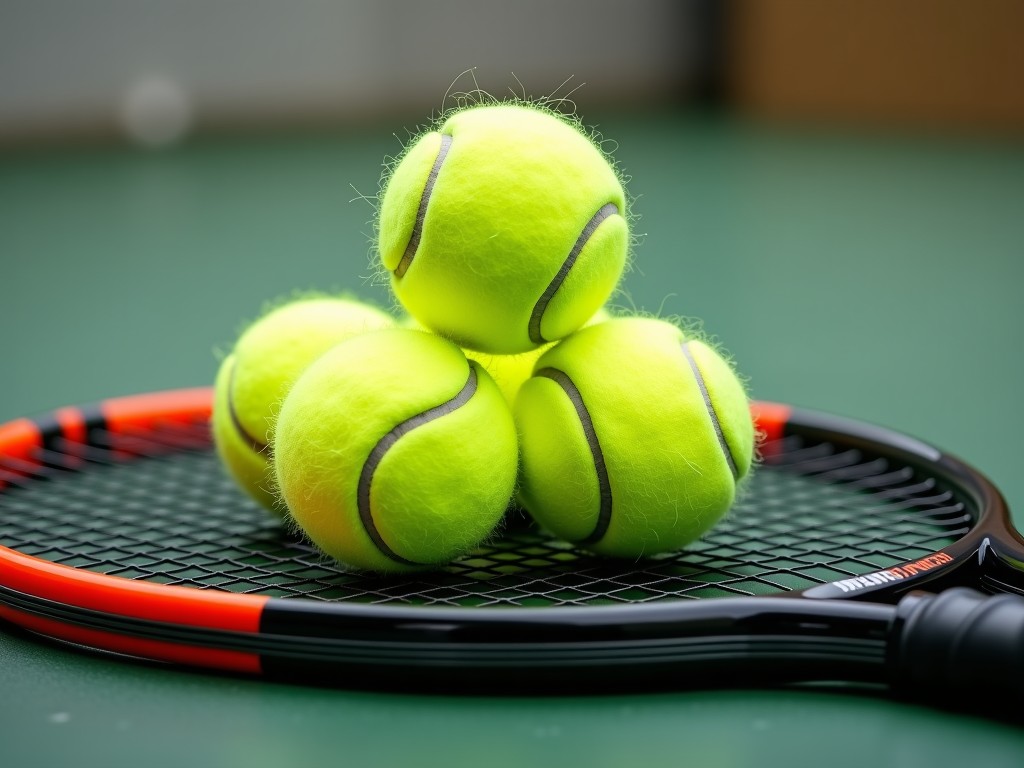
Procurement officers often overlook the cost-per-hour of play metric. If the internal pressure fluctuates by more than 0.5 PSI across a batch, the player's experience becomes inconsistent. Our molding process uses temperature-controlled curing to ensure the rubber density is uniform across 50,000-unit runs.
Specification Range and Customisation Limits
The physical dimensions of the ball are strictly governed by industry-standard tolerances. While the diameter must remain between 65.37mm and 68.7mm, the internal physics are the primary variable for altitude adjustment. We adjust the air-injection pressure to match the specific atmospheric conditions of the target market.
Felt weight is another critical customization point. A higher-wool content provides a better "feel" for professional players, while a higher nylon percentage increases durability for outdoor club-level use. We can vary the felt thickness and the pressing pressure, but the base core hardness is typically fixed to ensure the ball meets the required rebound height at 2.5 meters.
Matching the Product to the Buyer's Need
Wholesale buyers targeting tennis academies need to focus on the de-compression rate. Academies cycle through balls rapidly, requiring a heavy-duty felt that maintains its structural integrity. Our factory utilizes a specific vulcanization process that prevents the core from cracking when the ball is kept in low-pressure storage environments.
For private-label brands focusing on retail, the aesthetic consistency of the felt and branding is paramount. We offer heat-pressing techniques that ensure the logo does not peel or fade after the first high-impact strike. This protects the brand's visual integrity from the retail box until it hits the court.
What Can Be Customised and What Cannot
Customization is focused on the external felt, the internal pressure settings, and the branding application. However, the fundamental core diameter and the overall weight range cannot be altered, as these would render the ball non-compliant with standard play rules.
Tooling amortisation for custom felt colors or specific seam patterns requires a minimum order. If your project requires a specific pressure blend for non-standard altitudes, please contact our technical team to discuss the material formulation requirements.
Inspection Items and Test Methods
Quality Control Protocols
- Rebound Height Test: Measured from a drop of 2.5 meters onto a hard surface to ensure the bounce falls between 135mm and 147mm (adjusted for altitude specs).
- Pressure Retention: Balls are tested after 72 hours of storage to ensure the PSI drop does not exceed 5% of initial pressure.
- Felt Abrasion: A Martindale abrasion test simulates court friction to measure the resistance of the fibers to pilling.
- Dimensional and Weight Check: Every batch is sampled to ensure the-mean weight stays within the ±0.8g tolerance.
Reliability in bulk supply is built on the consistency of these tests across batches. We use automated optical inspection to check for felt irregularities, ensuring that every ball in a container has the same aerodynamic profile. This reduces the risk of buyer rejection due to performance variance during tournaments.
Ready to discuss your high-altitude production requirements?
Start Project Discussion

