Specifying Custom all white tennis racket Manufacturer for Wholesale and OEM Orders
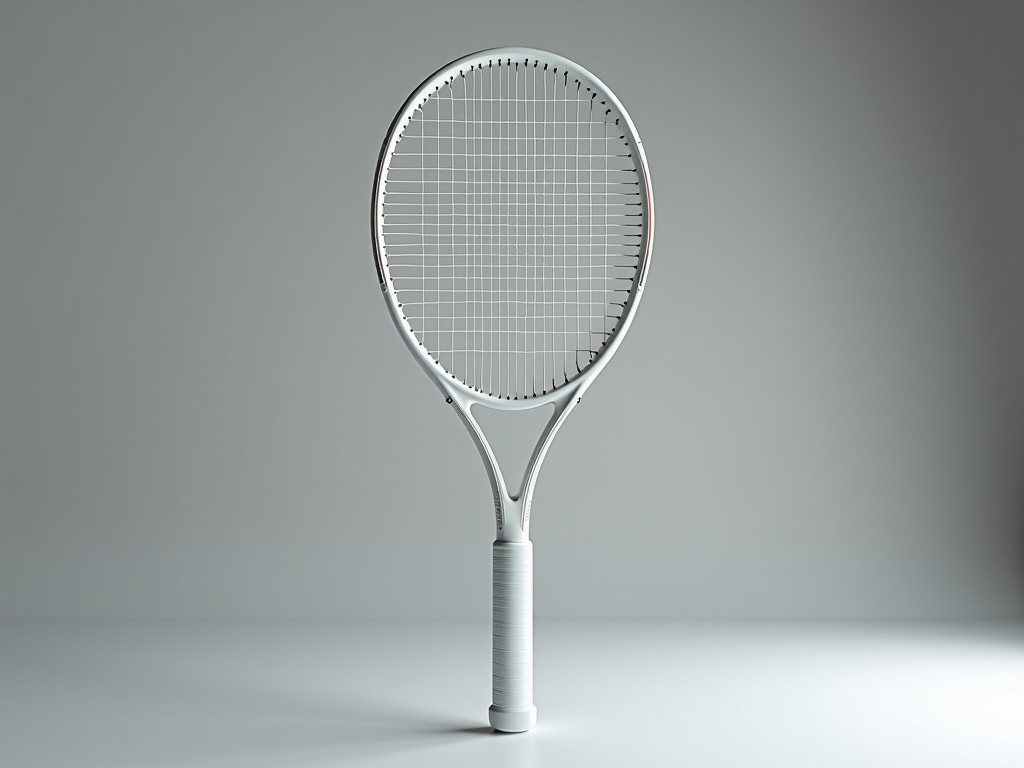
Securing a secondary manufacturing source for white-themed equipment requires a technical evaluation of finish stability and structural integrity. Many importers face issues where the "all white" aesthetic suffers from premature yellowing due to UV exposure or delamination at the high-stress throat joint. A capable manufacturer must demonstrate the use of UV-stabilized resins and precise carbon layup techniques to ensure the color remains neutral throughout the product's functional service life.
The procurement focus shifts to the trade-off between weight distribution and the durability of the white surface coating. While lower-grade coatings may meet initial aesthetic requirements, they often fail to resist the abrasion of high-velocity ball impacts. Professional-grade white racket production utilizes a multi-stage curing process to ensure the pigment bonds to the carbon fiber substrate without adding frame geometry.
What the Design Has to Balance
| Parameter | Standard Range | Procurement Impact |
|---|---|---|
| Frame Weight (unstr) | 270g - 315g | Affects shipping costs and market segment. |
| Balance Point | 320cm - 345cm from grip | Determines player maneuverability and swing weight. |
| Stiffness (RA) | 60 - 70 RA | Controls power return and vibration damping. |
| Base Material | High-Modulus Carbon | Influences unit cost and fatigue resistance. |
The interface between parts determines the structural integrity of the throat. If the resin-to-fiber ratio is improperly calibrated, the frame risks delamination under high-tension loads, typically those exceeding 55kg of string tension. Manufacturers who utilize vacuum-prepreg carbon fiber maintain more consistent material density, which prevents internal air pockets that lead to cracking during high-impact play.
Technical Note: Finish Stability
Pure white finishes require a specific primer layer to prevent "carbon bleed" through the white paint. Without this barrier, the dark carbon fibers can eventually discolor the white surface after several months of environmental exposure.
Material Options and Their Trade-offs
Deflection under load governs the overall feel of the racket. A higher-modulus carbon fiber allows for a thinner beam, which increases power return but becomes more brittle. For retail buyers targeting the club-level market, a hybrid blend of graphite and carbon offers a more forgiving frame, reducing the likelihood of catastrophic failure when the racket accidentally hits the ground.
White coating application is the primary variable in cost-structure. Standard spray-on paints are prone to chipping at the bevelled edges. In contrast, powder-coating or a specialized automotive-grade finish provides a more resilient surface, though it increases the unit price due to the additional curing cycles. The choice depends on whether the target buyer prioritizes immediate aesthetic perfection or long-term finish durability.
Option Comparison by Usage Level
Club/Entry Grade
- Standard graphite-carbon blend for cost efficiency.
- Thicker beam profile for increased stability.
- Basic white finish with standard UV inhibitors.
- Standard synthetic grommets for easy maintenance.
Performance/Tournament Grade
- High-modulus carbon layup for weight reduction.
- Aerodynamic thin beam for swing speed.
- Multi-layer UV-stabilized white finish.
- Custom-density grommets for vibration control.
Capacity, Tooling and Scheduling
Balance and load analysis shows that tooling is the primary bottleneck for OEM orders. Custom steel molds for specific frame geometries require an initial investment that is typically amortized over large volumes. For orders under 500 units, the per-unit cost is significantly higher due to the lack of scale economies and the manual labor required for precision-finish application.
Lead times for custom-white rackets generally range from 60 to 90 days, depending on the complexity of the finish process. The white coating requires longer curing times than darker colored frames to ensure no moisture is trapped before packaging. Procurement officers should align their production cycles well ahead of seasonal demand.
Keeping Repeat Orders Supplied
Consistency across batches is what separates a reliable manufacturer from a prototype shop. Variations in the white shade of the frame can occur between different production runs if pigment sourcing fluctuates. We implement batch-tracking for all resin and paint components to ensure that every reorder matches the approved sample exactly in color temperature.
Ready to discuss your custom white racket specifications?
Initiate a Project Discussion

