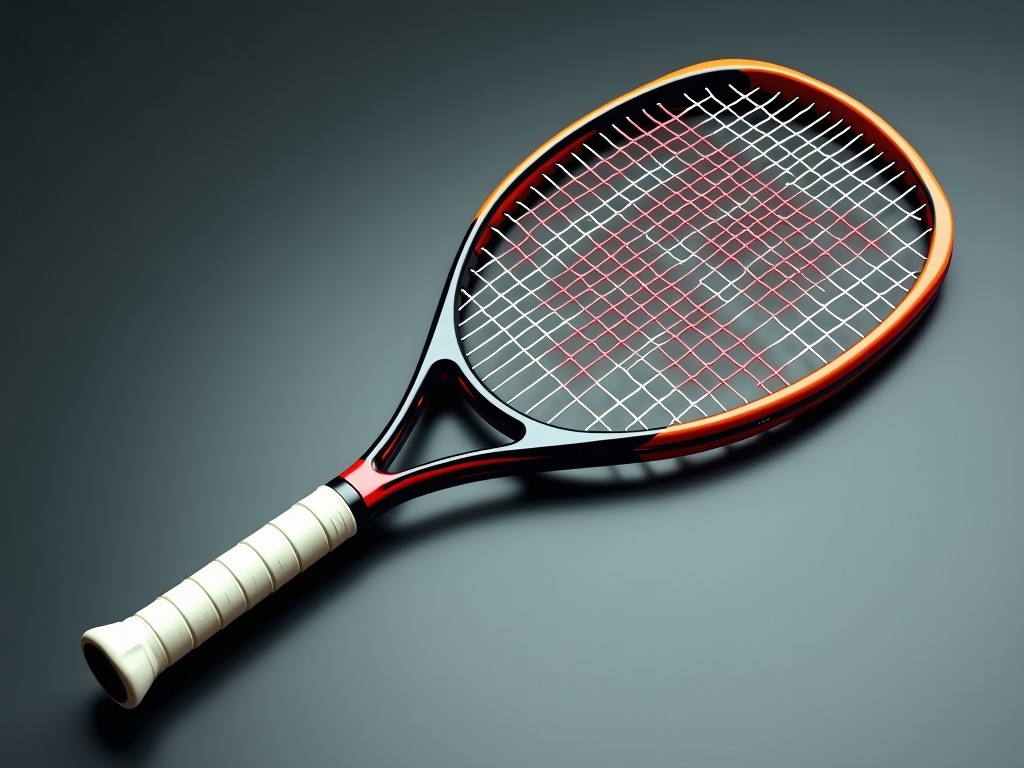
Custom good intermediate tennis racket Company: What Buyers Should Check Before Ordering
Most quality disputes start with a consistency gap where the balance point shifts by more than 3mm between batches. When an academy orders 500 units for a season, any variation in swing weight alters the player's timing and leads to high return rates. Private-label buyers require a stable manufacturing process where the first prototype matches the thousand-unit run exactly.
Materials and Construction Trade-offs
High-modulus graphite increases frame stiffness but transfers more high-frequency vibration to the arm. For intermediate players, a 45-degree layup orientation maintains torsional stability without significantly increasing the cost per unit. We utilize a 24T carbon fiber to ensure the weight drift does not exceed 2g across the production.
Stiffness vs. Comfort
A thicker beam (over 24mm) provides more power but reduces the sweet spot size. Intermediate rackets typically benefit from a 23mm beam to balance forgiveness with power for players who not yet have full swing speed.
Measured Performance in Real Use
A swing weight variance of +/- 5g alters how a player adjusts their swing speed. Our quality control limits this to +/- 2g to ensure consistent racket feel across an entire academy order. This precision prevents the "heavy head" sensation that occurs when resin distribution is uneven during the molding process.
Vibration damping systems integrated into the throat reduce impact shock on off-center hits. If the damping material is inconsistent, the frame delaminates after 100 hours of heavy play. We use a bonded silicone insert to maintain structural integrity over the service life.
Size, Weight and Specification Range
| Parameter | Standard Intermediate Range |
|---|---|
| Head Size | 100 - 105 sq in |
| Weight (unstrung) | 280g - 300g |
| Balance Point | Head-light (3-7 pts L) |
| Beam Width | 22.5mm - 24.5mm |
Option Comparison by Usage Level
Entry-level rackets often use aluminum-carbon composites which flex excessively under high tension. Intermediate models utilize full graphite construction to maintain string tension at 53-60 lbs without frame deformation.
| Feature | Entry Grade | Intermediate Grade |
|---|---|---|
| Frame Material | Aluminum Alloy | High-Modulus Graphite |
| Vibration Control | Basic Rubber | Active Damping Insert |
| Grip Material | Synthetic Vinyl | Polyurethane Overgrip Ready |
How Consistency Is Held Across Batches
Thermal control during the curing process prevents internal stress pockets. If the frame cools too quickly, the throat becomes prone to cracking under high string tension. We use computer-controlled ovens to ensure the resin-set uniform across the entire geometry.
Batch traceability allows us to map specific material lots to every racket number produced. This reduces the risk of systemic failure in large private-label orders. Review our technical specifications here.
Inspection Items and Test Methods
| Usage Condition | Potential Failure | Prevention Specification |
|---|---|---|
| High-impact stringing | Grommet tearing | Reinforced T-stabilized grommets |
| Repeated UV heat | Paint bubbling | UV-resistant base coat layers |
| Lateral impact | Throat fracture | Torsional rigidity test pass |
Request Artwork and Branding Review
Align your private-label specifications with our manufacturing capabilities before the next production cycle.
Initiate Consultation

