Specifying custom oversized new tennis rackets manufacturer for Wholesale and OEM Orders
The complaint that repeats across reorders often involves structural fatigue at the throat after six months of high-impact play.
Oversized frames face unique torsional stresses because the head surface area increases the lever arm. If the carbon fiber layup does not account for the torque generated at the junction, the frame deforms under high tension, leading to a loss of power and eventual delamination. We utilize a 24K high-modulus graphite to maintain a stiffness rating of 60 RA, even when string tensions are pushed to 60+ lbs. This structural integrity ensures the sweet spot remains consistent during high-velocity off-center hits.
Material Options and Their Trade-offs
Selecting the right material composite dictates the final weight-balance distribution and vibration dampening capabilities. High-modulus graphite allows for a lighter frame but increases the transfer of vibration, which some recreational players find difficult to adapt to.
Composite Fiber Analysis
- Standard Carbon Fiber provides a baseline stiffness at a lower material cost per batch.
- Aramid-infused weaves increase impact resistance at the frame edges, though they add 5-10g to the total swing weight.
- Ultra-light-modulus layups allow for thinner beam widths (22mm to 24mm) without sacrificing the internal hoop strength, improving the racquet's power-to-weight ratio.
Comparing Two Standard Configurations
Standard production runs usually split between head-heavy configurations for power and even-balanced setups for maneuverability in doubles play.
| Parameter | Power Config (115 sq in) | Control Config (105 sq in) |
|---|---|---|
| Swing Weight | 325g - 335g | 305g - 315g |
| Balance Point | Head-Heavy (35cm+) | Even-Balanced (32cm) |
| Beam Width | 28mm (Aerodynamic) | 24mm (Slim) |
What Can Be Customised and What Cannot
Customization focuses on the surface aesthetics and ergonomic interfaces which do not alter the fundamental structural frequency of the frame.
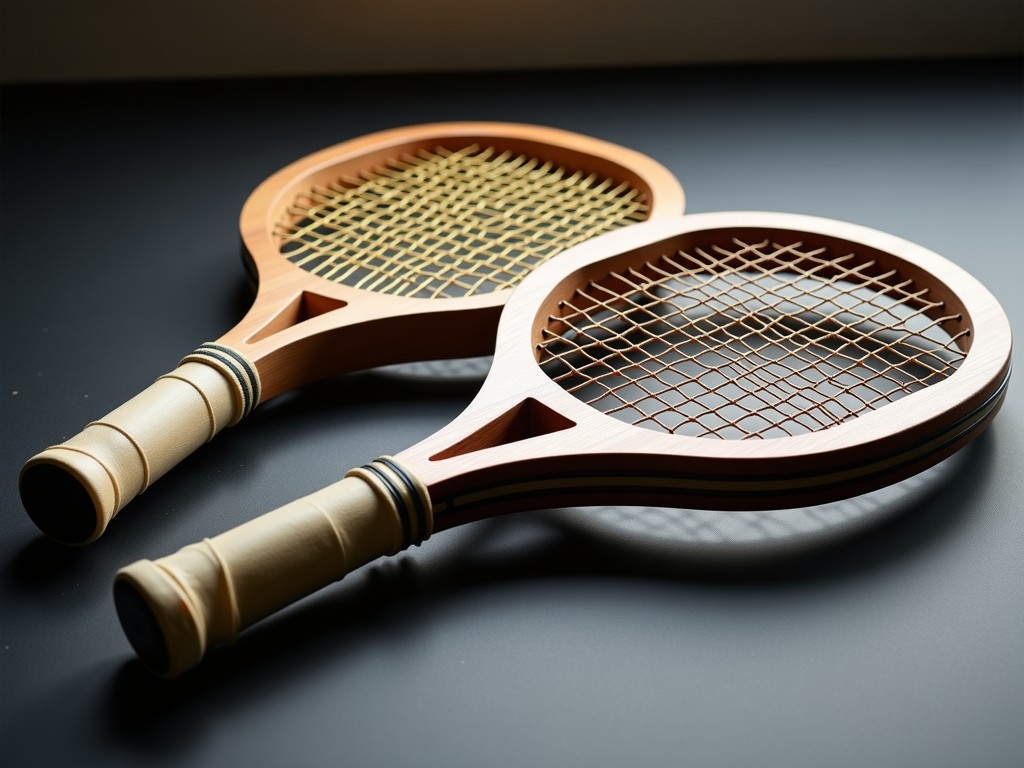
- Customizable: Grip size ranging from L0 to L5, internal weight inserts in the handle for balance-point adjustment.
- Customizable: Multi-layer decals, silk screen printing, and custom paint-coat finishes for retail branding.
- Fixed: The internal carbon layup pattern and hoop geometry cannot be shifted once the mold is created.
- Fixed: The structural tensile strength limit is determined by the material's elastic modulus.
Who Uses It and Where It Matters
Club tennis academies and senior fitness programs prioritize oversized rackets to provide a larger sweet spot for players with slower swing speeds.
Retail brands often order these specifications for entry-level markets where ease of use is the primary selling point over professional-grade precision. By increasing the head size, the manufacturer reduces the penalty for mishits, which directly impacts the return rate among novice users.
Working as a Production Partner, Not a Catalogue Supplier
Relying on a single supplier for oversized frames creates risk when material consistency fluctuates across different production batches.
A dedicated manufacturing partner provides batch traceability, ensuring that every order of 5,000 units maintains within a 2g tolerance of the specified weight. This consistency prevents the "drift" where one shipment feels percepturably heavier or stiffer than the last.
Inspection Items and Test Methods
Quality control protocols involve rigorous testing to ensure the oversized frame can withstand the mechanical stresses of competitive play.
| Usage Condition | Typical Failure | Preventive Specification |
|---|---|---|
| High-tension stringing | Throat cracking | Reinforced carbon-fiber wrap |
| Impact with hard ground | Frame delamination | High-modulus resin bonding |
| Long-term UV exposure | Paint fading/peeling | UV-resistant clear coating |
To discuss technical requirements for your next production run, artwork-and-branding-review.


